
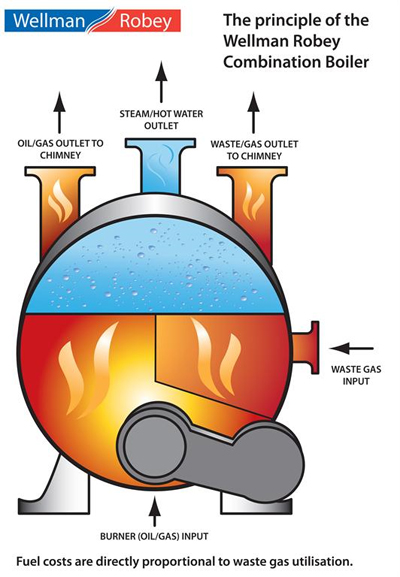
 Wellman Robey “Combination” Boilers have become an integral part of two Combined Heat and Power installations for the N.H.S Foundation Trust.
The principle of the “Combination” Boiler is to take the exhaust gases from the C.H.P electricity generator engine and use the heat from it to raise steam or hot water. A completely independent section within the boiler (with it’s own furnace and oil or gas fired burner) guarantees that the unit will be able to provide its required output at all times regardless of the supply of waste gases available by firing the boiler in the conventional way as well as (or instead of) using the waste heat recovery section.
The two N.H.S Trust Foundations that have recently taken delivery of the Wellman Robey Combination Boilers are Countess of Chester and Aintree University (Liverpool) hospitals.
Countess of Chester has 580 beds on a single site and provides a range of medical services for over 400,000 patients a year for Western Cheshire, the Wirral and North Wales. The Robey- Loos boiler supplied is a UL-S IE Composite Boiler designed for an output of 3945kg/hr at 5barG that will provide steam and hot-water for the total requirement of the hospital complex.
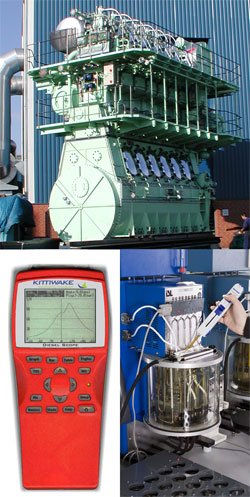 These two new offerings along with many of our other solutions including LinerSCAN help you extend engine life, increases efficiency, and reduces emissions to assist with environmental compliance.
 .jpg) Oil analysis is a well established practice in predictive maintenance. Lubricant analysis is often paired with other technologies such as infrared thermography, vibration analysis and ultrasound techniques. These technologies are very useful in detecting problems in machinery before costly failures and down time occur.
Oil analysis is a well established practice in predictive maintenance. Lubricant analysis is often paired with other technologies such as infrared thermography, vibration analysis and ultrasound techniques. These technologies are very useful in detecting problems in machinery before costly failures and down time occur. 
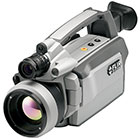 Instrument hire can reduce capital expenditure and provides access to the latest technology. Alan Hasson from Ashtead Technology explains the benefits when focusing on infrared cameras