Find ATEX, IECEx, Explosion Protection & Hazardous Area Content...

News

New Encapsulation Rules: What Changes for Your Ex Design?

Encapsulation protection, or “m”, is a protection technique used to prevent ignition in equipment for explosive atmospheres across oil and gas, mining and other industrial applications.

For over 10 years, manufacturers of encapsulated equipment for explosive atmospheres have worked to IEC 60079-18:2014 and its subsequent amendment. IEC 60079-18:2025, Edition 5.0, is the first full technical revision of the encapsulation “m” standard since then.

While the fundamental protection concept remains unchanged, Edition 5 introduces four Major Technical Changes. For manufacturers, the important question is not simply what has changed, but which changes could affect existing products, new designs and future certification.

Where are the significant changes?

The following areas deserve attention first because they include the Major Technical Changes and other changes with significant practical impact on the design and certification of encapsulated equipment.

Compound specification and curing

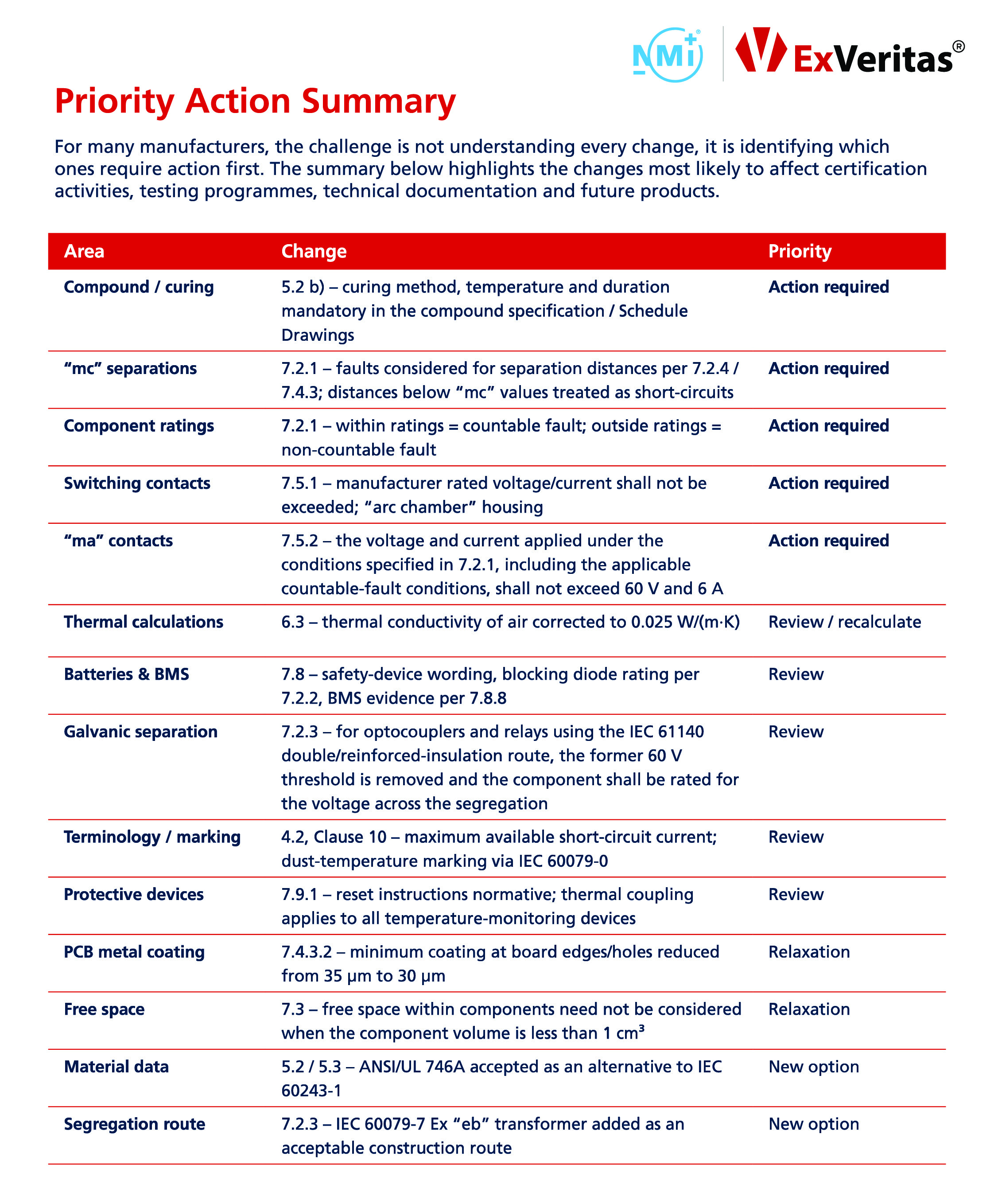
Edition 5 requires the curing method, temperature and duration to be included within the controlled compound specification.

This makes curing conditions an explicitly controlled part of the design and manufacturing process. Manufacturers should consider whether this information is already adequately captured within their controlled documentation. Where curing conditions are recorded elsewhere, documentation updates may be required.

Fault examination for “mc”

Edition 5 expressly applies the relevant separation-distance requirements to “mc”. Compact designs therefore cannot disregard these requirements simply because faults are generally not considered for “mc”.

Component fault treatment is also clarified. A component operating within its manufacturer ratings is treated as a countable fault, while operation outside those ratings is treated as a non-countable fault.

For compact “mc” equipment or designs relying on highly-stressed components, these provisions warrant particular attention.

Encapsulated switching contacts

The rated voltage and current specified by the switching-contact manufacturer must not be exceeded, while the housing around the arcing area is now termed the “arc chamber”.

For Level of Protection “ma”, the 60 V and 6 A limits must also be met under the applicable fault conditions specified by the standard. Manufacturers of “ma” equipment incorporating switching contacts should therefore verify the voltage and current under these conditions, rather than considering normal operating values alone.

Thermal calculations and battery systems

The previous edition included a note giving the thermal conductivity of air as 0.25 W/(m·K). This has been corrected to 0.025 W/(m·K).

Where the previous value was used to determine the hottest component or compound temperature, the calculation should be reviewed and, where necessary, recalculated.

Battery-powered equipment also receives additional attention.

The term “control device” is generally replaced by “safety device”, while Edition 5 introduces more explicit responsibilities where a Battery Management System provides a protection required by IEC 60079-18.

Evidence is required that the BMS remains functional under the expected relevant malfunctions. The equipment manufacturer should retain the appropriate supporting declaration from the BMS manufacturer and include information necessary to maintain the integrity of the protection within the product instructions.

Blocking diodes used to prevent reverse current are also subject to specified rating requirements.
ExVeritas September HES Content Image 2 PRINT

What should manufacturers do now?

A structured gap assessment remains the clearest way to separate substantive technical gaps from changes with little practical impact, particularly for "mc" designs, "ma" switching contacts, and battery systems affected by the BMS provisions.

NMi ExVeritas carries out these assessments for encapsulated equipment manufacturers, mapping Edition 5 requirements against existing designs and documentation ahead of transition and certification deadlines.
https://www.exveritas.com/

Intrinsically Safe Ultrasonic Sensors for Hazardous Environments

In industries such as oil and gas, chemical processing, mining, energy, food and beverage, and material handling, measurement equipment is often required to operate where flammable gases, vapors, or combustible dust may be present. In these environments, selecting the right sensor is not only about measurement performance. It is also part of the overall safety strategy.

Intrinsic safety is an explosion-protection method that limits the electrical and thermal energy available within a circuit, helping prevent the ignition of a potentially explosive atmosphere. When properly installed with an approved intrinsic safety barrier, an intrinsically safe ultrasonic sensor can provide non-contact level and distance measurement within hazardous areas.

This makes ultrasonic sensing particularly useful for applications such as monitoring flammable liquid levels in tanks, measuring material levels, detecting objects or equipment position, and monitoring distance on process equipment. Because ultrasonic sensors operate without contacting the target material, they can also reduce exposure of the sensor to corrosive, abrasive, or otherwise difficult materials.

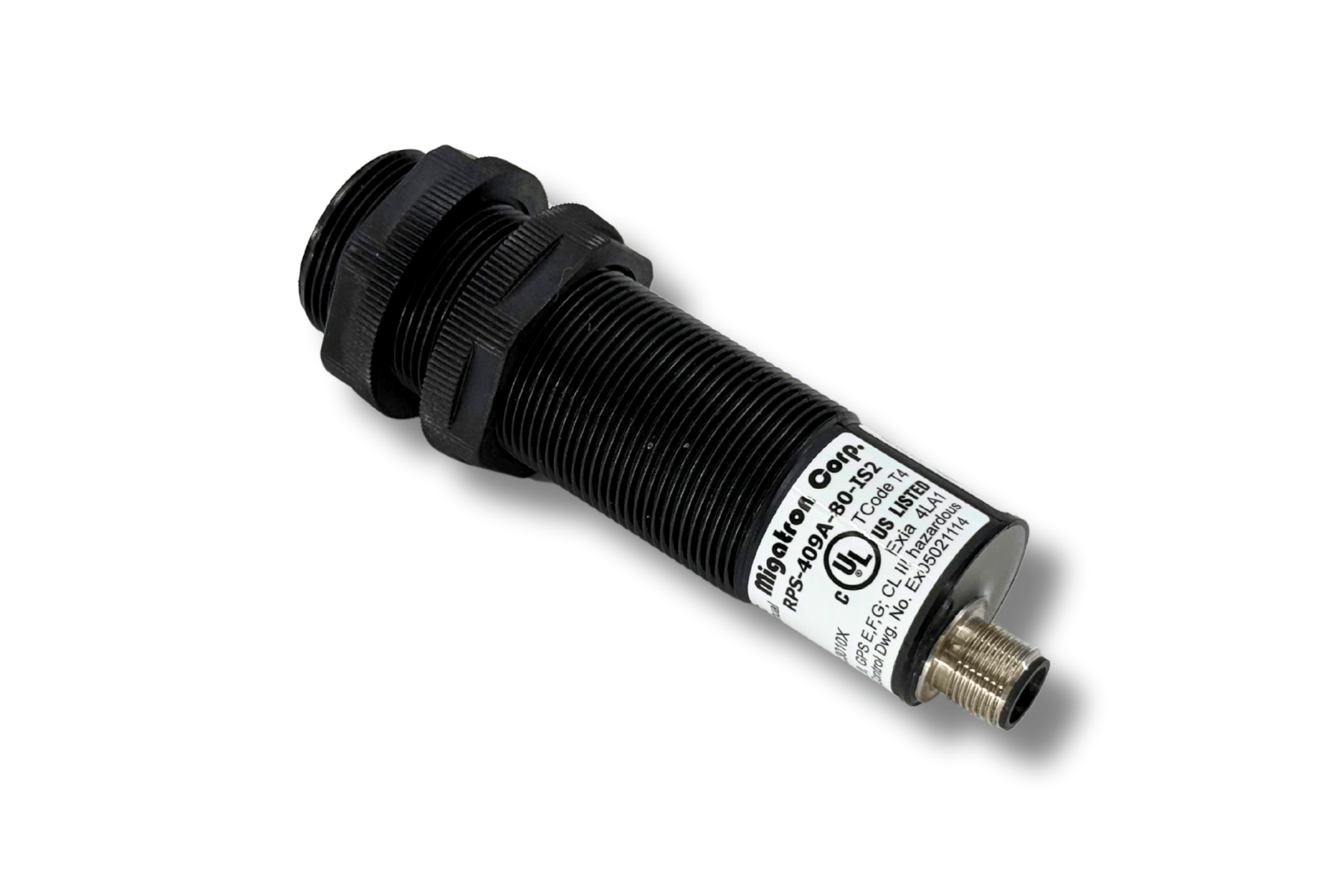
Migatron Corporation designs and manufactures intrinsically safe ultrasonic sensors for hazardous area applications. The RPS-409A-IS2 carries ANZEx, ATEX, IECEx, and C-UL-US approvals and is designed for use in mines susceptible to firedamp (Group 1 protection level Ma), and in hazardous gas and dust environments, including Zones 0, 1, 2, 20, 21, and 22 and Class I, II, and III locations when used with an approved intrinsic safety barrier(s). The RPS-429A-IS also offers ATEX, IECEx, and C-UL-US approvals, with 4–20 mA current-loop or 1–5 V analog output options.

As automation expands into hazardous environments, safe and reliable measurement becomes increasingly important. Migatron also works directly with OEMs and engineers to develop customized ultrasonic sensing solutions tailored to specific application and integration requirements.

http://www.migatron.com/

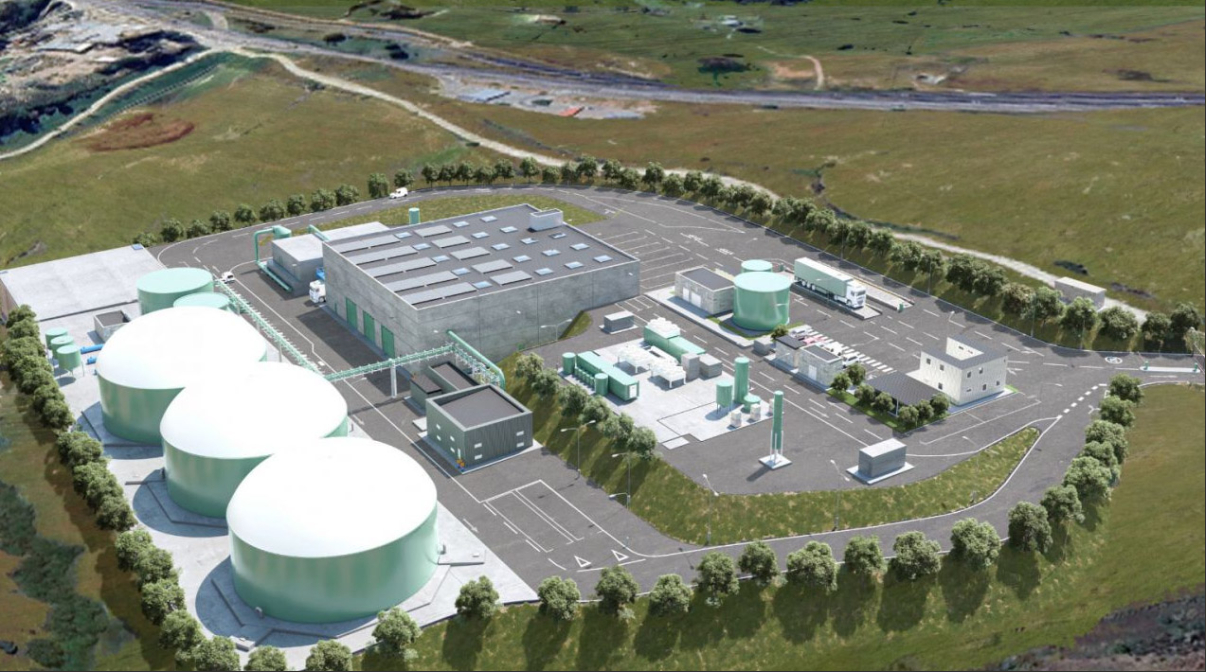
WELTEC BIOPOWER has begun construction of a new biomethane plant in Colmenar Viejo, north of Madrid, alongside environmental services provider PreZero and Enagás Renovable.

weltec_3.jpeg

Once operational, the facility will generate up to 60 GWh of renewable energy annually, enough to meet the energy requirements of approximately 11,700 households or 30,000 residents.

The plant will process up to 75,000 tonnes of organic waste each year, including separately collected household biowaste from Colmenar Viejo and surrounding municipalities. Rather than being sent to landfill, the organic material will be converted into renewable biomethane.

At the heart of the facility will be three stainless-steel digesters supplied by WELTEC BIOPOWER. Each digester measures 25.34 metres in diameter and 10.05 metres in height, with a capacity of 5,067 cubic metres. A gas-tight pre-storage tank will help maintain a continuous substrate supply and stable operating conditions.

“Stainless steel is particularly resistant to corrosion under the demanding biological and chemical conditions found in the digestion process. This gives the plant a long service life, high operational reliability and low maintenance requirements,” said Alain Priser, International Sales Manager at WELTEC BIOPOWER.

The facility will operate as a closed and sealed system, with biofilters and activated carbon systems designed to remove up to 99% of odorous substances from exhaust air. The resulting biomethane will be injected directly into the gas grid.

The project is expected to contribute to Madrid's efforts to reduce landfill use while converting regional organic waste into locally produced renewable energy.

WELTEC BIOPOWER will provide further information about the technology at stand 276A at Salon del Gas Renovable in Valladolid, 29–30 September 2026.

ABB expands hazardous-area dust monitoring with new PFM 20 Ex

ABB has expanded its industrial emissions measurement portfolio with the launch of the PFM 20 Ex, a new dust monitoring device developed for use in hazardous and harsh industrial environments.

Designed for applications where robust equipment and low-range measurement are essential, the PFM 20 Ex provides a certified dust detection range down to 7.5 mg/m³ and meets ATEX Zone 22 certification requirements.

The new device extends ABB’s dust monitoring capabilities and forms part of the company’s wider industrial emissions measurement offering, which includes continuous emissions monitoring, particulate analysis, dust and gas flow measurement and portable hydrocarbon detection.

The launch also builds on the measurement technologies added to ABB’s portfolio following its acquisition of Födisch Group in 2024. The acquisition expanded ABB’s capabilities in dust and gas flow measurement as well as portable hydrocarbon detection.

By bringing these technologies together, ABB says industrial operators can source a broader range of emissions measurement solutions from a single supplier, helping to simplify supplier coordination and provide a more consistent approach to selecting, deploying and supporting measurement equipment across industrial facilities.

“The PFM 20 Ex is an important product launch in its own right, giving customers high-sensitivity dust monitoring for hazardous environments,” said Jean-Rene Roy, Global Business Line Manager at ABB’s Measurement & Analytics division.

“This also represents a significant addition to our highly capable industrial emission measurement portfolio, enabling us to support a broader range of customer needs, from continuous gas analysis to dust, gas flow and portable measurement.”

ABB’s industrial emissions measurement portfolio includes continuous emission monitoring systems such as the ACF5000 and MCA 10 CEMS, alongside particulate analysers including the PFM 20, PFM 13 and OPM 19 ED dust analysers. The range also incorporates the FMD 09 gas flow analyser and portable Flame Ionisation Detectors (FIDs) for real-time, on-site hydrocarbon detection.

The measurement technologies are supported by remote and on-site service capabilities and flexible care agreements. ABB’s My Measurement Assistant+ (MMA+) also provides users with access to device health information, reports, documentation and AI-powered device-specific knowledge and support.

With the addition of the PFM 20 Ex, ABB is extending its ability to support industrial operators requiring dust and emissions monitoring technologies suitable for demanding and potentially hazardous operating environments.

One radio, two worlds: How the IS380.1 keeps hazardous-area teams connected

Ask any plant manager what slows down a digital rollout in a hazardous area, and the answer rarely involves the network. It involves the device in someone's hand. Field crews trust their two-way radios the way a pilot trusts a checklist: instinctively, without looking. Swap that tool for an unfamiliar smartphone and adoption stalls, however capable the new hardware might be.

i.safe MOBILE built the IS380.1 to sidestep that problem entirely. Rather than asking hazardous-area workers to relearn their tools, the company put a full 4G LTE device inside a housing that behaves like the radio they already know. Certified for ATEX and IECEx Zone 1/21, the IS380.1 targets exactly the environments where explosion protection is non-negotiable: refineries, offshore platforms, chemical plants, ports and rail infrastructure.

Ergonomics that need no explanation

Pick up the IS380.1 and every control sits where a radio operator expects it. A large, side-mounted PTT button falls naturally under the thumb. A rotary switch handles channel selection or volume without forcing eyes away from the task at hand. A front-facing, amplified loudspeaker cuts through compressor noise or a busy loading bay, and an SOS button next to the antenna offers a direct route to emergency alerting. Existing headsets and remote speaker microphones connect through the familiar 13-pin ISM interface, so accessory budgets and training materials stay valid.

For safety officers, that continuity carries real weight. Every additional training session is a session where attention drifts from the actual hazard. A device that inherits established muscle memory removes a whole category of rollout risk before it starts.

Where PMR meets broadband PTT

Underneath that familiar shell runs a powerful processor with 8 GB of RAM, 128 GB of storage, and i.safe MOBILE's own ISM-OS 16, based on Android. Connected to a 4G network, the IS380.1 opens up Push-to-Talk over Cellular alongside standard telephony, giving teams nationwide or even global reach that conventional VHF/UHF simply cannot offer.

Crucially, this does not mean abandoning existing radio infrastructure. Through third-party RoIP gateways, the IS380.1 bridges cellular PTT platforms with legacy VHF/UHF networks, so a technician carrying the new device can still reach a colleague on an older handset. Sites can migrate site by site, shift by shift, without a forklift replacement of every radio in circulation, and without a gap in coverage during the transition.

Built for the environments where it works

An IP68 rating and MIL-STD 810H certification confirm what the housing already suggests: this is hardware designed for offshore platforms, petrochemical plants and outdoor industrial sites, not for a controlled office environment. The pre-installed i.safe MOBILE App World, hosted on German servers and updated alongside device firmware, adds a further layer of control. IT and safety teams get a curated channel for validated applications, including lone-worker protection and PTT clients, tested specifically on i.safe MOBILE hardware rather than assumed to work.

A practical first step

For operators in oil and gas, chemicals, ports, rail and heavy industry, the IS380.1 offers something rarer than raw specifications: a migration path that respects how field teams actually work. It extends coverage, adds broadband PTT and telephony, and keeps legacy radio users in the conversation, all inside a form factor nobody needs to be retrained on. That combination turns digital transformation from a disruptive event into a gradual, low-risk transition, exactly the kind hazardous-area operations need.

Picture credits: i.safe MOBILE

www.isafe-mobile.com

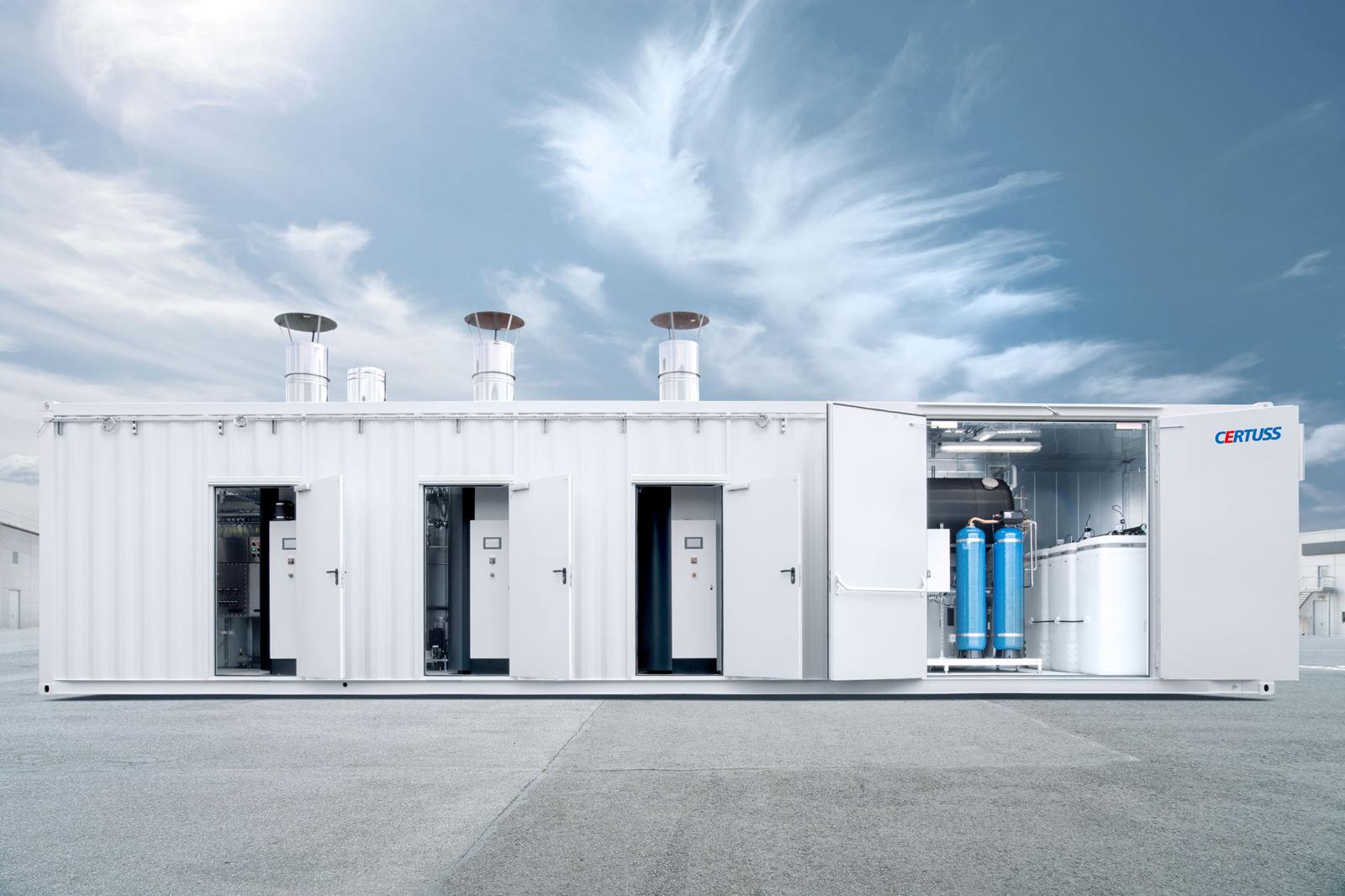
ATEX-Rated Containerised Steam System

Engineered for hazardous environments. Designed for flexibility.

Customers across more than 80 industries rely on tailored steam solutions to meet their individual operational requirements. Where steam generation is required within potentially explosive or hazardous areas, specialist engineering is essential.

Our ATEX-rated containerised steam system has been specifically designed and engineered for use within potentially explosive environments, including refinery applications. The system combines safe, reliable steam generation with a flexible, space-saving design.

Designed for Hazardous Areas

The container has been purpose-built for operation within a potentially explosive environment. The ventilation system has been specially developed and manufactured for the application, while the control system has been custom-designed to meet the requirements of the designated hazardous zones.

By integrating these systems into a single package, the customer receives a complete solution designed around the specific requirements of the installation.

Simple, Automated Operation

A high level of automation makes the system simple and efficient to operate, reducing the need for manual intervention and helping to minimise personnel requirements.

The integrated controls provide greater flexibility and allow the system to respond to changing steam demand, giving customers a highly responsive and straightforward steam-generation solution.

Flexible and Space-Saving

Steam systems are inherently compact, but where space is particularly restricted, a containerised solution provides additional flexibility in terms of location and installation.

Housing the complete steam plant within a purpose-designed container allows the system to be positioned where it is most practical for the customer, making it particularly suitable for existing industrial facilities where space is limited or disruption needs to be minimised.

Rapid Steam Generation

The rapid steam generation technology can be ready to produce steam in approximately 3–5 minutes, allowing the system to respond quickly when steam is required.

The generator supplies only as much steam as is needed at any given time, providing an efficient and responsive approach to variable steam demand.

Modular Design and Reduced Disruption

The modular design provides significant benefits when maintenance is required. Individual systems or modules can be serviced without necessarily interrupting normal operations, helping customers maintain continuity across their wider production processes.

The containerised plant can be delivered as a complete, factory-assembled package, including pipework, electrical wiring, insulation, controls and ventilation. This reduces the amount of work required on site and can help simplify installation and commissioning.

A Complete Steam Solution

By combining ATEX-rated engineering, advanced automation, rapid steam generation and modular construction, the containerised steam system provides a complete solution for challenging industrial environments.

For refineries and other potentially explosive areas, it offers customers greater flexibility over plant location and installation while providing reliable steam generation with minimal operational complexity.

Specialist engineering. Flexible installation. Reliable steam generation.

www.certuss.co.uk


Fertilizing with Precision – How Customized Sensors Ensure Every Granule Hits Its Target

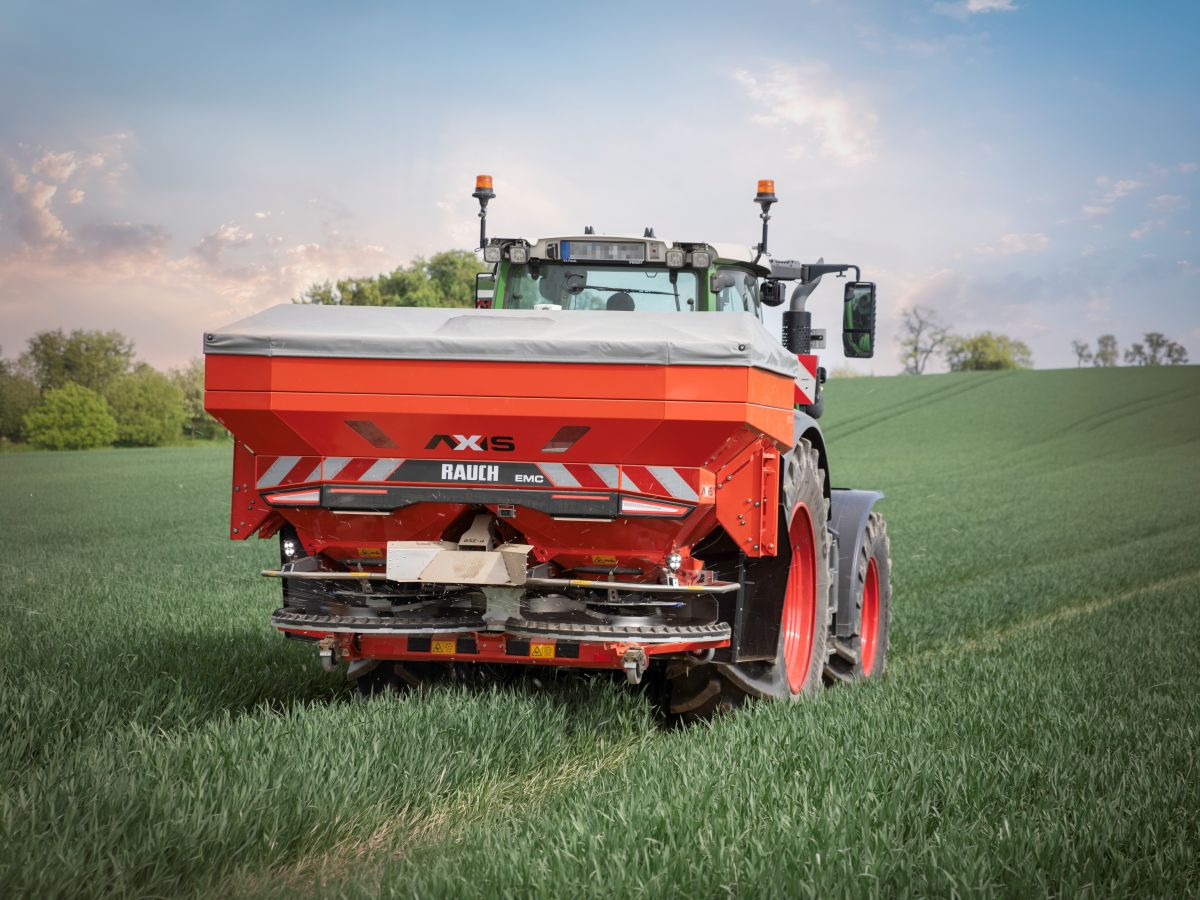
Rauch Landmaschinenfabrik GmbH relies on customized sensors from Metallux AG for its high-precision fertilizer spreaders. They ensure that every application of fertilizer reaches exactly where it is needed – economically, sustainably and with centimeter-level precision.

Rauch Landmaschinenfabrik GmbH is an internationally active family-owned company founded in 1921 and headquartered in Rheinmünster, Germany. The company develops and manufactures high-precision fertilizer spreading and seeding technology for agriculture as well as spreading equipment for winter road maintenance.

Around 400 employees contribute to the company’s success worldwide, including 45 in the development department alone. Its products are distributed in more than 50 countries through an international dealer network.

In the field of fertilizer technology, Rauch uses, among other solutions, disc spreaders in which rotating spreading discs distribute fertilizer granules across the field in precisely calculated trajectories, achieving working widths of up to 54 meters. Precise, targeted distribution depends on the exact coordination of disc speed, drop point and the properties of the fertilizer being used. Depending on particle size, shape and density, each granule has different flight characteristics and is therefore distributed differently across the field.

The objective is clear: to apply the right amount of fertilizer in exactly the right place. For farmers, this is crucial. Fertilizer supplies plants with essential nutrients, helps ensure high yields and contributes to long-term soil fertility. At the same time, it represents a significant cost factor. Under-application can lead to yield losses, while over-application not only causes unnecessary costs but can also impact the environment through excess nutrients entering soil and water. 

Rauch values Metallux for its combination of technical expertise, flexibility and quality. Maximilian Zimmer, Team Leader Product Electronics Development, explains:

“What we value about Metallux is its high level of expertise and reliability. You know what you are getting and can rely on your partner. The geographical proximity was an additional advantage, as it allowed us to discuss matters in person and make decisions quickly. This was particularly important for this project because the technology can only be tested during specific cycles and within limited time windows. Despite the tight schedule, we worked together to develop a very good, customized solution within a short period of time.”

With this solution, fertilizer reaches exactly where it can deliver the greatest benefit. In this way, precision in the field truly bears fruit.

www.metallux.de


British Safety Council’s Annual Conference to address hidden hazards in the workplace

British Safety Council has announced details of its Annual Conference 2026, which this year will examine risks that are often overlooked or underestimated but can have profound consequences for workers' health and wellbeing.

Building on British Safety Council's recently launched Hidden Hazards campaign, the event will focus on practical solutions, policy discussions and real-world examples designed to help organisations identify, manage and prevent long-term occupational health risks.

Called 'Hidden Hazards – From Awareness to Action', the conference will be a free virtual event and take place over two half days on 20 and 21 October. It will bring together health, safety and wellbeing professionals, industry leaders and subject matter experts to explore some of the most significant hidden hazards affecting today's workplaces.

Commenting ahead of the event, Paul Fakley, Marketing and Engagement Director at British Safety Council, who will be chairing the conference, said:

"British Safety Council believes that no one should be injured or made ill through their work. Many of the most serious workplace health risks are not immediately visible, yet they have the potential to cause life-changing harm. Through our Annual Conference this year we aim to bring these hidden hazards into sharper focus and equip organisations with the knowledge, tools and practical solutions needed to protect their people.

"By bringing together leading experts, employers and practitioners at our Annual Conference, we hope to inspire action that creates safer, healthier and more sustainable workplaces for everyone."

The programme includes panel discussions, presentations, case studies and expert sessions on critical workplace issues such as concern around exposure to respirable crystalline silica and the rise of silicosis linked to engineered stone, the realities of indoor and outdoor air quality, the long-term impacts of asbestos exposure, and the increasing importance of addressing workplace stressors, violence and aggression towards employees.

Day one will seek to explore the hidden hazards and raise awareness about them. Day two will focus on policy, leadership and organisational responses required to tackle them effectively. Delegates will hear from experts about the role of technology, leadership and data in driving meaningful change, and learn from organisations that have successfully implemented initiatives to protect worker health and wellbeing.

The conference will feature a keynote address by Prof. Neil Greenberg, President of the Society of Occupational Medicine (SOM), as well as expert contributions from Sarah Sleet, CEO of Asthma and Lung UK, Kevin Bampton, Chief Executive Officer of British Occupational Hygiene Society, Graham Petersen from the Trade Union Clean Air Network (TUCAN), Livi Elsmore, Senior Campaign Manager at the Healthy Air Coalition, Charles Pickles, Founder of Airtight on Asbestos Campaign, John Pares, Chair of the International Institute of Risk and Safety Management (IIRSM), Emily Agyeman, National Federation of Builders and Aurélie Faugier from the Global Cooksafe Coalition, among others.

The event will also include lived experience of living with the consequences of exposure to some hidden hazards, as well as best practise examples of initiatives to tackle and prevent them.

To view the full agenda and register for a free place, visit: https://www.britsafe.org/awards-and-events/conferences/annual-conference-2026

The overlooked ignition risk: why effective housekeeping is critical in hazardous areas

In hazardous area safety, attention naturally focuses on production equipment, fixed machinery and systems processes. But what about the equipment being used to clean and maintain these environments?

Good housekeeping is crucial when managing combustible dust and other hazardous substances. Even with effective extraction at source, dust can escape and settle on machinery, pipework, floors, ledges, lighting and other difficult to reach areas. Solid and liquid spills can also occur during production, material handling and maintenance operations; how that material is removed is vitally important.

Brian Folland, Product Manager for UK manufactured Kerstar industrial vacuum cleaners, elaborates, “As the HSE has highlighted, sweeping or using compressed air can disrupt settled dust and redistribute it into the atmosphere, causing a hazard to health.

“Using an appropriately certified industrial vacuum cleaner in hazardous areas provides a controlled method of dust collection and choosing the right equipment is essential. An ATEX certified vacuum is not automatically suitable for every hazardous environment - equipment must be appropriate for the zone it will operate in and the material being collected.

“For combustible dust this includes Dust Zones 21 & 22, while Gas Zones 1 & 2 apply to atmospheres where potentially explosive gas or vapour are present. The potential ignition sources, frequency of use and characteristics of the dust that needs removing should all be considered when specifying cleaning equipment.

“Static electricity in the atmosphere is another important consideration. Conductive construction, suitable accessories and effective earthing can help provide a controlled path for electrical charges.

“For engineers and operators, the main questions they should be asking when selecting suitable cleaning equipment are simple: What am I collecting? Where am I collecting it? If it’s potentially explosive, what ATEX zone will the equipment be used in?

Kerstar, now part of Filtermist Limited, manufactures and supplies a wide range of industrial vacuum cleaners in the UK. Its product portfolio includes ATEX rated vacuums suitable for use in Dust Zones 21 & 22 available as electric or compressed air powered models.

If you need help selecting the best industrial vacuum cleaner for your specific requirement, take a look at www.kerstar.com or contact the Kerstar team by calling 01952 290500.

JCE and TUFF Announce Strategic Partnership to Expand Hazardous Area Engineering Support Across India and South Asia

JCE has entered a new strategic partnership with TUFF Offshore Energy & Engineering (India) Pvt. Ltd., marking an important step in the company’s international growth. The alliance brings together JCE's hazardous area products, systems and engineering expertise with TUFF's regional presence, expanding access across India and South Asia, a region with significant activity across oil and gas, energy, petrochemical and wider industrial markets.

Bringing JCE Expertise Closer to Customers

Customers across the region will gain greater access to JCE's portfolio of Ex certified components, electrical control systems, distribution boards, junction boxes, motor control systems and solar/wind installations, backed by TUFF's local market knowledge and engineering capabilities. TUFF will undertake defined mechanical system integration activities for JCE products within the region, while certified Ex assembly remains controlled by JCE.

The partnership also allows JCE to support TUFF with technical expertise, engineering projects, customised facilities, product training and regional enquiries.

A Strategic Partnership for India and South Asia

TUFF brings established experience in the energy and engineering sectors, giving JCE a strong platform to grow its presence across India and South Asia.

Together, the companies combine JCE's specialist knowledge of explosion protection and Ex certified electrical systems with TUFF's regional expertise and customer relationships, supporting customers from initial equipment selection through to delivery and integration.

Martin Craig, Managing Director of JCE, said:

“Forming a strategic alliance with TUFF is an exciting milestone for JCE. We see significant opportunities across the region and look forward to working together to develop long-term customer relationships and deliver high quality Ex equipment and engineered solutions.”

Ramesh Paulraj, Managing Director of TUFF Offshore Energy & Engineering (India) Pvt. Ltd., said:

“We are delighted to be entering into this partnership with JCE. It brings together complementary engineering expertise and gives us an excellent opportunity to expand access to JCE's solutions across the region.”

www.jcegroup.com