News

Safe and Sound with Peli™ Safety Lighting

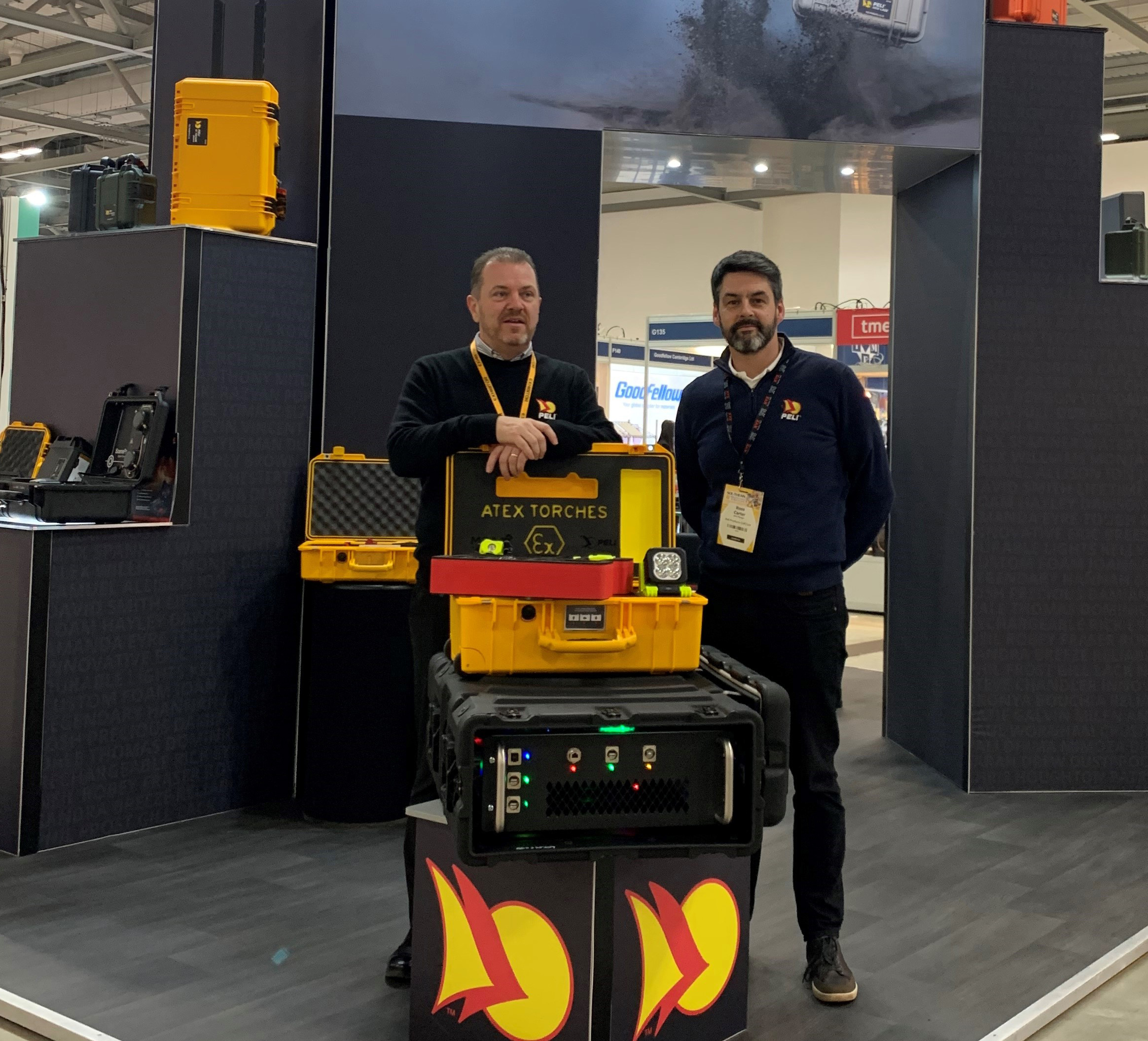
Peli Products (UK) offer the Peli™ brand of ATEX approved lighting products for professionals working in hazardous areas.  Each torch in the Peli safety range is certified to current ATEX requirements for Zone 0 or Zone 1 and they all are ideal for industrial and offshore use.

The range includes small compact torches through to large rechargeable hand lamps and worklights.  

A wide area light is produced from the 9455 Zone 0 model, this rugged LED work light is maintenance-free and rechargeable.  Weighing 7.3kg, it is compact, portable and can be set up in seconds. The unit has a retractable mast; the head can be rotated 360° and it also pivots to angle the light directly where required.  A ten hour runtime ensures light duration for a full shift, there are no trailing cables and the 9455Z0 is silent running,

Safe for use in hazardous areas, ATEX certified installed LED lighting is now available from Wolf Safety

Wolf Safety have introduced a powerful new range of ATEX certified LED installed lighting, designed for permanent use in potentially explosive atmospheres.

The world’s leading manufacturer of portable and temporary ATEX and IECEx certified hazardous area safety lighting, Wolf have been keeping people safe for almost 120 years.

The company’s designers and production engineers have used their expertise to develop a new range of highly effective LED installed lighting, safe to use in hazardous  Zones 1 and 21.

The range includes:

  • Linear luminaires featuring revolutionary Directional Linear Optics (DLO) or standard Forward Facing Array LED configurations (with battery back-up emergency versions also available);
  • Floodlights with a market leading maximum light output of up to 25,932 lumens;
  • Bulkhead lighting, also featuring DLO (with battery back-up emergency versions also available);
  • High bay lighting.

DLO directs light exactly where it’s needed so is ideal for use in specific, close-up workspaces, reducing glare to avoid people being ‘blinded’ by  emitted light, while its superior colour definition facilitates safety critical hazardous area tasks.

www.wolfsafety.com


Advantages of the Lithium-Ion over Nickel-Metal Hydride and Nickel Cadmium Batteries

Nickel Cadmium (Nicad) is the oldest type of rechargeable battery and is known for being durable. If correctly used it technically has a longer life cycle than other battery types. Its primary disadvantage is the charging problem commonly referred to as the “memory effect.” This occurs from partially discharging and recharging the battery, limiting it to the highest charge level of the last cycle. This effect drastically shortens the lifespan of the battery.

Nickel Metal Hydride (NiMH) batteries offer a higher energy density than Nicad, but this comes at the cost of increased weight. NiMH batteries are nearly twice as heavy as Nicad, but they do not suffer from the memory effect. Instead, they sometimes have a condition called “weak-cell syndrome” where some of the cells can no longer hold power and appear to be charged but die almost immediately when used.

Lithium-Ion (Li-ion) are the preferred type of battery in modern devices because of their high energy density. They do not suffer from memory effect or weak-cell syndrome, but come with an extra cost in engineering. Without properly designed safety circuitry they can experience “thermal runaway” causing a fire. This is the worst possible situation for a product designed for use in explosive environments. The protective features of the safety circuitry must protect against all types of short circuit, excess temperature, and electrolyte leakage. The circuit is designed to immediately shut down if any of these faults occur in the system. Because of the knowledge, expense, and time required to engineer explosive environment products, a limited number of companies achieve this. Nightstick, a global manufacturer of portable LED lighting products, has 50+ products rated for use in explosive environments.

Locate a dealer near you at www.nightstick.com


New range of explosion-proof LED signal lights from Artidor

Are you looking for smart, affordable solutions to ensure safe working in areas filled with hazardous gas or dust? There is only one answer to that question: Artidor Explosion Safety in Geldrop, the Netherlands. The specialist in the development and production of explosion-proof products for 35 years. As company director Marc Moolenaar says proudly, “With our extensive knowledge of explosion protection and years of experience in engineering and R&D, we are among the most innovative companies in the market.”

What motivates you?

“Flexibility, quality and unburdening our customers with customized solutions are our top priorities. In this way, we often arrive at more practical or less expensive explosion-proof solutions. These solutions are developed by our specialists in our own workshop, often based on existing products, while retaining the original features as much as possible. Furthermore, we can also arrange ATEX and IECEx certification. Our passion for technology and for beautiful, high-quality products results in durable products that meet expectations. A good example is our new series of explosion-proof signal lights.”

AGL Automation Ltd are delighted to announce our latest partnership with Norwegian company Tampnet

 Tampnet are the largest 4G network provider in the North Sea providing cellular coverage to many of the North Sea’s Energy Assets including Oil & Gas platforms, FPSOs and Offshore Windfarms.

AGL’s partnership will involve supplying Data SIM packages for the Tampnet network in a Connected Worker bundle including Smartphones, Tablets, Head Mounted Tablets and Software solutions. AGL will also provide Data SIM packages for Remote Monitoring Systems, ­­Cameras, IOT sensors and other 4G Cellular enabled devices.

Tampnet Sales Manager John Main, said ‘We realised there was a gap in the market where Offshore Services companies were unable to fully avail of the connected worker solutions as it was sometimes problematic to get a connection to the outside world on Offshore Assets. We wanted to find a partner who could supply the full connected worker solution including Hazardous Area (Atex) devices and software and add a Tampnet Data connection to complete the solution. AGL Automation are a young company (formed in April 2020) but the extensive experience within the business gives us the confidence that they are the right partner for us.

AGL Automation Director, Angus McCarter, said ‘We were providing a connected worker solution with devices and software however connection to the outside world was the last piece of the puzzle that we needed. Previously if you wanted to connect to the internet offshore you needed to connect to the local WiFi (if even available) and Cybersecurity concerns always made this an onerous task. With a Tampnet Data SIM you can simply connect to the internet completely independent of the local network. After finishing the job you can take that Smartphone or Tablet to the next Asset and continue seamlessly.

For more information on Tampnet SIM + device bundles or SIM only packages then get in touch.

This email address is being protected from spambots. You need JavaScript enabled to view it.

www.aglautomation.com

ARE YOUR WORKPLACE SAFETY SIGNS COMPLIANT?

UK safety expert Arco urges businesses to review their safety signage

As businesses continue to reintroduce employees to the workplace, Arco, the UK’s leading safety company, is raising awareness of the importance of reviewing safety signage to keep businesses compliant and employees and members of the public safe.

New workplace layouts designed to adhere to social distancing measures may be obstructing the visibility of signs installed before COVID-19. In addition, temporary closures may have disrupted regular cleaning and maintenance procedures, increasing the likelihood that signs may be dirty, faded or damaged. Safety signs are designed to help identify hazards and provide information on safe routes and access around buildings. However, signage must be adequately cleaned, maintained and updated to work effectively.

Arco is urging employers to consider whether their signage needs replacing and ensure it is in line with current regulations. Signs must meet the BS EN IS07010 standard to ensure all graphical safety symbols are consistent and compliant. Signs with universal images and symbols are essential in overcoming language or literacy barriers.

Delivering excellence in benzene monitoring instrumentation for the chemical, pharmaceutical and petrochemical industries

Monitoring benzene exposure levels is critical for the health and wellbeing of staff and the public who may encounter this group one carcinogen. While benzene has many useful and practical applications in industries, the risk to health is undeniable and requires exact and precise monitoring to mitigate damage. Having accurate and dedicated monitoring instrumentation specifically for managing the risk of benzene is essential for any business that works with this chemical.

 As benzene is both widespread in industrial applications and poses a significant risk to health, there is pressure from public health and industrial safety perspectives on making sure it is managed and monitored properly. The most effective way of minimising exposure to benzene is through appropriate safety and monitoring practices. Using PID (photoionisation detection) instruments from ION Science is an excellent way of protecting against potential hazards.

ION Science has a dedicated range of instruments specifically designed for monitoring benzene. As a compound that poses a range of long- and short-term health risks associated with exposure, having instruments that can monitor wherever staff are working and in areas where there is potential for public or environmental exposure is key.

Croatia chooses Intersec GeoSafe for its new national public warning system

Croatia has selected Intersec’s GeoSafe technology as the basis for its new national public warning system (PWS). The decision sees Croatia adopting a best practice response to the European mandate that all EU member states must implement a modern digital public warning system by June 20221.

Ingolf Ruh, Chief Revenue Officer, for Intersec says:

“The Croatian government wanted the best technology possible in order to serve its population in a crisis. Simply complying with the European regulations regarding public warning systems was not enough: they wanted to innovate and prepare for the future. As part of an end-to-end solution that enables government and network operators to work seamlessly together from the outset, GeoSafe will deliver a public warning system for Croatia that will keep citizens informed and protected for many years to come.”

Three steps to heat transfer fluid regulatory compliance

According to statistics from The Home Office, Fire and Rescue services in the UK attended 14,308 fires in non-dwelling buildings in 2020. The effects of fires in the workplace can be devastating, causing injury as well as significant damage to property and the surrounding environment. However, most fires are preventable when employers implement the correct preventative measures. Here Clive Jones, managing director of thermal fluid specialist Global Heat Transfer, outlines the three key steps to managing thermal fluids in accordance with regulations.

 Any facility that uses heat transfer systems containing thermal fluid must proactively maintain them to mitigate for potential risks associated with explosive atmospheres in the workplace. These atmospheres can be caused by dangerous substances like flammable gases, mists or vapours, or by combustible dust — if any of these mix with air under atmospheric conditions, they can ignite and cause significant damage.

GSMX-P fire gas detector


Fires usually develop over a long period of time. Nevertheless, many systems detect too late. Temperature rises in the exhaust air can only be detected very late by means of temperature sensors and conventional smoke detectors are too sluggish and dust-prone for use under industrial conditions due to their functioning.

In contrast to other systems, the GSMX-P follows the approach of detecting the fire gases in the formation phase and thus does not have to wait for strong smoke concentrations or late temperature increases. If the gas concentrations deviate even slightly from the target state, the GSMX-P already gives a first alarm.

The GSMX-P fire gas detector monitors the entire cross-section of the clean gas / ventilation line. For this purpose, it is attached to the line in a separate housing. Two pipes protruding into the clean gas / ventilation line generate continuous air extraction over the entire cross-section using the Venturi principle. The design not only enables representative and reproducible monitoring, but also dispenses with further electrical aids such as pumps or fans.