News

Safe and sustainable – the next generation of flameless explosion venting

As the inventor of flameless explosion venting, REMBE is once again challenging the status quo with the new Q-Box R3leaf, the world's first sustainable device for flameless explosion venting.

After years of systematic development, testing and successful approval tests, REMBE is convinced that it has contributed to more than just an improvement in flameless explosion venting technology. Instead, the aim is to set a good example and send a clear signal that everyone can reduce the carbon footprint in our industry. 

rembe_monday_fig_1.jpeg

Fig. 1: The Q-Box R3leaf as the first sustainable flameless explosion venting device

During development of the Q-Box R3leaf the focus was on sustainability and the central question: Where can the status quo be further challenged?  

The development of the Q-Box R3leaf expands REMBE's line of flameless explosion venting devices with a product optimised in terms of both effectiveness and sustainability.  

Thanks to the selection of materials, the geometry of components and appropriate joining processes, it was possible to significantly increase the packaging density, avoid the need for emission-intensive joining and coating processes, and at the same time significantly improve the effectiveness of internal and international logistics processes. These optimisations affect the entire supply chain of the Q-Box R3leaf and thus ensure reduced CO2 emissions.

Thanks to continuous development, it was possible to significantly increase the venting efficiency of the Q-Box R3leaf, allowing plant operators to reduce the number of flameless explosion venting devices required on their plant.

How does an explosion occur?

The topic of “explosion protection” is omnipresent for plant operators and machine manufacturers when it comes to handling or transporting flammable and explosive dusts. Contrary to the widespread assumption, the risk of explosion extends beyond gases, as flammable dusts can release enormous forces.

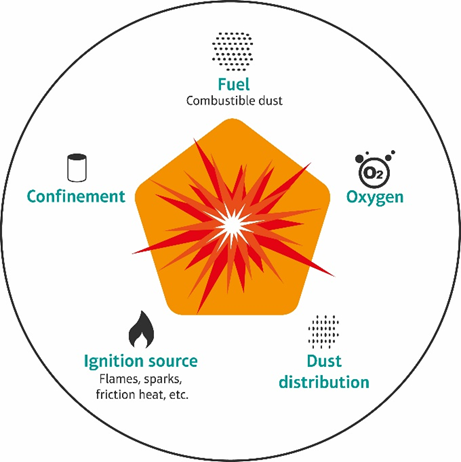
The following conditions, also known as fire triangle or dust explosion pentagon, must exist for an explosion to occur within a production facility or machine:
rembe_fig_2.jpeg

Fig. 2: Dust explosion pentagon

If any of the aforementioned conditions are eliminated, explosion protection has essentially been practised. However, if this is not possible at all times and in all operating states, explosion hazards persist. This necessitates categorizing explosion-prone areas into zones and systematically installing protective measures accordingly.

What is flameless explosion venting? 

Flameless explosion venting devices are primarily used to protect vessels or plants against the main effects of explosions, flames and pressure, which would be released unhindered into the environment if conventional explosion venting was used. To put it simply, they consist of two elements: the explosion venting device, such as an explosion vent and a downstream flame extinguishing element. This decreases the explosive pressure to a level that is harmless for the protected plant, and at the same time reduces the temperature of the combustion gases to a harmless level.

Flameless explosion venting devices are used wherever safe pressure relief in the event of an explosion is not permitted due to the potential proximity to people, other plants or objects.

www.rembe.com


Pressure washing goes purple with a WJA code of practice

The Water Jetting Association has launched a new code of practice for the safe use of pressure washing equipment.

The code – known as the Purple Code due to its purple cover – has been approved by the HSE and the first of its kind to provide guidance on the use of lower pressure water jetting techniques.

Its full title is the WJA code of practice for the safe use of pressure washers with pressures up to 207 bar and flow up to 22 litres (5 imperial gallons) per minute.

The Purple Code now sits alongside the WJA’s two other long-established codes. The Blue Code is for the safe use of high pressure and ultra-high pressure water jetting equipment.

The Red Code is for the safe use of water jetting equipment in drains and sewers and surface preparation with a jetting gun at pressures up to 275 bar (4,000 psi) that an operative can comfortably control.

WJA President John Jones said: “Given the wide use of pressure washing equipment, both commercially and domestically, the Purple Code is, arguably, one of the most important documents the WJA has produced in recent years.

“We’ve worked hard to make sure it is accurate, up-to-date and, above all, easy to follow and practical, so operatives get clear guidance on how to use pressure washing equipment safely and productively.

“Pressure washing is an increasingly important application in many industrial and commercial settings, and in countless gardens and drives up and down the UK. Therefore, it’s vital that there is authoritative, expert-led guidance to control the risks associated with it.”

Water at pressures as seven bar (100 psi) can puncture skin or damage eyes. At pressures up to 207 bar (3,000 psi), common in pressure washing systems, the damage caused by water jets to the body can be catastrophic. Also, harsh chemicals can be added, and water can be heated to boiling point.

The WJA’s Purple Code is thought to be the first pressure washing code of practice published anywhere in the world. It was finalised with the assistance of the Health and Safety Executive (HSE).

WJA Technical Manager Gordon Taylor explained: “The HSE has reviewed the WJA Purple Code and we’ve incorporated its recommendations to ensure it is fully aligned with latest health and safety laws and regulations.

“We hope it means the HSE will view the document as the UK’s foremost authoritative guide to safe pressure washing, in the same way it sees our Blue and Red Codes as setting the industry standards for their water jetting applications.

“Powerful pressure washing equipment is widely available but the risks associated with it are often not well understood by operatives.

“We’re very keen to work proactively with contractors and service users to make the WJA Purple Code widely available to address this issue and ensure pressure washing is carried out as safely as possible.”

The WJA Purple Code follows the same format as the two other codes. Its 100 pages has 19 sections covering topics that include:

  • Personal protective equipment;
  • Water jetting team organisation and duties;
  • Frost precautions;
  • Water jetting units;
  • Hose assemblies, including inspection and testing;
  • Safe use of pressure washing equipment, including training.

In a series of appendices, the code shows the WJA injury treatment algorithm, which gives clear instruction on treating water jetting injuries from first response to post-hospital rehabilitation.

The WJA Purple Code will be used as an important aid in the delivery of the WJA’s City & Guilds-accredited Pressure Washing course.

The one-day course, delivered by WJA-approved coach/examiners provides class-based learning and practical skills assessment. Candidates are then examined on their knowledge using the CLiKAPAD digital response tool, with a 75% pass mark required.

www.waterjetting.org.uk

Cleaning up in ATEX Zones

In Great Britain, the Dangerous Substances and Explosive Atmospheres Regulations 2002 (DSEAR) require employers to eliminate or control the risks from explosive atmospheres in the workplace. This includes adhering to two European Directives including Directive 2014/34/EU, also known as the ATEX Equipment Directive, which concerns equipment and protective systems intended for use in potentially explosive atmospheres. 

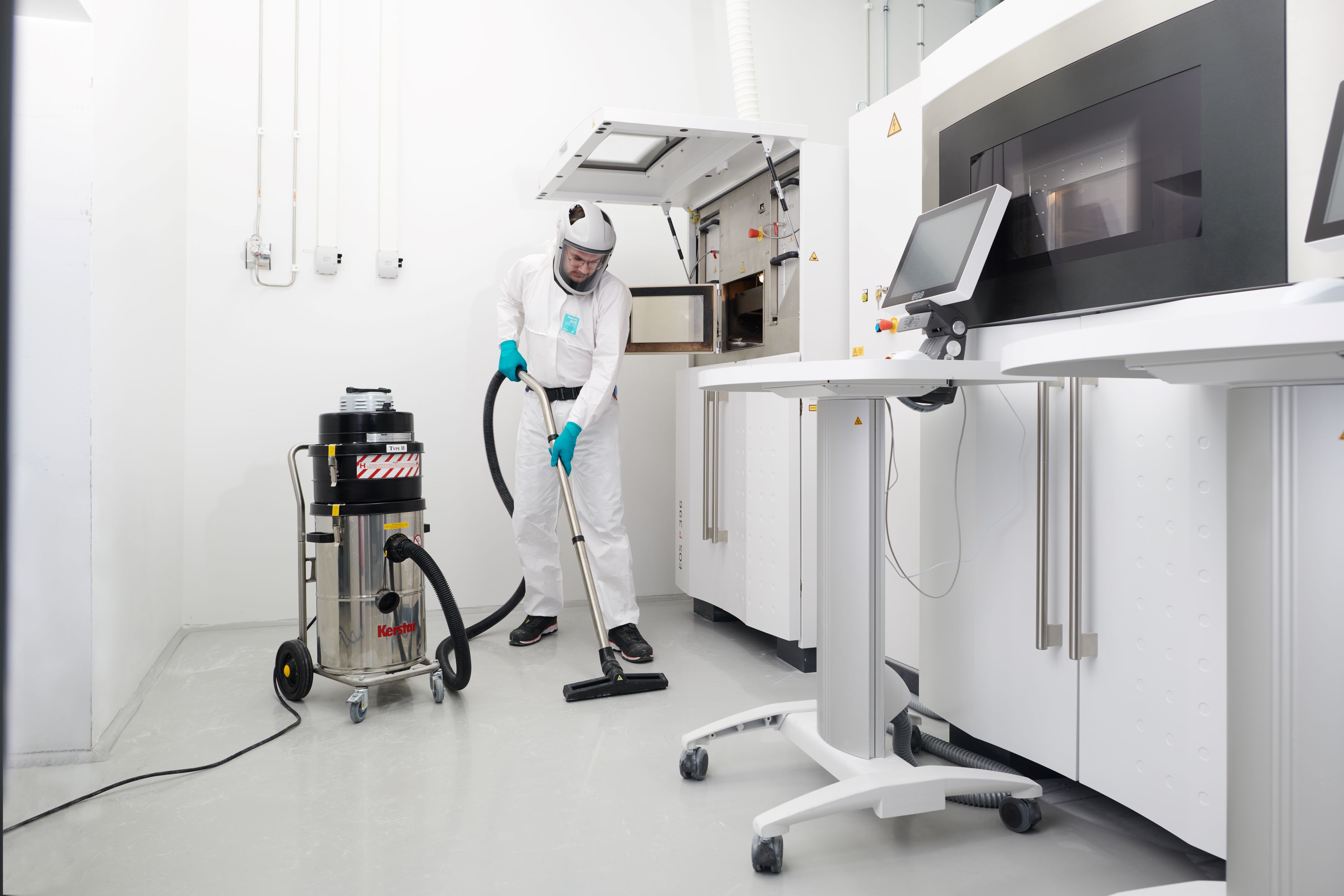
Production facilities that use combustible powders as part of their production process, or those which create a very fine waste which is classed as combustible dust, should all use ATEX rated equipment.

Kerstar’s UK manufactured ATEX certified industrial vacuum cleaners are suitable for use in Gas Zones 1 & 2 and Dust Zones 21 & 22 – as specified on the rating plate on every unit. All of Kerstar’s compressed air (KAV range) and electric (KEVA range) ATEX vacuums provide three-stage filtration which includes a specially designed microfibre bag with a cap which, when closed, cannot be re-opened, and a HEPA H14 filter – offering 99.995% efficiency for dusts and powders as fine as 0.3 micron.

All KAV and KEVA models offer stainless steel canisters mounted on a stainless steel caddy fitted with conductive braked castors and wheels - this ensures each vacuum is antistatic and conductive from top to bottom. Every machine is supplied with a fully conductive hose and accessory kit, and a full earth path continuity certificate.

Kerstar Business Development Manager, Brian Folland, comments, “It’s really important that employers ensure they are providing equipment which is fit for purpose – particularly in potentially explosive atmospheres. This is just as important for cleaning equipment as it is for production machinery. Everything used in an ATEX rated Zone must be certified to meet the ATEX Directives.”

Find out more about Kerstar’s ATEX certified and Type H (suitable for use with hazardous dusts) vacuum cleaners by visiting www.kerstar.com.

What is the real benefit of Zone 0 certification?

In many hazardous locations there is a need to use condition monitoring equipment, e.g. for measuring the vibration levels and temperatures of rotating machinery to diagnose faults such as misalignment, unbalance or impending bearing failure. The equipment needed to do the monitoring must therefore be “intrinsically safe” and incapable of igniting an explosive atmosphere.

The Dangerous Substances and Explosive Atmospheres Regulations (DSEAR) require employers to control the risks to safety from fire and explosions. Consequently, this entails compliance with BS EN 1127 (Explosive atmospheres - explosion prevention and protection), which requires that any electrical equipment used is intrinsically safe and complies with IEC 60079.

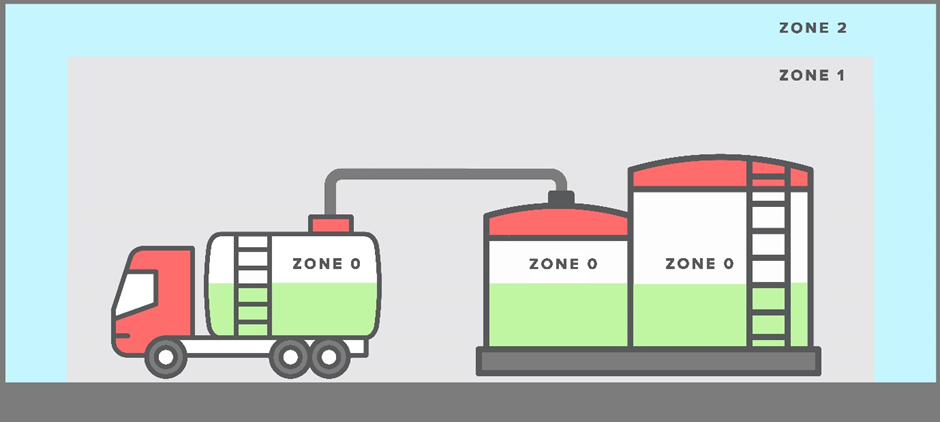
The likelihood of an explosive atmosphere existing is dealt with in these standards by the definition of various “zones”. These range from Zone 0, where an explosive atmosphere is likely to be present most of the time, to Zone 2, where it is not likely to occur in normal operation but, if it does occur, will persist for a short period only. With Zone 1 the “grey area” in between these two extremes.

tpi_monday.jpeg

Importantly, it is the responsibility of the plant operator to decide which parts of their plant are in which zones. But this can pose something of a problem. For example, these days there are many Zone 2 certified devices available, such as mobile phones or tablet PCs in special casings. These are fine when used in an area that is clearly Zone 2. But what if someone left a door or a hatch open to a Zone 0 area? Does our Zone 2 now become Zone 1, or worse still Zone 0? Does our previously certified safe, Zone 2 device now constitute a potential hazard?

This is where the real benefit of Zone 0 certification comes in. Basically, you don’t have to think because Zone 0 devices can literally be used anywhere!

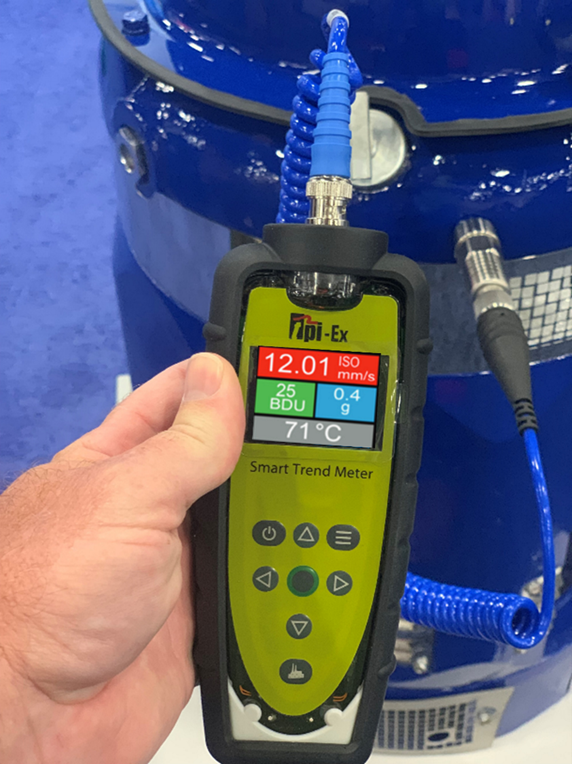
There is a price to pay however, as Zone 0 devices are typically more expensive due to increased manufacturing costs (e.g. additional safety components and higher levels of redundancy). However, Test Products International (TPI) believes it has achieved a significant Zone 0 cost breakthrough with the very affordable TPI 9085Ex vibration analyser.

Costing from as little as £4,250 the TPI 9085Ex combines on-meter diagnostics with the all-important ability to TREND readings over time to simplify condition-based maintenance (CBM). Certified for Zone 0 with IECEx, ATEX and North American approval, the TPI 9085Ex can be used in ANY hazardous location anywhere in the world.

The TPI 9085Ex offers on-meter analysis for the detection of machine faults such as unbalance, misalignment, looseness and bearing wear. With full colour OLED display and Bluetooth communications, the TPI 9085Ex features colour coded alarms and zoomable on-screen vibration frequency plots with cursor readout. It can store lists (routes) of up to 1000 machines, each with up to 10 measurement points, with full waveform and frequency spectrum (FFT) capture and transfer to PC-based software.

Additionally, the TPI 9085Ex with its uniquely designed sensor, SIMULTANEOUSLY captures both VIBRATION and TEMPERATURE readings. So, if the indicated level of bearing wear is high and it’s hot then you can be sure that what you have is a worn bearing and not for example pump cavitation.

The included C-Trend PC-based trending and reporting software features all the high-end benefits, such as automatic email notification of alarms and report generation, to implement a full CBM strategy.  Routes and readings can also be transferred to/from the TPI 9085Ex via Bluetooth using a smart phone or tablet running the free TPI Cloud Bridge App. This allows service personnel to be sent routes and return readings over the Internet, no matter where they are in the world. 

For more information please contact TPI Europe’s head office on +44 1293 530196 or take a look on the website at www.tpieurope.com or email This email address is being protected from spambots. You need JavaScript enabled to view it.

tpi_monday_2.jpeg

Simplifying Purge & Pressurization

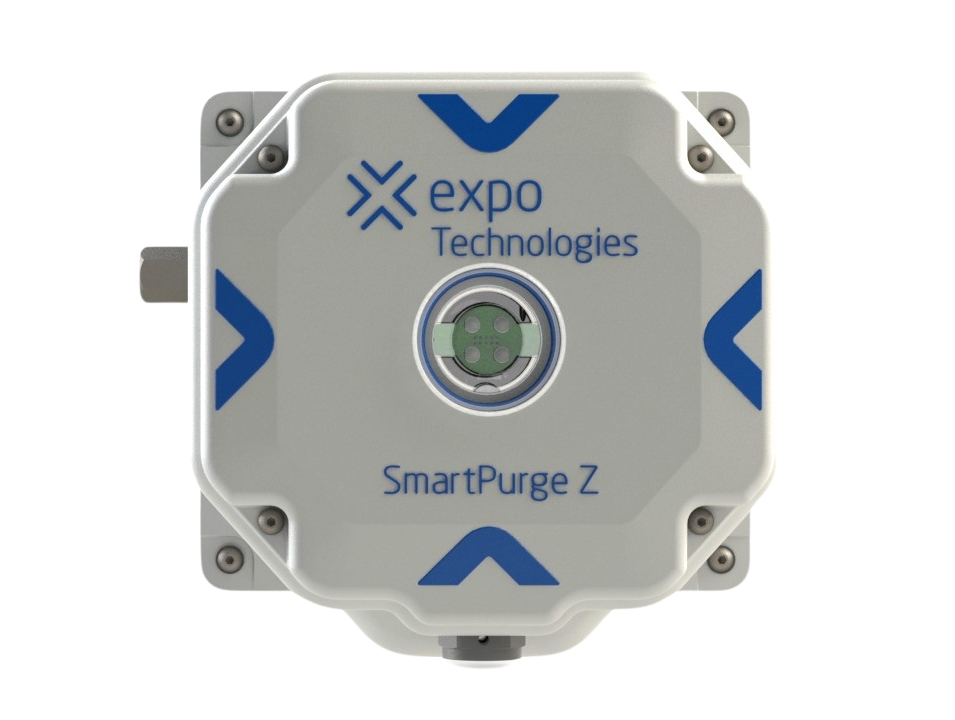
Expo Technologies is excited to announce the latest addition to our range of purge & pressurization systems – the SmartPurge Z.

While Purge & Pressurization is one of the simplest approved protection methods for electrical enclosures in hazardous areas, many purge systems are complicated to specify, and even more complex to install and commission.

The SmartPurge Z has been designed to be one of the simplest systems while offering all the capabilities electrical panel builders and OEMs are looking for.

One unit

Many purge systems comprise multiple elements, typically the control system, vent valve, and inlet valve. The SmartPurge Z has combined all of these elements into one unit, avoiding potential errors in specifying, and allowing for simple, fast installation.

One input

With the SmartPurge Z there is no complex set-up process, with flow curves and multiple parameter inputs. There is only one thing to set – the purge time – and that only takes a few seconds.

One size

The purge flow rate of the SmartPurge Z has been optimised to suit the most frequently used enclosure sizes. For ATEX/IECEx certified applications, requiring 5 air changes, the system can purge enclosures up to 2.1m3 in volume in 30 minutes or less. Purge times up to 99 minutes can be selected, allowing it to purge even larger enclosures.

No further adjustment

After the purge is complete, a key capability of the SmartPurge Z is to automatically adjust the leakage compensation flow rate to maintain a constant enclosure pressure. This eliminates time-consuming manual set-up, as well as reducing the consumption of purge gas.

Contact Expo Technologies

Expo Technologies has redefined Purge and Pressurization through the development of the SmartPurge Z. Visit our website to find out more.

www.expoworldwide.com


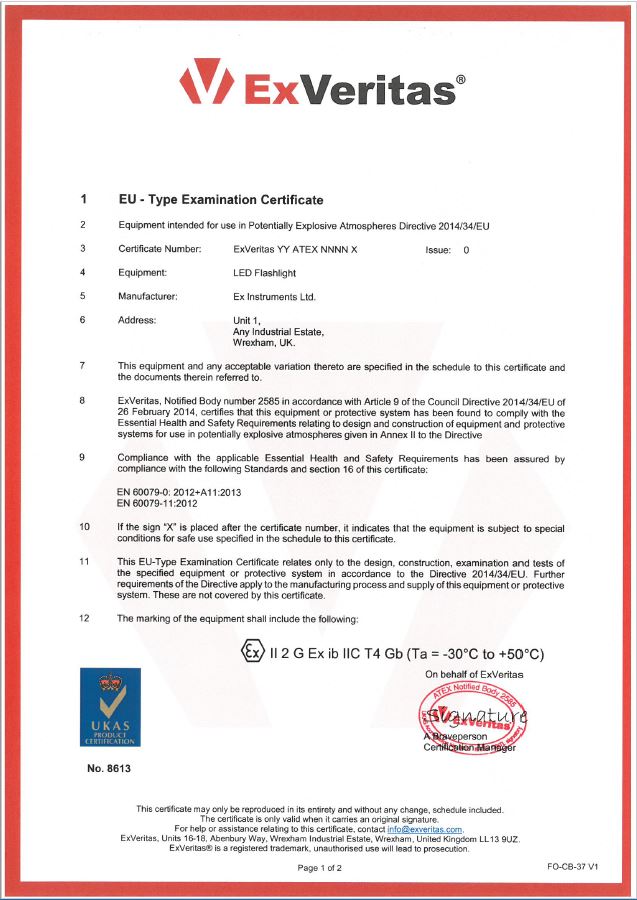
The ‘competence’ requirements for ‘Ex Manufacturers’ who self-certify…who checks?

There are many schemes that check the competence of ‘Ex’ equipment installers and inspectors (such as CompEx) but those schemes ‘assume’ that the equipment certificates are correct. In the UK and EU however, a lot of equipment can be ‘self-certified’ by the manufacturer. This includes all Zone 2 equipment, Zone 1 non-electrical equipment and even equipment for Zone 0 if the manufacturer declares that the device is a simple apparatus. In addition to this, there is equipment which is put on the market as an ‘assembly’ using certified equipment but often introducing new (often non-electrical) ignition sources.

So how does the end user know these ‘self-certified’ items of equipment are safe?

As an end user, you are taking the final responsibility for the equipment you use, it is vital that you have sufficient diligence in accepting certification that has no accreditation or independence. ‘Ex’ matters, if something goes wrong the result can be catastrophic, so you should accept nothing at ‘face value’.

Specify 3rd party certication (and check it is legitimate)

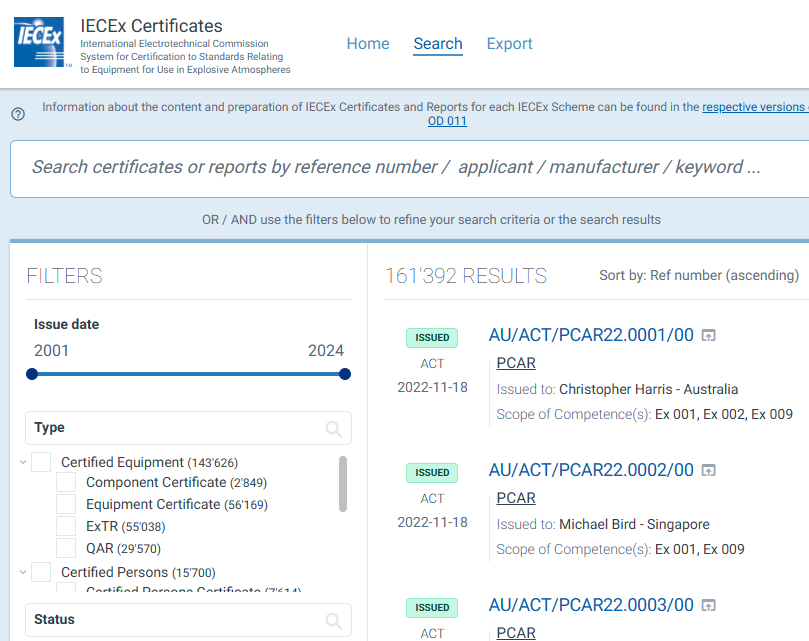
Although the manufacturer does not legally always need to obtain 3rd party certication, the buyer can make it a condition of purchase. This is the safest and simplest as method as the buyer can be assured of the independence and competence of the Certification Body (assuming the body is accredited for ‘Ex’, schemes like ‘IECEx’ who have global recognition and Certification Bodies status can be checked on line.)

Caveat Emptor (Let the Buyer Beware)

Remember, anyone can produce a certificate and many manufacturers and non-accredited bodies and counterfeiters issue certificates that look very much like officially Notified Body or IECEx Body Certification. Only accept certification from reputable bodies who’s certification can be verified (that can be done by the end user online with IECEx).

Be an ‘intelligent’ customer.

No certification should be taken at face value, so you should always have the competence to check the certificate you are being presented with ‘before’ purchase, for example:

  • Are the certificates to the correct Standards and are all necessary standards included. For example, a fan may be certified to generic standards when it should be certified to the standard specifically for Ex fans.
  • Are the certificates to the ‘current’ level and at least to the 60079 series standards (as required by the installation standard, 60079-14).
  • Is the manufacturer an ‘Ex’ specialist and have you audited or reviewed them as a body with the ‘competence’ to self-certify (for example, do they have a test facility, do their staff have the relevant competence and independence).

There are suitable training courses to help become be an ‘intelligent customer’ or a ‘competent manufacturer’ for explosion safety. These courses can help with the design and certification (self certication or 3rd party certication) and will ultimately save time and money as well as make ‘safer’ product and installations. For example, courses run by ExVeritas include:

  • 'Ex' Electrical Equipment Design and Certification: How to select a design with appropriate protection concepts, prepare certication drawings, test samples and quality systems (QAN/QAR/FUS).
  • Advanced Intrinsic Safety Circuit Design: A five-day workshop-based training covering the most advanced intrinsic safety design techniques.
  • Ex Assemblies and Non-Electrical Equipment: How to design ‘Ex’ assemblies and non-electrical equipment for ATEX, UKCA and IECEx Certification (from simple pump skids to diesel engine generators)

exveritas.jpeg


ExVeritas are a UK Government Appointed Body for UKCA ‘Ex’, an ATEX Notified Body and an IECEx Certification Body and Test Laboratory, we are also a MET Partner Laboratory for North American Certification. Our training is delivered by Senior Certification Body Engineers who are industry experts, you will learn from our vast experience in this field. www.exveritas.com

Links for courses that address the competence issues discussed in this article:

Ex Certification Process for ATEX and IECEx is explained here (exveritas.com)

Advanced Intrinsic Safety Circuit Design from an ATEX/UKCA and IECEx Body (exveritas.com)

ATEX and IECEx Ex h Non-Electrical Equipment and Assemblies training for Designers (exveritas.com)

Compressor from FPS delivers 46% less energy consumption at Armac Martin

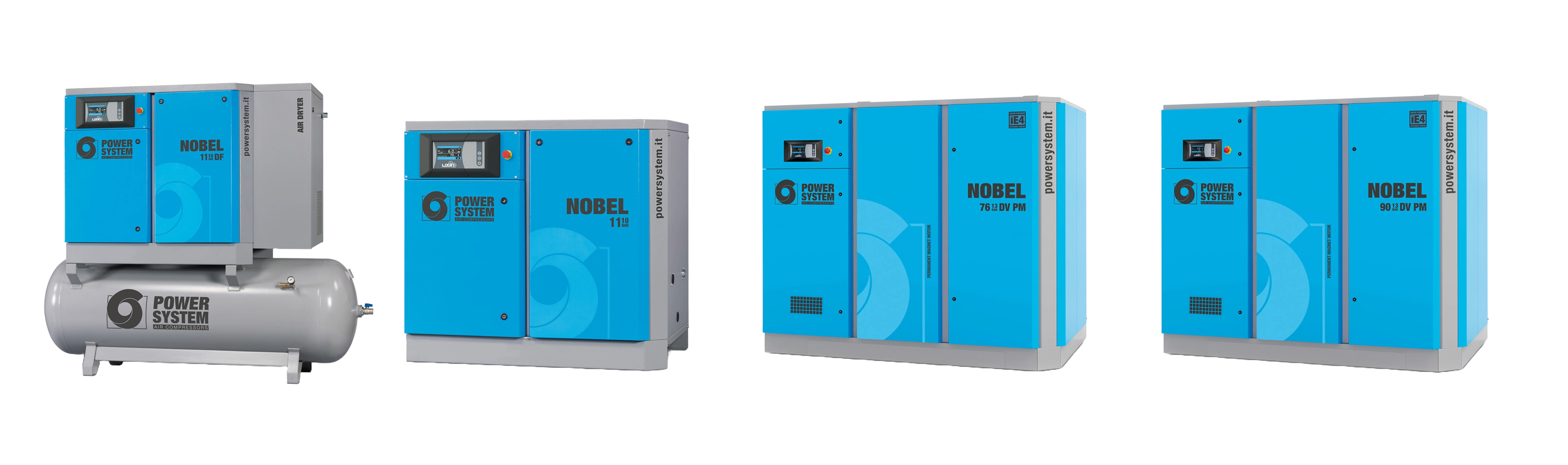
Birmingham-based Armac Martin, a pioneer in design-led luxury brass hardware and accessories, relies heavily on compressed air for its CNC machining requirements. However, the company’s existing system was constantly operating at full capacity, leading to unnecessary energy expenditure. By collaborating with FPS Compressors and its preferred local distributor Compressed Air Systems UK - Birmingham, Armac Martin adopted a new system capable of variable compressed air supply. The project led to an impressive 46% reduction in energy consumption compared with the company’s previous compressor.

Founded in 1929 as a local brass foundry, Armac Martin is today a fourth-generation family business with a global reputation for exceptional design and craftsmanship. Compressed air is critical to the successful operation of the company’s modern CNC machining centres. At the same time, like all manufacturers, Armac Martin is driving to make its operations more sustainable. The company has a strategy to achieve net zero by 2041, making the significant energy drain of its compressed air system a cause of major concern.

Collaborating with FPS Compressors and Compressed Air Systems UK - Birmingham, Armac Martin opted for a new system capable of variable compressed air supply, identified through data logging and energy audit exercises. Monitoring of the system took place using state-of-the-art instruments over several weeks. FPS Compressors and Compressed Air Systems UK - Birmingham explained both the data and the recommend solution to Armac Martin’s management team. Notably, the transition to the new compressed air system, which features a NOBEL 18.508 DVF PM variable-speed screw air compressor from FPS at its core, was seamless and without downtime. Comprehensive training ensured proficiency in operation.


With the NOBEL 18.508 DV FPM, compressed air aligns to system requirements by regulating the speed of the electric IE4 permanent magnet motor, which can range from 15-100% of the maximum speed. Notably, the direct-drive system means zero energy losses, whereas standard drive belts may incur losses of 4-11% as the energy transfers from the motor to the compressor. Excellent and precise pressure control extends from 6 to 13 bar, while accurate and optimised cooling of the compressor arrives courtesy of efficient, powerful and quiet radial fans.

By partnering with industry experts and embracing innovative technologies, Armac Martin is seeing a remarkable 46% reduction in compressor energy consumption, translating to an impressive £23,637 in annual savings. The return-on-investment [ROI] for this sustainable initiative was achieved in just 14 months.

“The use of compressed air represents a large chunk of electricity costs at machine shops such as Armac Martin, just like it does at any manufacturing plant, food production facility or packaging plant,” says Nick Poole, Managing Director at FPS Air Compressors. “To make gains, users of compressed air must get smart about specifying the optimal technology, notably the compressor. Armac Martin is a great example of what this strategy can deliver. While the company’s previous compressed air system ran constantly at full capacity, the new solution reduces power requirements by only meeting actual demand. The result? Significant improvements in energy efficiency without any compromise in manufacturing performance.”

For additional information on this case study please visit:
www.fps-compressors.co.uk/fps-case-study-armac-martin.html

Further information is available from:

FPS Air Compressors Ltd, Unit 5, Tower Estate, Warpsgrove Lane, Chalgrove Oxfordshire OX44 7XZ

Telephone: 01865 892 620                                          e-mail: This email address is being protected from spambots. You need JavaScript enabled to view it.

www.fps-compressors.co.uk

RealWear Smart Glasses Deployment Enables HARDI to Reduce Downtime for Farmers

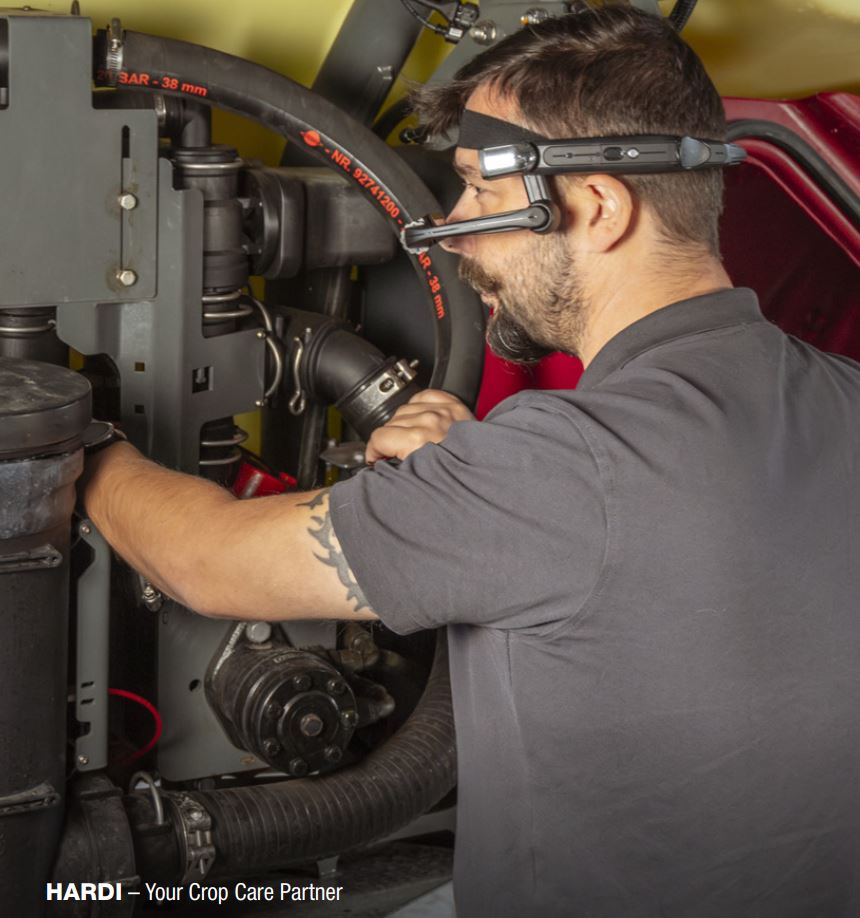
RealWear, the pioneer of smart glasses for frontline workers, has announced that HARDI International A/S, an international leader of agricultural crop protection equipment has deployed RealWear Navigator® 520 smart glasses and the Innomize after sales concept in order to offer its customers real-time remote technical support for its highly advanced machinery. 

HARDI exports its offerings to farmers in over 100 countries. With a workforce of approximately 600 employees across the globe, its subsidiaries and production units span most continents. The company manufactures highly-advanced agricultural machinery and, given the harsh environments in which they operate, maintenance outside of scheduled servicing is required occasionally. While HARDI relies on its global sales network to successfully address technical issues for farmers in the field, there are instances where unforeseen challenges arise that require the expertise of a technical service professional from HARDI. Previously, they would have to physically travel to the location and resolve the issue.

That process incurred substantial costs and time and posed a significant hurdle if the customer was based far away from the service centre. Prior to the RealWear deployment, to resolve certain technical issues this would involve physically dispatching HARDI service technicians to address reported issues. The journey typically began with the farmer contacting their local dealership, where the machine was purchased. The dealership would then attempt to provide remote support or send a service technician to the farmer. If the on-site technician couldn't resolve the issue, HARDI would need to be involved. This could lead to technicians being dispatched from Denmark, where HARDI is headquartered, to locations as distant as Japan or South Africa. Taking into account the geographical distances, the entire process from reporting the issue to reaching a resolution could result in significant downtime for the farmer. Uptime is critical in the weather-dependent agriculture industry, where a successful yield is closely tied to favourable weather conditions. Farmers depend on specific windows of opportunity for tasks such as spraying, so any machinery problems must be resolved promptly, limiting downtime as much as possible.

As a result, HARDI looked at various smart glasses to create a new workflow process, one in which it could resolve issues remotely where possible. Working with RealWear Gold Partner, Innomize, HARDI selected the RealWear Navigator 520 based on its ergonomic, rugged design and features like noise reduction which provides the ability to operate seamlessly amid the background clamour of heavy machinery. 

Now, when assistance is required, on-site technicians wearing a RealWear Navigator 520 can connect remotely with a HARDI expert to view what the technician is seeing in real-time through video streaming. This enables experts to guide the on-site technician visually to solve the problem which is identified faster, extra intervention costs and time are avoided, and downtime is reduced. This new way of working has minimised travel expenses and the environmental impact associated with it, while optimising the efficiency of HARDI’s service technicians, especially during peak seasons. 

The cost-saving impact of adopting RealWear smart glasses has been noteworthy. Traditionally, dispatching a technician for on-site assistance incurred a hefty expense of approximately 5,000 euros per trip, dependent on location. However, with the implementation of RealWear smart glasses, issues can be resolved within approximately one and a half hours per case on average. 

“We have deployed several RealWear devices to date in our initial phase of our global rollout”, commented Mads Ulrik Petersen, Aftermarket Manager at HARDI. “While we have used smart glasses internally in our technical service operations since 2021, we are now transitioning into a more commercial phase. HARDI now offers this solution to farmers and dealers allowing them to purchase the technology and receive faster technical support.”

The RealWear Navigator 520s being used by HARDI feature Remote Eye from Wideum, a remote video assistance software used in smart glasses. It enables both the technician and the expert to communicate hands-free. The software also incorporates an AI translator for efficient multilingual communication. Users can speak in their native language, and the system translates the conversation into another language in real-time. This unique feature has proven to be a game-changer, especially for HARDI’s global operations, facilitating effective communication and removing language barriers. 

“HARDI’s deployment of RealWear smart glasses sets a benchmark for the agricultural industry and showcases the technology’s potential impact on businesses operating in diverse and international settings. Overcoming language barriers is a pivotal aspect, especially when dealing with customers across multiple territories. It's a challenge that, when tackled effectively, can significantly enhance global operations,” added Helle Rosenberg, Business Development Specialist at Innomize.

Looking to the future, Petersen added: “Investing in our large and intricate machines is a significant commitment for farmers, given the substantial financial outlay. These machines are packed to the brim with electronics, and any disruption to these components can render the entire machine inoperable. As part of our strategy, we are planning to integrate RealWear smart glasses into every sale of certain models in our assortment.”

AIRBENCH WB WET BENCH IS NOW AVAILABLE WITH H13 HEPA FINAL FILTRATION

AirBench WB is designed specifically for flammable dusts which produce sparks when worked – for example titanium. WB uses a unique double-pass system of baffles to quench sparks in the integral water bath; filtering dust by passing through multiple water sprays.

Airflow is generated using a high-efficiency centrifugal fan, selected specifically for the high pressure needed to induce a water spray.

The new WB models include final H13 HEPA filtration, enabling use for welding in addition to grinding and similar processes. This allows users to centralise mixed-metal processing at a single workstation.

The UK’s most advanced solution to titanium dust extraction, now available from AirBench Ltd.

Visit www.airbench.com/wb for more information, or contact AirBench Ltd to discuss your extraction issues.


THE TRADE SHOW FOR PROCESS & CHEMICAL ENGINEERS! CHEMUK 2024 EXPO ANNOUNCES THE PROCESS & CHEMICAL ENGINEERING SHOW ZONE

chem_uk_march.jpeg

The CHEMUK 2024 EXPO will return on 15th & 16th May at the NEC in Birmingham. Running as part of the trade show, event organiser, UK Industry Events, has announced the launch of the new Process & Chemical Engineering Show Zone.

The Process & Chemical Engineering Show Zone will be the UK’s only event that brings process engineers from the Chemical, Food & Beverage, Pharma, Oil & Gas, and Water & Wastewater industries together to experience the very latest innovation that is shaping and inspiring the process industries under one giant roof.

The new focused event zone will present hundreds of specialist process engineering suppliers to attending process professionals that are involved directly in the design, development, management, and maintenance of operations in the processing of liquid, solid, powder, and gas-based process engineering industries.

Managing Director of UK Industry Events, Ian Stone, explained the decision to introduce the focused show zone, ‘The Process & Chemical Engineering Show Zone’ will give attendees the ability to survey the wealth of new technology and products that are available but also to be able to share that knowledge across the various vertical industries that are the application areas for process engineering.’

Speaker Programme

Running as part of the show will be the Process & Chemical Engineering speaker programme. Highlights from this year’s show will include a series of 90-minute Mini Conferences, including:

  • ‘Scale-Up’ challenges, towards Sustainable Production - IChemE Mini Conference
  • Bioprocess Scale up: From Bench Top to Commercialisation- IBioIC Mini Conference
  • Process Intensification Symposium: Unlocking the Potential of Process Intensification for Net Zero - Hosted by Process Intensification (PI) Group - Newcastle University Mini Conference
  • Technologies that will disrupt chemical manufacturing - Hosted by Innovate UK & Biotechnology and Biological Sciences Research Council (BBSRC) Mini Conference

In addition, the speaker programme will present several expert presentations and keynotes, including:

  • IChemE Presidential Address
  • Supporting your journey to Net-Zero - Innovate UK KTN on behalf of Dept for Energy Security and Net Zero/ DESNZ
  • Is it just yet another fieldbus? Ethernet conquers instrumentation in process industry – ABB
  • Process Intensification of Batch Chemistry Production - Thermal Fluid Systems
  • New technologies from the Solvents Industry on the road to net zero – Solvents Industry Association

Industry Support:

The Process & Chemical Engineering Show is partnered with the major trade bodies and industry associations supporting the process engineering sector including, the IChemE - The Institute for Chemical Engineers, BVAA - British Valve & Actuator Association, BPMA - British Pump Manufacturers Association, UKGSA - UK Gaskets & Sealants Association, Process Intensification Network, NEPIC, and Chemicals Northwest, amongst others.

Dates for the Diary

CHEMUK 2024 takes place on Wed 15th & Thu 16th May 2024

Venue: Hall 1, NEC - National Exhibition Centre, Birmingham, B40 1NT

Wednesday 15th May: 9.30am – 5.00pm

Thursday 16th May: 9.30am – 4.00pm

Register for your FREE entry badge at www.chemicalukexpo.com