News

Cordless Industrial Vacuum Cleaner for Hazardous Dusts

quairepac_nov.jpeg

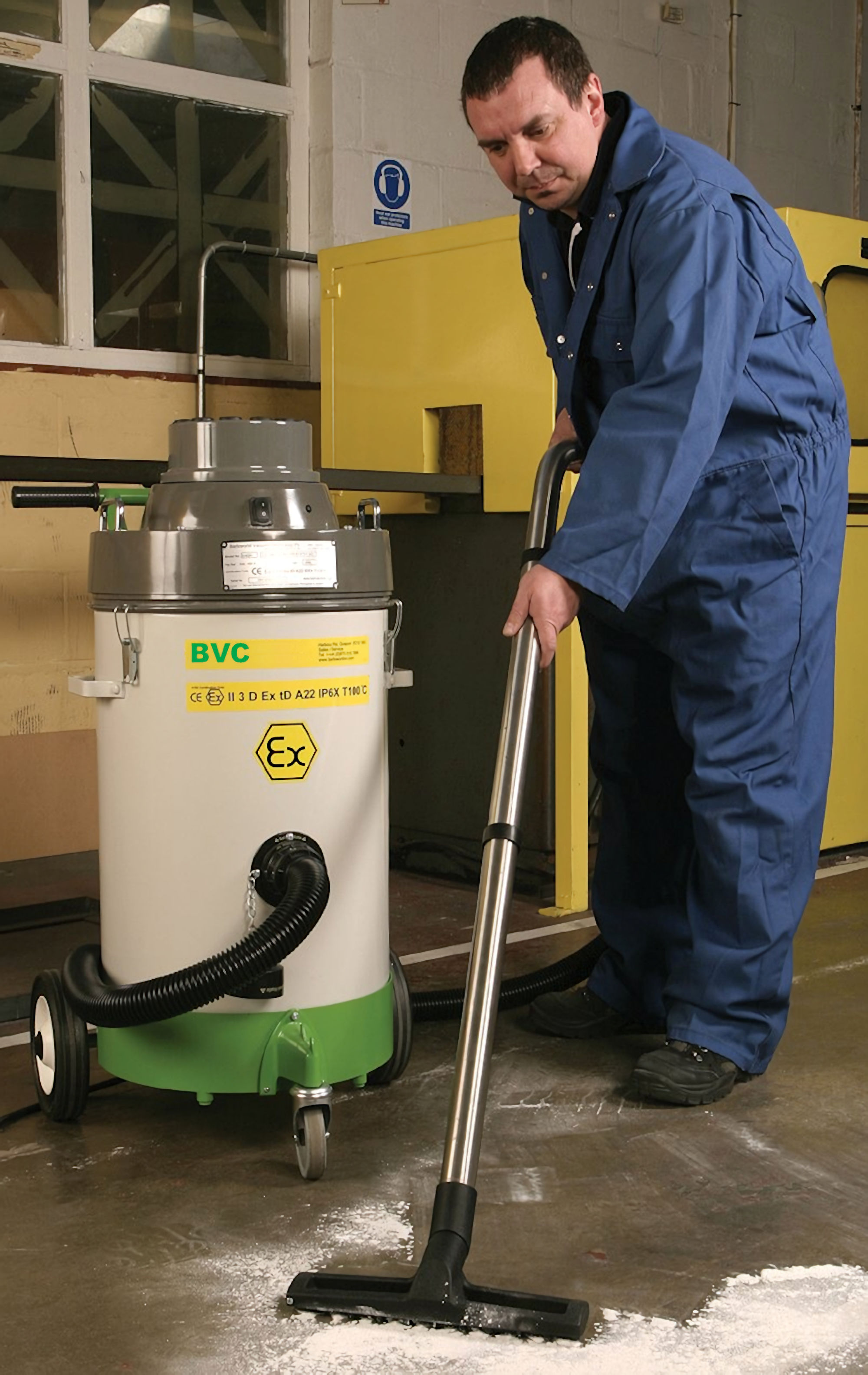
A clean work space is essential for health and safety, and the best tool for general cleaning up dust and loose product in the workplace is an Industrial Vacuum Cleaner. However, the vast majority of machines need to be plugged in to a power outlet, which necessitates appropriately positioned power outlets, and a trailing cable which itself presents a hazard.

Quirepace have introduced the cordless IV60 eGX into the range of BVC Industrial Vacuum Cleaners to eliminate this risk. This is a powerful battery powered unit which, as standard, is provided with a 3-stage filtration dry product tank consisting of a paper sack collection, microfibre main filter and 3rd stage HEPA filter. This configuration is suitable for most dry-product collection applications. The unit may be configured as both M-Class and H-Class rated units.

The unique Honda eGX electric engine is designed to replace petrol engines in the 2.5hp class and combined with the well-proven BVC YP3 turbine delivers powerful suction suitable for the toughest industrial cleaning jobs.

With a run-time of 1/2hr to 2 hrs depending on power setting, the new BVC IV60 eGX in either M-Class or H-Class specification, is ideal for spillages of potentially hazardous products, and the absence of any requirement to plug-in means BVC IV60 is immediately ready for use anywhere in the building.

In addition to the standard dry-product tank, BVC IV60 eGX is also available with wet tank, longopac®, and drop-tank options. It is also ideal for high-reach cleaning using lightweight carbon fibre cleaning poles. Like all BVC Industrial Vacuum Cleaners, a wide range of different hoses, tools and accessories are available from Quirepace’s Fareham factory and warehouse.

Contact Quirepace today and ask for a demonstration.

Quirepace Ltd

This email address is being protected from spambots. You need JavaScript enabled to view it.
www.quirepace.co.uk
www.bvc.co.uk

Early detection of explosions and fires

Early detection of explosions and fires

 With the GSME and HOTSPOT detectors from REMBE, an artificial intelligence has been created that detects fire and explosion events at an early stage. The GSME detector is an artificial nose, "trained" for pyrolysis - popularly known as smoldering gases, while the HOTSPOT detector represents an artificial eye that already detects surface temperature changes of 1 °C.

REMBE´s HOTSPOT X20 measures surface temperatures using an intelligent evaluation system, which divides the field of view into detection zones. A separate temperature threshold value can be set for each individual zone in order to tailor the detection to the process as far as possible. The HOTSPOT X20 can even identify small temperature increases (1 °C) and enables to warn the operator of a fire or glowing embers at extremely early stages. The HOTSPOT X20 can also be used in explosion atmosphere up to zone 20 and under high dust loads and monitors a temperature range in the standard version of 0-200 °C (higher temperatures possible, but typically not required).

Temperature monitoring can be particularly helpful when handling secondary fuels. Where gas measurement technology becomes very complex due to cross-sensitivities, temperature is a simple parameter for detecting process anomalies. Common mounting points are above or on conveyors so that the process flows can be monitored. If elevated temperatures are detected, the potential ignition source can be stopped before it reaches the next potentially explosive atmosphere.

Mainly hydrocarbon compounds are released when many substances thermally decompose. If there is incomplete burning without a flame and a low oxygen supply, carbon monoxide is created as well. The GSME X20 pyrolysis gas detector, for instance, has been designed for detecting these gases, even as they develop. Alongside carbon monoxide and hydrocarbon compounds, nitrogen oxide and hydrogen compounds (CO, HC, H2 and NOx) are also monitored. With the aid of an intelligent evaluation algorithm, a process behaviour can be ideally mapped and normal off-gasing be adopted. If a concentration increases above the usual level, the GSME X20 immediately triggers an alarm. The detector, is also suitable for explosion atmospheres up to zone 20, monitors concentration ranges from 0-100ppm.

Gas measurement technology can also be used for traditional energy sources. However, this must be suitable for the harsh environments. Thanks to the multi-component measurement, the GSME detector can also be used in storage facilities.

When the location and mounting position are ideally designed in an explosion protection concept, HOTSPOT X20 and GSME X20 allow explosions and fires to be prevented through early detection.


www.rembe.de


Hydrogen – Properties and its significance towards safety.

 In this article we will dive deep into further chemical and combustion properties of hydrogen to study its impact on process safety in design and operation phase of engineering project involving production, storage transport and utilization of hydrogen.

 Chemical and combustion properties-

How H2 behaves at ambient temperature and how it reacts with other metals & non-metals…

At ambient temperature the hydrogen reaction with oxygen is extraordinarily slow unless it is activated by catalyser or spark, once reaction activated by spark it can turn in to high rate ignition or explosion depending upon the surrounding physical condition and concentration of H2 and O2 .Hydrogen reacts both with non-metals (high electro negativity) and with metals (low electro negativity) to form either ionic or covalent hydrides (e.g. HCl, H2O). The electro negativity of hydrogen is 2.20 (Pauling scale) this makes hydrogen most reactive compared to others. Hydrogen can react chemically with most other materials. This property of hydrogen needs to be understood in depth to ascertain physical and chemical compatibility of metals/non-metals/other materials like composites while selecting materials for handling of pressurized /liquid hydrogen.

Flammability range/limits of hydrogen (4.1% to 72.5% vol in air)-

 Hydrogen in connection with oxygen is flammable over wide range of 4.1% to 72.5% compared to natural gas and other petroleum products and it can become explosive within wide range of concentration i.e. 18% to 59% at standard atmospheric conditions. We may draw misleading conclusion that handling and utilization of hydrogen is not as safe as natural gas and other petroleum product due to its very wide flammability range instead in actual/practical cases H2 will rarely reach the limit of its higher flammability limit if handled in well ventilated premise due to its higher diffusivity-coefficient, high buoyancy and smaller molecular weight which helps H2 to disperse quickly in case of leak (H2 is 14 time buoyant than air while natural gas is 4 times). This means that same quantity of hydrogen in gaseous form will escape at 4.6 times faster than natural gas .The flammability range of petroleum on lower threshold is only 1.2% while hydrogen has advantage up to 4.1%.

We can say that in well-ventilated unconfined space the probability of hydrogen forming explosive mixture is much less than liquid petroleum product and relatively lesser than natural gas. Early detection of leaks is critical for preventing accidents, protecting workers and the public, and avoiding potential damage to infrastructure. Hydrogen leak-detection systems employ technologies such as sensors, detectors, and monitoring equipment to identify leaks promptly. Hydrogen leaks are scientifically defined in ASME B31.12 as Grade-1,2 &3 along with its readings and mitigation measures in hydrogen value chain as below. This can be used to decide/design the location of hydrogen leak detection sensor and their sensitivity along with firefighting/hazard mitigation response in case of unlikely event.

EHS_Graph.jpeg

The flammability mixture to an extent depends upon the temperature, pressure and direction of propagation of hydrogen flame. The variations are explained well in table mentioned below (table-2.1). These results are drawn out of laboratory experiment conducted at specific laboratory conditions hence actual limits may vary slightly depending upon concentration, temperature and pressure. Hence, it’s important to build in designed factor of safety while designing process safety equipment for storage and handling of hydrogen.

graph1.jpeg

Practically the flammability limit of hydrogen depends upon the instrument & standard method used for measurement. The table 2.2 below mentions about the LEL & UFL of H2 for various international standards.

graph2.jpeg

Another factor worth paying attention to here is effect of mixture temperature (H2 & Oxygen) on LFL&UFL of hydrogen. The flammability ranges of hydrogen changes linearly in proportion to change in temperature. LEL will decrease by about 2.5% by volume (from 4% -1.5% by volume) with increase in mixture temperature from 200C to 4000C .UFL increases more significantly by about 12.5% by volume for the same change of mixture temperature.

graph_chart.jpeg

The effect increase of mixture pressure is different for LFL and UFL. In case of LFL value decreases to 5.6% for increase in pressure from 0.1-5.0MPa then is constant up to pressure of 15MPa. For UFL changes and not linear, UFL decrease from 76% to 71% for changes in pressure from 0.1 to 2.0 MPa then increase from 71% to 73.8% with pressure increase from 2.0 to 5.0MPa  again decreases significantly from 73.8% to 72.8% with pressure rise from 5.0 to 15.0MPa. Please ref to the graph mentioned below for better understanding of effect of pressure and temperature.

Hydrogen gas does not have a flash point as it is already a gas at ambient conditions. It means that cryogenic hydrogen will flash at all temperatures above its boiling point of 20 K (-2530C).

The comparative view of flammability range of Hydrogen, Methanol, Petroleum and Natural gas is provided as below. Practically wide flammability range of H2 makes it more efficient fuel for wide range of heat and power applications at the same time process safety of hydrogen must be designed keeping this in mind because this advantage is coupled with disadvantage while handling of H2.

H2.jpeg

Limiting Oxygen Index-

As we know that oxygen, fuel (liquid/gas) &Ignition sources are required to complete fire triangle so that fire is initiated. In controlled fire scenario engineering process and controls are used to control either oxygen/ fuel proportion to control the flame and heat generated out of flame. In case of hydrogen, next question comes in our mind is what is that minimum % of oxygen required for propagation of hydrogen flame and generate heat. Answer is no mixture of hydrogen, air& nitrogen at NTP will propagate the flame if mixture contains less than 5% of oxygen by volume (NASA -1997).

Ignition Properties of hydrogen-

Now let’s see how flammable hydrogen air mixture (usually  non- stoichiometric mixture) can be ignited for purpose or by accident, once we understand how hydrogen & air mixture can get ignited we can make efforts to understand how to keep it safe in storage and handling and utilization.

The minimum energy required to ignite the hydrogen +air mixture is called Minimum Ignition Energy (MIE) which is 0.02 mJ only. As this value of MIE is very low even compared with other hydrocarbon fuels it can easily be created by mechanical spark created by rapidly closing of valve, electrostatic discharge in ungrounded particulate filters, spark from electrical equipment, catalyst particles, heating equipments, Lightning strike near the vent stack. Hence it is of utmost importance to eliminate or isolate the source of spark in appropriate way from hydrogen system as if unforeseen ignition sources could occur.

Needless to say that less ignition energy is required as mixture is closer to stoichiometric level as well it depends upon temperature, pressure and composition. Practically all ignition sources generate energy more than 10 mJ hence any ignition source or spark can ignite the mixture of hydrogen and air.

As hydrogen is essentially an electrical insulator at both liquid and gaseous state, flow of hydrogen will generate the static electricity similar to other hydrocarbon fuel which can lead to generation of spark if not grounded to equalize potential of all hydrogen handling equipment. These properties of static electricity generation can be become more serious in the event of high flow rate and longer blow down time from hydrogen storage.

Auto ignition temperature of hydrogen is above 5100C which is relatively higher than hydrocarbons having longer molecule.  Objects at temperature of 3200C can ignite the hydrogen after prolonged contact. Comparative chart is provided below to compare the auto-ignition temperature of hydrogen with other fuels.

FUELS.jpeg

What happens if Hydrogen & air mixed gets in contact with spark –Travel from spark to explosion.

So far we were looking how we can keep hydrogen in its containment which is designed to store and carry. Now we will try to understand what technical properties of hydrogen as fuel in the gaseous and liquid phase are vital if it gets in contact with sparks.

Burning Velocity-Velocity indicating the speed with which smooth plane combustion wave can advance into stationary mixture. It is pertinent property of gas which is depending upon temperature, pressure and concentration. The burning velocity of hydrogen in air at stoichiometric (29.4% vol. of H2) ambient conditions is 2.55 m/s reaching a maximum of 3.2 m/s at a concentration of 40.1%, which would even increase to 11.75 m/s in pure oxygen. It is interesting to note than burning velocity is maximum at 40.1% concentration rather than at stoichiometric conditions. This effect of shifting occurs due H2 property of higher molecular diffusivity. It is interesting to note that higher diffusivity of hydrogen is actually the beneficial property of hydrogen as long it is not in contact with sparks because this property prolongs the hydrogen-air reaching to LEL limit in unconfined space. However, once hydrogen is ignited it acts as flame propagator which is not safe while handling hydrogen in entire value chain.

The higher the burning velocity, the greater the chance for a transition from deflagration to detonation (DDT). Needless to say that diffusivity of hydrogen property has double edge (beneficial & harmful) in hydrogen process engineering design. The laminar burning velocity (burning velocity) as function of concentration if hydrogen in air is shown in the graph mentioned below.

BM.jpeg

Flame propagation Speed- This is deflagration front velocity relative to fixed observer is given by speed of sound in combustion products which is 975m/s for stoichiometric hydrogen air mixture.

Detonability limits – Detonation is worst case scenario of hydrogen accident .The detonation range mentioned in technical report   ISO- 15916/2004 is 18-59% by volume of hydrogen in air. The detonation range varies on size of tube used for experiment. By conservative generalization of available data suggest the detonation range of hydrogen is within 11-70% (flammability range is 5%-75%). This is narrower and as expected within the range of flammability and that’s the cause of worry to process designer while designing the containment to store and carry hydrogen.

The time in which the flame at the ignition point develops to a detonation depends on many parameters such as temperature, pressure, mixture composition, geometry and ignition source strength. For a stoichiometric hydrogen-air mixture to detonate.

The explosion of a hydrogen-air mixture cloud results in the formation of a pressure wave, which is different and dependent on the combustion mode (slow/fast/detonation). In the deflagration of a free hydrogen-air gas cloud, the maximum overpressure is in the order of 10 kPa.

At 7 KPa pressure-   People would fall to the ground.

35KPa pressure-      Damage of ear drum is expected.

240 KPa pressures- Above which fatalities must be considered.

 Emissivity* of hydrogen flame (less than 0.01) -The thermal energy radiated from a flame corresponds to the higher heating value (HHV). Emissivity of Hydrogen flame is less than 0.1 unlike hydrocarbon is approximately 0.2 to 0.3 for lighter hydrocarbon. Hence radiations emitted from hydrogen flame are lesser than hydrocarbon. Therefore despite high flame temperature the burning hazard of hydrogen is comparatively small. Hydrogen flame has major problem in its non-visibility even in dark room unless impurities in the air are present. Another advantage is no smoke generation by hydrogen flame hence its comparatively safe in confined areas.

*Emissivity- The emissivity of the surface of a material is its effectiveness in emitting energy as thermal radiation.

 Safety measures to avoid detonation is extremely important. While deflagration of quiescent stoichiometric hydrogen air mixture in open atmosphere generates pressure wave of only 0.01MPa (below level of eardrum injury), the detonation of same mixture would be accompanied by blast of more than magnitude of higher pressure of about 1.5MPa (far above the fatal pressure of about 0.08-0.10 MPa).

Comparison of hydrogen with other fuels-

Hydrogen is unusual fuel; the leak of lower flow rate of hydrogen supports combustion as compared to other hydrocarbon fuels. H2 has lowest molecular mass, lowest density and lowest viscosity. These properties of hydrogen are turning in its favor for quick escape for confined space at the same time

 The other properties of hydrogen which are required to understand from process safety point of view and their comparison is provided in table below.

HYW.jpeg

Reference-

1. Five minute guide- Hydrogen-www.arup.com page 1-12.

2. Chapter-1 Hydrogen fundamentals –Biennal Report on Hydrogen Safety (BRHS)-6.

3. Fundamentals of hydrogen safety engineering by Vladimir Molkov volume -35 -47.

4. US Department of energy /energy efficiency & renewal energy/fuel cell laboratory.

4. Wikipedia/hydrogen & Wikipedia/emissivity.


Article wriiten by 

Mahesh Salunkhe

Reducing CO2 Through Air Leak Detection

Carbon dioxide is a gas essential in the production of many everyday products, including food and beverages as well as being a key raw material in the fertilizer industry.

flir_leak.jpeg

However, these days, carbon dioxide hits the news headlines for all the wrong reasons. According to a report issued by the Royal College of Physicians several years ago, in 2013 the concentration of carbon dioxide in the atmosphere had increased by about 42% over the levels before the industrial revolution, and the concentration continues to rise.

Carbon dioxide is one of the main gases causing the Earth to overheat. Much is spoken about the CO2 emitted by vehicles in the automotive sector; however the main culprit is energy and heat generation. In 2020 electricity and heat production accounted for over 15 billion tonnes of CO2 emissions, with transportation in second place at just over 7 billion tonnes. Ask most industrial companies why they have sought to reduce energy usage in recent years and fiscal reasoning would be top of the agenda for many firms.

We have seen huge increases in the cost of electricity in recent years, especially in Europe as geopolitical and economic pressures bear down heavily on the price of oil and gas. However, another reason, high on the agenda of many fortune 500 companies is the desire to reduce their carbon footprint, ensuring we leave this planet in good order for our children and future generations.

When it comes to reducing energy use on a large industrial complex, low hanging fruit such as low energy light bulbs and movement sensors have already been initiated. The more difficult areas are associated with the production itself, elements that require elevated temperatures can be better insulated, as indeed can refrigerated areas, but mechanical machines themselves can prove difficult to improve in terms of efficiency without affecting production. One element that is found on most manufacturing sites is the need for compressed air.

Pneumatics are a 1/2 common theme and used in all sorts of industrial applications. To deliver the compressed air, a compressor or number of compressors are employed, and the resulting air is delivered around a site by a system of air lines. These pipes are often above ground to improve logistics and ergonomics of production, however over time they can degrade and give rise to leaks. Elbow joints, reducers, condensers, and other fixtures all have the potential to leak air under pressure. With hundreds of metres of pipework, these leaks can often be difficult to detect. Teledyne FLIR are a global producer of high quality analytical handheld devices, including both thermal and acoustic imaging cameras.

Released earlier this year, the FLIR Si2-LD acoustic camera makes light work of identifying leaks in pipework, even those elevated air lines that are difficult to access. By simply pointing the camera at an airline it can detect leaks of 0.05 litres per minute at a distance of 10 metres. At 2.5 metres, leaks as little as 0.0032 litres per minute can be detected. These may not sound like very big volumes, but over the course of a year the loss can be considerable.

On the FLIR Si2-LD, air leaks are displayed on the high definition five-inch colour screen, by simply pointing the handheld device at the air line. Teledyne FLIR not only produce a wide range of high quality cameras but also provide the associated software to facilitate the collection and analysis of data. The FLIR Si2-LD camera is loaded with such software. Using a system termed Industrial Gas Quantification, the camera can calculate the monetary loss incurred for each leak identified. As well as air, the software can also calculate losses for a variety of other gaseous systems including ammonia, helium, hydrogen, argon and carbon dioxide. If your company is one of the many thousands, that are concerned about their carbon footprint then reducing electricity usage through eliminating air leaks might prove to be an example of low hanging fruit. The Si2-LD from FLIR is a vital tool is facilitating this move to protect our environment. To find out more about the SI2-LD acoustic camera and other instruments in the Teledyne FLIR range please contact your local agent or your FLIR distributor

EEMUA Representatives from Syngenta, SSE and Axiom recognised in EEMUA Awards 2024

Photo by Ian Cooper/Ian Cooper Photography.

EEMUA is pleased to announce that the winner of its Early Years Industry Award 2024 is Joseph Flynn, an electrical, control and instrumentation (EC&I) technician at Syngenta. The award recognises the efforts of new starters within the engineering field in EEMUA member companies, demonstrating their communication skills, engineering application and leadership in their specialism.

The EEMUA Awards Committee were impressed with Joseph’s entry where he demonstrated great achievement and innovation making good use of relevant guidance and available materials to propose and implement a company project that assists with preparing and training early entry engineers for working in potentially explosive atmospheres. The result is a thoroughly practical contribution to better in-house training.

On receiving the award, Joseph said: “Understanding and utilising the skillsets of employees inside our organisations allows for better collaboration, innovation, and teamwork to drive us closer to our goals. I’m very pleased with the outcome of this project and look forward to the following stages of its development and integration within the company.”

In recognition of the high quality of entries to the Early Years Industry Award, ‘runners-up’ prizes are presented to Kirsty Pratt, Graduate Wells Engineer at Harbour Energy and Taliya Mammadhasanzada, Process Engineer at BP. Also shortlisted for the award were Amanda Dixon, Developing Engineer at Sellafield Ltd and Promise Ahante, Associate Product Engineering Manager at BP.


EEMUA is also pleased to announce that the recipient of this year’s Stuart Turner Award is Katherine Asvegren, Senior Pressure Systems Engineer at SSE Thermal, and that Adam Potter, Managing Director of Axiom, receives the EEMUA Associate Contributor of the Year Award.

The Stuart Turner Award honours the memory of Stuart Turner, an enthusiastic advocate for all things EEMUA, by recognising an employee of a member organisation who has made a significant contribution to the work of EEMUA. Katherine impressed the Awards Committee with her continued involvement across a range of EEMUA activities and significant contributions over many years. This has included active involvement within committees, chairing the Piping Systems and Pressure Vessels Committee for the last three years, being actively involved in several working groups, speaking at EEMUA events, and representing EEMUA as a speaker at events, and her work for the EEMUA Mechanical Integrity Practitioner Certificate (MIPC) course both as an assessor and content developer.

The Associate Contributor of the Year Award mirrors the Stuart Turner Award by celebrating EEMUA Associate employees who give their expertise to play a part in the Association’s work. Since Axiom became an Associate in 2017, Adam has been committed in his support of EEMUA events and contributing to EEMUA activities, most recently as a member of the working group authoring new guidance (future release) on metallic storage tanks. 

The achievements of all the nominees and winners were celebrated at the EEMUA Annual Dinner held in Chester on 20 November.

www.eemua.org


The Importance of Intrinsic Safety in Instrumentation for the Mining Industry

Intrinsic safety (IS) is a critical design and operational principle in instrumentation used within the mining industry. Mines are often classified as hazardous areas due to the presence of flammable gases, combustible dust, or reactive substances. Intrinsically safe instrumentation is engineered to operate with energy levels below those capable of igniting such volatile environments, ensuring that safety and operational efficiency are not compromised.

One primary advantage of intrinsic safety is the reduction of explosion risks. In mining, where methane and coal dust explosions are a constant threat, IS-certified devices prevent sparks or overheating that could trigger catastrophic events. This protection extends to maintenance and diagnostics, allowing equipment to be safely inspected and serviced without de-energising systems or disrupting operations.

Another key benefit is compliance with international safety standards, such as IECEx and ATEX, which mandate IS compliance for hazardous locations. By employing IS-certified instrumentation, mining operators demonstrate adherence to these standards, minimising legal liabilities and enhancing worker safety.

The reliability of intrinsically safe instruments is also crucial. Pressure transmitters, for example, are pivotal for monitoring equipment performance and environmental conditions in mining. Malfunctioning devices could lead to system failures or unsafe conditions. IS technology ensures these instruments maintain accuracy and reliability, even under extreme conditions, without posing ignition risks.

Moreover, the use of IS instrumentation fosters cost savings over time. By eliminating the need for heavy explosion-proof enclosures or purging systems, IS solutions streamline equipment design and installation, reducing both capital and operational expenses.

For a comprehensive range of intrinsically safe, hazardous area pressure transmitters suitable for mining applications, visit ESI Technology Ltd. Their products are designed to deliver precision and safety in even the most challenging environments.

www.esi-tec.com


Introducing the 5-Point Maintenance Program for On-Site Safety Shower!

Aqua_Safety_Showers_nove.jpeg

At Aqua, we understand the importance of keeping your on-site safety product in optimal condition to ensure the well-being of your workforce. That's why we're excited to offer our comprehensive 5-Point Maintenance Program, designed to maximise the longevity and effectiveness of your safety equipment. Let's take a closer look at the five key points of our maintenance program:

    Regular Inspections: Our team of trained technicians will conduct regular inspections of your on-site safety product, carefully examining each component for signs of wear, damage, or malfunction. By catching potential issues early on, we can address them protectively and prevent any major breakdowns or accidents.

    Cleaning and Lubrication: Proper cleaning and lubrication are essential for the smooth functioning of your safety equipment. We will thoroughly clean all parts, removing dirt, debris, and other contaminants that could compromise performance.

   Maintenance and inspection: Failsafe maintenance and inspection are crucial to guarantee safe and reliable operation. Our experts will calibrate your safety product according to industry standards, making necessary adjustments to maintain availability in times of need. This step is vital for equipment used in remote site locations with variable environmental temperatures. 

    Component Replacement: Over time, certain safety product components may wear out or become obsolete. As part of our maintenance program, we will identify any worn-out parts and promptly replace them with high-quality, manufacturer-approved replacements.

    Documentation and Reporting: Our maintenance program includes comprehensive documentation and reporting. We will keep detailed records of all inspections, repairs, and replacements performed on your safety product.

By enrolling in our 5-Point Maintenance Program, you can enjoy the following benefits:

    Enhanced safety: Regular maintenance ensures that your safety product is functioning optimally, reducing the risk of accidents and injuries.

    Improved equipment lifespan: Proper care and maintenance extend the life of your safety equipment, saving you money on premature replacements.

    Compliance assurance: Our program helps you stay in compliance with safety regulations and standards, giving you peace of mind during inspections.

    Minimised downtime: Proactive maintenance reduces the likelihood of unexpected breakdowns, keeping your operations running smoothly.

    Expert support: Our trained technicians possess the expertise to identify and address any issues, providing reliable and efficient service.

Invest in the longevity and reliability of your on-site safety product with our 5-Point Maintenance Program. Contact us today to learn more and schedule your maintenance sessions. Your workforce's safety is our top priority at Aqua!

www.aqua-safety.com

The latest version of EN60079-14 published this year could not make it any clearer on the use of the Omni® Accessory to ensure your hazardous area cable gland installation is fully safe and compliant to the latest standards.

blayds.jpeg

EN60079-14 8.3.2 states that “Cables shall be supported and routed straight from the cable entry device to avoid lateral tension that could compromise the seal around the cable” and that “if additional clamping is required to prevent pulling and twisting of the cable transmitting the forces to the conductor terminations inside the enclosure/connector, a clamp shall be provided, as close as practicable to the gland along the cable. Note 1: Cable clamps within 10 times the diameter of the cable or 300mm whichever is the shorter length of the cable entry device are commonly used and might be required by other codes, for example IEC 61892.”

In short, cables should be clamped, as close to the rear seal of the gland as practical, to help prevent cable movement which in turn can loosen conductors and cause water and dust ingress.

But it is not just here where the use of the Omni® Accessory is recommended. This requirement to ensure cables are correctly supported when exiting cable glands is further demonstrated in almost all Hazardous Area gland manufacturers certificates and instructions for safe use. The majority of compression, displacement or diaphragm type Ex glands, when used with unarmoured or braided cables, require that the cables are clamped to prevent pulling or twisting in order to maintain IP (ingress protection against water and solids) as well as the electrical continuity of the braid/shield.

Almost every hazardous area cable gland, irrespective of manufacturer, with an “X” at the end of their ATEX/IEXEC certificate number, requires that the cable, when used in a fixed installation with unarmoured or braided cable is clamped to prevent pulling or twisting. Most of the leading glands in the market today have a similar requirement, yet the majority of installations bypass this requirement completely.

This is not a “nice to have” rather a legal requirement to ensure the gland is installed in line with the certification – without this, your installation is non-compliant.

The Omni® Accessory from Blayds is the all-in-one solution that ensures your cable installation is correctly routed straight from the gland whilst also ensuring that the cable is clamped to prevent twisting and pulling. It also includes an integrated IP seal, earthing, and also provides a handy location for cable/circuit marker.  Available in Brass or Nickel Plated Brass with/or without integrated IP washer and in sizes M20 through to M40, the Omni® Accessory is a simple and cost effective way to ensure your cable gland installations are compliant with the latest standards. By installing the Omni® Accessory, you are helping to reduce the strain on the cable gland seal, improving its lifespan, its IP performance and its hazardous area protection.

Visit the Blayds website today at www.blayds.com or email This email address is being protected from spambots. You need JavaScript enabled to view it. to request your free of charge Omni® Accessory sample pack.

Investing in Innovation: Peppers Cable Glands enhances customer support with Quick Response Cell and their New Milling Machine

peppers_nov_2025.jpeg

At Peppers Cable Glands, they believe that success is intrinsically tied to the success of their customers. By continually improving their processes, technology, and customer support capabilities, they aim to ensure that their customers receive the highest quality products and services. Recent investments not only enhance their production capabilities but also improve how they serve their customers: the introduction of a new milling machine and the Quick Response Cell (QRC).

The Quick Response Cell (QRC) is designed to provide rapid, tailored solutions for customers who need high-priority or custom cable glands. By setting up a dedicated team with streamlined operations, Peppers can quickly pivot to meet urgent demands, minimising lead times while maintaining industry-leading quality standards. Whether it's delivering on custom specifications, unexpected large orders, or meeting time-sensitive project requirements, the QRC has become a valuable resource for clients who cannot afford delays.

With the QRC in place, they’ve helped numerous customers avoid costly project overruns and minimise downtime, enhancing their overall project efficiency. The QRC embodies Peppers’ commitment to offering fast, flexible, and responsive service, especially in today’s fast-moving industries.

In addition to the QRC, they’ve also invested in cutting-edge manufacturing technology by bringing a new milling machine into their production line. This advanced piece of equipment increases manufacturing precision and efficiency, allowing them to meet growing customer demand with even greater accuracy and reduced turnaround times. The new milling machine ensures that their cable glands meet the tightest tolerances, providing enhanced reliability in the most demanding environments.

“The Quick Response Cell and new Milling Machine allows us to respond more agilely to fluctuating customer needs and market conditions. By leveraging automation, we can quickly adapt to changing demand, ensuring we are always ready and able to meet our customers' requirements”. Grayham Churchouse, Sales Manager.

For their customers, these investments translate to greater confidence and peace of mind, knowing that Peppers is constantly enhancing its capacity to meet their needs. By upgrading their manufacturing capabilities and reinforcing the QRC, they can ensure that their customers’ businesses are never held back by delays or product shortages.

At Peppers Cable Glands, the priority remains supporting their customer’s businesses. These investments and initiatives are just part of an ongoing commitment to delivering the best products and service, so customers can continue to focus on driving their business forward.

www.cableglands.co.uk


Do you know your Ex “Zones” from your “Classes” and “Divisions”?

TPI_November_2024.jpeg

Worldwide, Dangerous Substances and Explosive Atmospheres Regulations require employers to control the risks to safety from fire and explosions. This entails compliance with international standards, which in turn requires that any electrical equipment used in a hazardous area must be certified intrinsically safe. The likely existence of an explosive atmosphere is dealt with in the various standards by the definition of “Zones”. Importantly, it is the responsibility of the plant operator to decide which parts of their plant are in which Zones.

For the IECEx (Worldwide) & ATEX (European) standards the following Zones are defined:

Zone 0 - an area in which an explosive atmosphere is present constantly or for long periods or frequently.


Zone 1 - an area in which an explosive atmosphere is likely to occur in normal operation occasionally.


Zone 2 - an area in which an explosive atmosphere is not likely to occur in normal operation but, if it does occur, will persist for a short period only.

However, in North America, a system of “Classes” and “Divisions” is used:

Class 1: Relates to gases and vapours.

Division 1: The hazard can exist under normal conditions, or could be caused by maintenance work, leakage, or breakdown.

Division 2: Gases or vapours are confined and only escape due to accidental rupture or breakdown.

This can lead to confusion when an instrument is likely to be used in different world regions. The simplest solution is to go for a Zone 0/Class 1, Div 1 dual certified instrument, which then covers all eventualities worldwide.

Typically, Zone 0 intrinsically safe instruments are expensive. However, Test Products International (TPI) believes it has achieved a significant cost breakthrough with its very affordable TPI 9085Ex vibration analyser.

Combining on-meter diagnostics with the all-important ability to TREND readings over time to simplify condition-based maintenance (CBM), the “go anywhere” TPI 9085Ex is certified for IECEx/ATEX Zone 0 with North American Class 1, Div 1 approval. This means the 9085Ex is certified intrinsically safe for ANY atmosphere WORLDWIDE.

The 9085Ex detects unbalance, misalignment and looseness. It also measures “bearing noise” and displays it in bearing damage units (BDU), which is roughly equivalent to “percentage bearing wear”. In addition, the 9085Ex uniquely incorporates a directly contacting temperature sensor within its vibration probe. This gives a highly accurate, virtually instantaneous, surface temperature reading for the bearing, simultaneously as the vibration reading is taken. With a high BDU reading and high temperature, you know that what you are seeing really is a worn bearing and not some other source of vibration such as pump cavitation.

The compact handheld TPI 9085Ex is extremely affordable and simple to use. It can, and indeed should, be included in every maintenance tool kit. Using the FREE TPI Bridge App, “routes” and readings can be transferred to and from the 9085Ex anywhere in the world using mobile devices (e.g. smart phone or tablet PC) and then via Bluetooth to and from the 9085Ex.

“Routes” are simply lists of machines showing exactly what readings need to be taken and where to take them. The readings are then automatically time and date stamped by the 9085Ex and saved in the route for automatic transfer to computer-based trending software.

“Trending” is the mainstay of condition-based maintenance. By looking at the trend of bearing noise and temperature readings, you can determine well in advance when a bearing will likely need replacing. The TPI 9085Ex comes with powerful, yet simple to use, subscription free trending software, which includes automatic email notification of alarms and report generation, giving you everything you need for a full CBM strategy.

For more information please contact TPI Europe’s head office on +44 1293 530196 or take a look on the website at www.tpieurope.com or email This email address is being protected from spambots. You need JavaScript enabled to view it.