News

Navigating the Hazards of Methane Gas Leaks

In this article, we will delve into the unique properties of methane, its flammability, and explore effective solutions to help prevent and address the perilous situations it can create. We will consider methane’s molecular composition, physical characteristics, and environmental impact.

Methane (CH₄) is a simple hydrocarbon and the primary component of natural gas. This colorless, odorless gas possesses several key properties that make it both a valuable resource and a potential hazard. Methane can be transported not only in gas form but also in liquid form at extremely low temperatures, which is the basis of the Liquefied Natural Gas (LNG) industry. The transportation and storage of LNG come with their own set of specific and unique hazards. Strict safety measures and protocols can help to manage the risks associated with methane’s high energy content and the extreme conditions required to keep it in liquid form.

As we explore the explosive risk associated with methane gas leaks, we will consider not only its molecular composition and physical characteristics but also the particular safety concerns tied to the LNG sector. In this blog post, we will delve into the unique properties of methane, its flammability, and examine effective solutions to help prevent and address the perilous situations it can create, whether as a gas or in its liquefied state.

The Explosive Hazards of Methane Gas Leaks:

  1. Flammability and Explosive Potential:

Methane, being a highly combustible gas, can form explosive mixtures with air in concentrations ranging from 5% to 15%*. This property, combined with its odorless nature, underscores the need for vigilance in detecting leaks before they escalate into dangerous situations. When leaked into confined spaces, such as buildings or pipelines, methane can create an explosive atmosphere that can be maintained for a long time due to slower gas dilution. Even a small spark or ignition source can trigger an explosion, potentially leading to severe consequences for both individuals and infrastructure.

  1. Infrastructure Vulnerability:

The physical state of methane as a colorless and odorless gas at room temperature and atmospheric pressure makes it challenging to detect without specialized equipment. Methane leaks in pipelines, storage facilities, or other infrastructure can result from corrosion, equipment malfunctions, or inadequate maintenance. These leaks not only release methane into the atmosphere but also expose these facilities to the risk of explosions.

  1. Public Safety Concerns:

With a boiling point of -161.5°C (-258.7°F) and a melting point of -182.5°C (-296.5°F), methane transitions between states at extremely low temperatures. This property is what allows methane to be liquefied and transported as Liquefied Natural Gas (LNG), a critical component of the global energy industry. Effective detection methods and preventive measures can mitigate the unique hazards associated with both gaseous and liquefied methane, particularly in confined spaces and during LNG transport and store.

Methods to Help Prevent Explosive Methane Gas Leaks:

  1. Rigorous Inspection and Maintenance:

Regular inspections can help to identify potential vulnerabilities in infrastructure, such as corroded pipes or faulty equipment. Understanding methane’s low boiling and melting points reinforces the need for thorough inspections to confirm the integrity of the infrastructure even under extreme conditions.

  1. Enhanced Leak Detection Technologies:

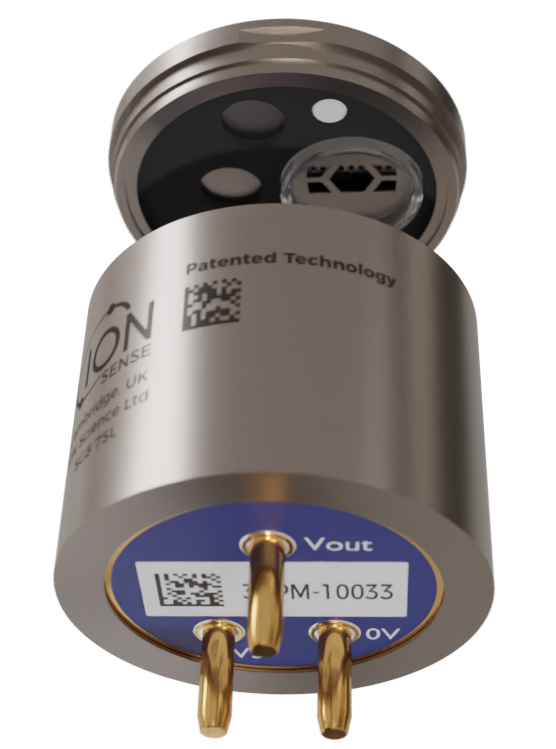
Utilizing cutting-edge technologies, including advanced gas sensors, can improve the detection of methane leaks before they escalate. Early identification allows for rapid response and intervention, helping to reduce the risk of ignition sources coming into contact with the leaked gas.

  1. Emergency Shutdown Systems:

Implementing robust emergency shutdown systems in infrastructure can swiftly isolate and contain methane leaks in the event of detection. These systems are designed to prevent the escalation of leaks into explosive situations, helping to safeguard both the facility and surrounding areas.

  1. Public Awareness and Preparedness:

The addition of odorants like mercaptan to natural gas, though not directly related to methane’s physical properties, plays an important role in public safety. Public awareness campaigns, coupled with clear guidance on emergency response procedures, further enhance community preparedness against the explosive hazards of methane leaks.

Gas Monitoring Methods for Methane Leaks

Detecting methane gas leaks can help to avoid environmental hazards and potential explosive situations. Several methods and technologies are employed for methane leak detection. Here are some common methods:

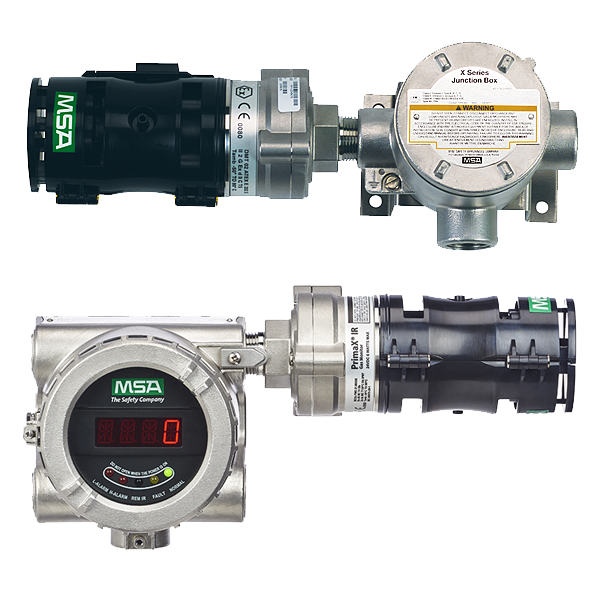
  • Point Detectors: These are fixed devices that can detect methane levels in specific locations where they are installed. They provide real-time readings and are often used in areas with known risks. Infrared and catalytic bead sensors are common detection methods.

Recommended MSA Safety gas detectors: ULTIMA® X5000, General Monitors® S5000, PrimaX® IR

Open Path Detectors: These devices use infrared technology to detect methane along an open path between a transmitter and a receiver. Changes in the infrared light absorption indicate the presence of methane.

Recommended MSA Safety gas detectors: Senscient ELDS, IR5500

  • Acoustic Detectors: Acoustic (ultrasonic) sensors can detect the sound of gas escaping from leaks. This method is especially useful for identifying leaks in pressurized systems and can complement other detection methods.

Recommended MSA Safety gas detectors: Observer®i Ultrasonic Gas Leak Detector

  • Fire and Gas Detection Controllers: Used to power the connected Methane fire and gas detectors and display measured gas concentrations. They can also monitor the limit values, actuate alarm devices, and initiate risk reduction measures.

Recommended MSA Safety products: Fire and Gas Detection Controllers

Combining multiple detection methods can provide a more comprehensive and reliable approach to identifying and addressing methane gas leaks promptly. The choice of method often depends on factors such as the size of the area to be monitored, accessibility, and the severity of potential risks.

Conclusion:

Understanding the unique properties of methane, from its chemical composition to physical characteristics, underscores the explosive dangers associated with gas leaks. By combining rigorous inspection, advanced detection technologies, emergency shutdown systems, and community education, risks can be mitigated, helping to ensure a safer and more secure future for all.

Discover how our gas leak and flame detection systems enhance safety in LNG facilities


Learn how to protect your workers and facility from hazardous hydrogen gas leaks


* Based on NFPA flammability limits (International / IEC limits are often different e.g. ISO 80079‑20‑1 states 4.4% Vol. - 17.0% Vol. range for Methane).

MSA, ULTIMA, General Monitors, PrimaX, ELDS, and Observer are registered or unregistered trademarks of MSA Technology, LLC or its affiliates/subsidiaries in the United States and other countries and regions. 

Smart-Ex® 03 from Pepperl+Fuchs – a smartphone as a proven alternative to Ex-cameras

ecom.jpeg

Inspection and maintenance tasks in hazardous areas are always particularly challenging. To enable mobile workers to carry out their tasks in such Ex-zones, they need specially developed devices that are certified for use under these conditions. One of the most important devices for such applications is a camera that can be used, for example, to document damage to the plant or maintenance work that has been carried out. However, Ex-cameras that have been specially developed and approved for these applications represent isolated solutions that still require the transport of additional work equipment.

However, just as in the consumer segment, where compact digital cameras have long since been replaced by smartphones, there are proven alternatives to the use of Ex-cameras such as the explosion-protected Smart-Ex® 03 from Pepperl+Fuchs. Its main camera with 13 megapixels, LED flash and autofocus not only allows the recording of high-quality images, but also videos in full HD resolution. In addition, it’s possible to automatically identify objects or scan barcodes. The 6-inch display is also better suited for reviewing the images taken than the small and low-resolution camera screens.

Smartphone in a camera-only variant

The Smart-Ex® 03 is optionally available in a camera-only variant which has all its smartphone functions deactivated via kiosk mode, so that only the camera and associated applications can be used. This prevents users from intentionally or unintentionally installing unauthorized applications or changing the system settings. The restriction can be lifted by the manufacturer at any time via the kiosk mode, so that a 5G smartphone with all functions is available when needed, thus ensuring future-proofing.

Comprehensive communication functions

In addition to the camera functions, it is the supported communication standards and applications that make the Smart-Ex® 03 a versatile tool. Thanks to 5G, the quick transmission of large amounts of data directly from the site of operation to the cloud, to the company network or by email – where authorized by the company – is no problem. With a camera, on the other hand, data can often only be transmitted after returning to the office by physically connecting the SD card with the stored images to the office computer. Thanks to the desktop mode of the Smart-Ex® 03, the smartphone itself can function as a fully-fledged computer replacement in the office, so that there is no need to transfer data at all.

With the Smart-Ex® 03, mobile workers also have the option of contacting remote support by phone or video call at any time in the field. The front camera with 5 megapixels guarantees clear images. The freely programmable side button of the Smart-Ex® 03 can be customized for the appropriate application. For example, it can be configured as a push-to-talk or emergency call button so that mobile workers can quickly call for help at their current location in an emergency.

Comprehensive advantages for users

To ensure that the Smart-Ex® 03 can always be used optimally, even under adverse conditions, it features a so-called glove mode. This mode increases the sensitivity of the touchscreen so it can be operated precisely even when wearing gloves. Thanks to the double-tap feature, the device can be locked by simply double-tapping on the home screen. This eliminates the need to feel for the on/off button on the side, which can be a challenge when wearing gloves. In addition, both left- and right-handed workers benefit from this feature.

In contrast to an Ex-camera, the Smart-Ex® 03 also handles scanning tasks with ease thanks to its main camera with autofocus and phase detection. The eBARCODE-ML app provides users with a powerful, machine-learning-based solution for scanning barcodes or QR codes. The app can also be used to read RFID data via the device's NFC functionality. The data is only stored locally on the device; it is not transferred to other locations.

The performance of the main camera also enables the use of augmented reality applications for scenarios such as predictive maintenance or remote support. With the help of sensors, the smartphone recognizes the scanned object and displays all relevant technical data on the screen. This saves time, enables rapid response times and ensures precise maintenance and inspection of industrial objects. Even in emergencies, the AR application helps with a quick and easy scan of the environment to quickly locate fire extinguishers, rigging points or safe escape routes.

Future-proof thanks to Android Enterprise Recommended

Google's Android Enterprise Recommended certification guarantees that the Smart-Ex® 03 will receive multiple Android upgrades and be provided with regular security updates. Starting in mid-2025, the smartphone will be delivered with the current Android 15 operating system version. As an Android Enterprise Silver Partner, it is also guaranteed that worldwide support will always be available to quickly and easily solve any problems that may arise.

ECOM Instruments GmbH - Intrinsically Safe Mobile Devices

NEW FLAME DETECTOR IS IDEAL FOR BOTH H2 AND HC FIRES

Teledyne Gas & Flame Detection (Teledyne GFD) has released its Spyglass™ Xtend triple-infrared flame detector, a notable industry advance that offers the simultaneous detection of both hydrogen (H2) and hydrocarbon (HC) fires.


This important innovation boosts safety in dense industrial environments where hydrogen flames can spread to other equipment and start fires involving hydrocarbon fuels that are invisible to an H2-only detector.

The combined detection of both hydrogen and hydrocarbon flames arrives courtesy of Teledyne Gas and Flame Detection’s triple-infrared technology. Where industrial spaces are highly populated with machines, equipment, tools, stored goods and many other common workplace items, a hydrogen flame can spread and trigger a fire involving hydrocarbon fuels. It is here that Spyglass™ Xtend is able to provide a crucial safety net.

Take the example of detecting hydrogen flames using an H2-only detector and prompting a subsequent safety action to interrupt the hydrogen supply and extinguish the flame. It would be easy to think the emergency is over, but any already burning hydrocarbon fires will persist. An H2 detector cannot detect HC flames.

With its integral triple-infrared technology - paired with a unique algorithm - the new Spyglass™ Xtend flame detector supports an enhanced safety strategy by detecting both hydrogen and hydrocarbon flames simultaneously. Five selectable sensitivity levels are available.

“Users of our Spyglass™ Xtend can take advantage of a considerably longer detection range, while response times are much faster compared with existing UV/IR technology,” explains Régis PRÉVOST, Product Line Manager at Teledyne GFD. “The result? Earlier detection of hydrogen and/or hydrocarbon flames, protecting workers and minimising damage to your premises and assets. It’s also worth pointing out that the hydrogen flame detection performance of the Spyglass™ Xtend matches that of our existing Spyglass™ IR3-H2, which is dedicated solely to hydrogen.”

The new triple-infrared technology ensures perfect immunity against false alarms or untimely faults due to sun glare or heavy rain, guaranteeing reliable operation in outdoor environments. Further supporting outside use, heated optics prevent condensation and frosting, while users can ensure nominal detector performance by undertaking automatic or manual self-tests that check the optics are clean. The stainless steel enclosure carries IP66/68 and NEMA 4X/6 ingress protection ratings.

Teledyne Gas and Flame Detection’s Spyglass™ Xtend offers a number of universal current outputs, including analogue 4-20 mA, sink or source, alarm and fault, while an optional HART® 7 digital output supports easy configuration and diagnostic capability for preventive maintenance strategies. The new flame detector carries Safety Integrity Level (SIL 2), ATEX, IECEX and usFMc certifications.

Any dense industrial settings looking to boost safety credentials and provide greater worker and asset protection will find that the new Spyglass™ Xtend stands up to scrutiny with its simultaneous, fast and reliable detection of both hydrogen and hydrocarbon flames. Two versions are available: with or without on-board HD video output. The HD video option offers real-time monitoring of the area and automatic video recording during alarms for detailed post-event analysis.

For more information, visit www.teledynegasandflamedetection.com or contact This email address is being protected from spambots. You need JavaScript enabled to view it.

Wieland Electric and Ross Controls Offer TÜV-Certified Training Program for Functional Safety Experts

QR.jpeg

International Certification Course Qualifies Participants as “Certified Functional Safety Expert (CFSE) for Electrical and Fluid Power Systems” in Just 5 Days
 Wieland Electric, in collaboration with Ross Controls, a global leader in safety solutions for fluid power and poppet valve technology, is proud to announce newly added TÜV-certified training courses, "CFSE - Certified Functional Safety Expert for Electrical and Fluid Power Systems."


This intensive five-day course is designed for designers, developers, maintenance engineers, and safety officers seeking to enhance their expertise in functional safety. Participants will gain in-depth knowledge and practical skills to implement functional safety measures throughout the entire CE process in compliance with international standards.

The curriculum of this internationally accredited course is built around the CE process and encompasses the full scope of machine safety. It covers foundational standards, risk assessment in compliance with EN ISO 12100, and performance level calculations.

Furthermore, the course includes the proper application of safety-critical sensor technology in line with standards, as well as validation and verification processes based on EN ISO 13849-2. Through its partnership with Ross Controls, Wieland Electric ensures the course addresses not only electrical safety but also pneumatic and hydraulic safety technologies. The modular structure allows for flexible adaptation of the training content and duration to suit the participants' prior experience and specific needs.

The benefits of this certification include cross-industry recognition as a qualified functional safety expert and the ability to demonstrate a high level of expertise with minimal time investment. Additionally, participants gain practice-oriented recommendations from industry experts, enabling a seamless transfer of knowledge for effectively executing the CE process in accordance with the latest standards. Designed as an international course, it provides consistent training across multiple locations. Certificates are valid for four years and can be renewed for an additional four years through a one-day refresher seminar.


Upcoming course dates (duration: 5 days | 9:00am - 5:00 pm):
February 24 - 28, 2025 in Mississauga, Ontario, Canada
April 28 - May 2, 2025 in Ferndale, Michigan, USA

https://www.wieland-electric.com/en/

The differences between low and high concentrations of H2S gas

MSA_1.jpeg

Key things to know about hydrogen sulfide

Hydrogen sulfide (H2S) gas can be fatal at high concentrations. But even low concentrations can cause health issues, particularly with prolonged exposure. So how can you best protect workers and minimise downtime? We answer your common questions about H2S.

What is H2S gas?

Hydrogen sulfide is a highly flammable, toxic and corrosive gas found in several industries including oil and gas, wastewater and chemical processing. It’s sometimes called ‘sour gas’, ‘sewer gas’ or ‘stink damp’ because of the way it smells like rotten eggs. However, H2S can’t reliably be detected by smell as it quickly deadens the sense of smell (a process known as ‘olfactory desensitisation or fatigue’).

How dangerous is H2S?

Exposure to high levels of H2S can be fatal, leading to loss of breathing, coma, seizures and death. It’s the second most common cause of fatal gas inhalation exposure in the workplace, second only to carbon monoxide[1].

But H2S can also be harmful at low concentration levels, causing headaches, dizziness, nausea, breathing difficulties and a sore throat. These health impacts can become more serious with prolonged exposure.

Low concentration vs. high concentration H2S – exposure limits

The health impacts of H2S depend on how much is inhaled and for how long. The recommended exposure limit set by NIOSH (the US National Institute for Occupational Safety and Health) for ten minutes is 10 ppm[2]. However, some U.S. states have developed ambient air standards for H2S well below OSHA and NIOSH standards due to concerns about health risks from chronic exposure[3].

For longer exposures to H2S, the recommended limits are a lot lower. For example, if you’re exposed for up to 24 hours, the World Health Organisation (WHO) recommends a maximum exposure of 0.1 ppm.

In response to concerns about the risks of H2S to human health even at low concentration levels, some countries have introduced equally stringent guidelines requiring businesses to monitor H₂S at such concentrations. That’s why we’ve recently updated our ALTAIR io™ 4 Connected Gas Detector, offering the option of a low-concentration hydrogen sulfide sensor that can detect H2S at very low levels*.

H2S in industry – the different sector impacts

H2S creates safety challenges for many industries. But some industries are more likely to be affected. These include:

Oil, Gas & Petrochemical (OGP)

OGP facilities handle raw ‘sour’ gas and oil which are naturally high in H2S. Extraction and refining processes release H2S, which may accumulate in confined, poorly ventilated spaces like processing units, pipelines and storage tanks. Closed systems with high-pressure conditions amplify the risks for workers.

Balancing safety and operational efficiency is an ongoing challenge in the OGP industry. Some are tackling this challenge by integrating new technological solutions into their safety management practices.

Waste water management

Wastewater facilities such as closed pipelines and sludge tanks have low oxygen levels and so provide the ideal conditions for H2S buildup. This is because sulfate-reducing bacteria which break down organic material and produce H₂S as a byproduct thrive in anaerobic (low-oxygen) conditions.

One of the key risks for wastewater workers is when they’re entering confined spaces like tanks and sewer lines. For many waste water management businesses, real-time monitoring of gas levels is considered a must-have.

Steel production

The steel industry’s use of high-temperature processes and sulfur-rich materials can lead to the release of H2S, creating hazards for workers. Confined, poorly ventilated spaces and desulfurisation units pose particular risks.

A safety challenge for large steel production facilities can be determining who has used which portable gas detector and when. One company has found a solution to this common problem using the Connected Work Platform driven by ALTAIR io™ 4 connected gas detector.

Preventative measures – safeguarding workers

Given the well-documented risks of H2S to workers, safety managers are seeking out effective preventative measures, including regular training and effective ventilation. The use of Personal Protective Equipment is also important.

But a particularly helpful method for avoiding excessive H2S exposure is constant monitoring by advanced gas detection systems such as our ALTAIR io 4 Connected Gas Detector. Such systems can give you an early warning of even subtle increases in H2S concentration, helping you stay ahead of potential risks. Our updated ALTAIR io 4 device can detect subtle changes in H2S concentration levels at a resolution of 0.1 ppm, offering enhanced protection to workers. The default configuration for low-concentration H2S detection starts at 0.3 ppm, but customers may choose to configure the device to detect H2S starting at 0.0 ppm. This capability is particularly important in industries like oil and gas where companies wish to monitor low levels of H2S. Our low-concentration H2S sensor also offers processes designed to streamline regulatory compliance, minimising downtime and allowing readiness even for large-scale operations.

As with all toxic gases, early detection of H2S is an excellent way to alert safety managers to small increases in H2S emissions so they can help workers avoid harmful exposure, even at low concentrations.

*The default configuration for low-concentration H2S detection on the ALTAIR io 4 connected gas detector starts at 0.3 ppm, but customers may choose to configure the device to detect H2S starting at 0.0 ppm (in increments of 0.1 ppm). 


CTA:
Watch our on-demand demo
Find out more about the solution  


[1] Guidotti TL, 2010. Hydrogen sulfide: Advances in understanding human toxicity. Int. J. Toxicol 29, 569–581. [DOI] [PubMed] [Google Scholar][Ref list]

[2] https://www.cdc.gov/niosh/npg/npgd0337.html

[3] https://ohsonline.com/articles/2007/10/human-health-effects-from-exposure-to-lowlevel-concentrations-of-hydrogen-sulfide.aspx

Shocking 90% of PPE from non-registered providers fails tests

The British Safety Industry Federation (BSIF) has issued an urgent warning to those responsible for procuring personal protective equipment (PPE) and safety products following the results of its latest independent tests. These findings once again reveal the alarming prevalence of substandard—and potentially hazardous—products circulating in the market.

Between December 2023 and December 2024, the BSIF tested 161 products from non-member suppliers, assessing their advertised performance, labelling accuracy, and compliance with relevant standards. Alarmingly, only 10% (16 products) met full compliance requirements, while an overwhelming 90% (138 products) failed to meet the necessary criteria with seven test results still pending.

Particularly troubling was the finding that in some categories, including head protection, eye & face protection and fall protection, every non-member product tested (100%) failed the assessments. Even more concerning is the fact that many of these substandard products are still available for purchase, placing unsuspecting users at significant risk.

Key problem areas

Failures were identified across all product categories, with some showing particularly alarming issues:

•   Head Protection100% failure rate (6 products) Products failed resistance to penetration and shock absorption tests, potentially allowing impacts to penetrate the helmet or transfer excessive force to the wearer's head.

•   Eye and Face Protection & Fall Protection100% failure rate (13 products) Products failed to resist particle impacts, risking severe injuries from foreign objects entering the eyes or compromising fall safety mechanisms.

•   Safety Footwear86% failure rate (31 products) A growing number of safety shoes, often marketed on social media platforms like TikTok, promise comfort and protection but fail critical tests such as toecap compression, impact resistance, midsole penetration, slip resistance, and electrical hazard protection.

•   Hearing Protection90% failure rate (28 products) Issues included incorrect cushion and headband pressures, compromising effectiveness against hazardous noise levels.

•   Safety Gloves95% failure rate (21 products) Products failed claims for cut protection, abrasion resistance, and puncture resistance, leaving wearers exposed to mechanical injuries.

•   Hi-Vis Clothing85% failure rate (11 products) Many garments lacked sufficient brightness and failed chromaticity and luminance tests, rendering them ineffective in low-visibility conditions.

•   Respiratory Protective Equipment (RPE)88% failure rate (22 products) Filters in these products did not adequately protect against hazardous dust and fumes.


The tests and assessments were conducted in accordance with the requirements of the PPE Regulation and are vital for ensuring that only safe and effective products are placed on the market.


BSIF member test results


The non-member test results are vastly different from the results of tests conducted on products supplied by BSIF Registered Safety Suppliers, who are committed to selling only certified PPE and trading honestly and ethically. Of the 399 tests completed on products from Registered Safety Suppliers between December 2023 and December 2024, 86% – 322 products – passed. Even for the 14% – 51 products – initially falling short, all issues were promptly addressed and rectified, while 24 results are still pending.  

Check for the BSIF Shield


For buyers and end users seeking assurance, the BSIF Shield is a respected mark of credibility. Companies displaying this shield have pledged a binding declaration that their PPE and safety equipment meets the correct performance standards, fully complies with regulations, and bears the necessary UKCA and/or CE markings. Choosing a Registered Safety Supplier helps to ensure not only genuine products fit for purpose but also authentic information and guidance.

Commenting on the latest statistics, BSIF CEO Alan Murray says: "People are continually surprised by the sheer volume of PPE and safety products that fail to meet basic safety standards. What's even more shocking is that, despite vendors being informed of these deficiencies, such products often remain on the market, continuing to expose unsuspecting buyers and users to significant risks.

"Our latest test results have once again brought to light a deluge of problem PPE, from substandard safety helmets to safety shoes that fall a long way short of the required standards for keeping wearers safe.   

"Buyers and specifiers must urgently review their procurement processes and consider what assurances they have that the PPE and safety equipment they are being supplied with is fit for purpose.”

BSIF Registered Safety Supplier Scheme Manager Roy Wilders adds: "The findings are deeply concerning. When protective—and sometimes life-saving—equipment fails to meet standards, it's not just a statistic; it's a potential tragedy waiting to happen."

“The dedicated RSSS team works tirelessly year-round, assessing members of the scheme to ensure compliance with stringent requirements and actively monitoring the market to identify and address substandard products. However, buyers also have a critical role to play. By verifying the credentials of their PPE and safety equipment suppliers, they can help eliminate the market for substandard goods and prioritise safety above all.

“Checking for the BSIF Registered Safety Supplier shield is the easiest way to ensure you only deal with compliant, competent and trustworthy suppliers. Remember, anyone can sell safety, but you shouldn't buy safety from just anyone; always check for the BSIF shield."

Resources for buyers

•    Download the BSIF's PPE purchasing checklist: Check Your PPE

•    Find a full list of Registered Safety Suppliers: Registered Safety Supplier Scheme

How Pressure Transmitters Improve Safety in Hazardous Environments

In industries like oil and gas, chemical processing, and power generation, safety is critical. These sectors face extreme conditions, volatile substances, and high pressures, making advanced pressure monitoring essential. Intrinsically safe pressure transmitters play a pivotal role in maintaining safety by providing precise, real-time monitoring in hazardous settings.

Pressure transmitters continuously track pressure levels, offering early detection of anomalies. For instance, in oil and gas applications, models like the GS4200 detect pressure spikes before they escalate into leaks or explosions. This early intervention reduces risks, downtime, and repair costs.

These devices often integrate with Safety Instrumented Systems (SIS) to automate emergency responses. When thresholds are exceeded, trigger safety mechanisms, such as shutting down equipment or venting pressure, providing rapid, reliable action in critical moments.

By enabling remote monitoring, pressure transmitters also minimise the need for workers to enter hazardous areas, reducing exposure to toxic gases, high temperatures, or explosive atmospheres, improving workplace safety.

Compliance with stringent regulations, such as those set by the UK’s Health and Safety Executive (HSE), is another benefit. ATEX and IECEx-certified models ensure adherence to safety standards while demonstrating a commitment to operational integrity.

Designed to handle the toughest environments, transmitters like the corrosion-resistant PR3110 and high-pressure HP1000 maintain reliability under extreme conditions. They also protect the environment by detecting leaks early, preventing the release of harmful substances.

Investing in advanced pressure transmitters is a smart step for any organisation, enhancing safety, reducing risks, and safeguarding the environment.

Explore ESI Technology’s ATEX and IECEx-certified hazardous area pressure transmitters at https://esi-tec.com/product-application/hazardous-area-pressure-transmitters/

Explosion Proof ATEX/IECEx Zone 1 / 21 iPhone 15

New: Slim Lightweight Design

atexxo_1.jpeg
Atexxo Manufacturing has released the Apple iPhone 15 which is global certified and suitable for use in Zone 1 Gas IIC and Zone 21 Dust IIIC hazardous locations. The explosion proof iPhones are originally manufactured by Apple then converted and certified according to the ATEX directives and IECEx standards by Atexxo Manufacturing. This makes the ATEX/IECEx Smartphones suited for safe use in gas/vapour Zone 1 and dust Zone 21 hazardous areas. Sim-card can be installed by the end-user themselves. The devices are suited for Apple’s DEP (open) Business Manager Program.

The ATEX/IECEx iPhone 15 comes with an aluminum case finish. The ATEX/IECEx Zone 1/21 iPhones are suitable for use in extreme demanding environments. They are available in 128gb, 256gb and 512gb versions.
Wireless charging is possible with the use of the original Apple magsafe charger. Beside safe use as a smartphone, all versions are excellent for use as an explosion proof camera or RFID scanner. For Middle East countries, versions with blocked cameras are available.

atexx02.jpeg

Explosion safety level:

       II 2G; II 2D

Ex db IIC T4 Gb
Ex tb IIIC T135°C Db

Features:

- 64Gb or 256 Gb of 512 Gb

- Self Sim-Card Installation or eSim

- Wireless charging with original Apple Magsafe

- Continuous Apple IOS Software Updates

- Suited for Apple DEP (open) Business Manager Program

- Global certified (ATEX, IECEx)


Typical Applications:

- Connected fieldworker
- Digital twins

- Industry 4.0

- Pharmacy
- Petro Chemical plants

- Offshore platforms

For more information please contact our sales department

www.atexxo.com
This email address is being protected from spambots. You need JavaScript enabled to view it.
+31(0)186601299

Enerpac Announces Fast Retraction RC-Trio Hydraulic Cylinders

Enerpac announces the RC-Trio hydraulic cylinders range featuring a enhanced durability bearing system and hybrid spring-return system for up to 3x faster retraction. The general purpose RC-Trio range is the latest evolution of the Enerpac RC-Series cylinders; the company’s most popular cylinder and used every day in thousands of engineering and construction projects.

Durability
The driving force of the Enerpac RC-Trio cylinder range is the new Trio bearing system. The system includes up to four high-performance wear bands, offering increased resistance to damage, reduced bearing load, and longer cylinder lifespan. The hardened composite material of these bands increases bearing surface area for greater side load resistance, significantly improving cylinder life. Durability is also on display in new high-performance polyethylene seals that last longer than ever. 

Another part of the Trio bearing system is the Trio stop ring, which includes an additional wear band to absorb greater side load. The stop ring can take full cylinder extension force and, depending upon cylinder size, is manufactured in Nitrided Steel or High-Resistance Bronze, for increased durability. It also features a durable wiper to help prevent contamination from entering the cylinder during retract cycles.

Productivity
To enhance productivity, the RC-Trio features a new Trio spring system designed to reduce retraction time. This pre-tensioned return spring system provides up to 3X faster retraction (available on 50-, 75-, and 100-ton models). It uses high-strength steel wire to improve spring life. The spring retention design improves serviceability, while allowing higher pre-load during assembly. Additionally, the spring is easily removed without special tools.

Versatility
The RC-Trio is a general-purpose cylinder available in 41 models and is designed for use in all positions. Versatile features include collar and plunger threads and base mounting holes that enable easy fixturing (on most models), new base holes on 30- and 75-ton models, hardened plunger saddle that protects plunger end during all lifting operations, and optional tilt and smooth saddles as accessories. Plus, the RC-Trio maintains the same dimensions and connection threads, providing full compatibility with existing RC-Series units in the field.

To learn more about the Enerpac RC-Trio cylinder range, visit www.enerpac.com. 

The differences between low and high concentrations of H2S gas

Hydrogen sulfide (H2S) gas can be fatal at high concentrations. But even low concentrations can cause health issues, particularly with prolonged exposure. So how can you best protect workers and minimise downtime? We answer your common questions about H2S.

What is H2S gas?

Hydrogen sulfide is a highly flammable, toxic and corrosive gas found in several industries including oil and gas, wastewater and chemical processing. It’s sometimes called ‘sour gas’, ‘sewer gas’ or ‘stink damp’ because of the way it smells like rotten eggs. However, H2S can’t reliably be detected by smell as it quickly deadens the sense of smell (a process known as ‘olfactory desensitisation or fatigue’).

How dangerous is H2S?

Exposure to high levels of H2S can be fatal, leading to loss of breathing, coma, seizures and death. It’s the second most common cause of fatal gas inhalation exposure in the workplace, second only to carbon monoxide[1].

But H2S can also be harmful at low concentration levels, causing headaches, dizziness, nausea, breathing difficulties and a sore throat. These health impacts can become more serious with prolonged exposure.

Low concentration vs. high concentration H2S – exposure limits

The health impacts of H2S depend on how much is inhaled and for how long. The recommended exposure limit set by NIOSH (the US National Institute for Occupational Safety and Health) for ten minutes is 10 ppm[2]

However, some U.S. states have developed ambient air standards for H2S well below OSHA and NIOSH standards due to concerns about health risks from chronic exposure[3].

For longer exposures to H2S, the recommended limits are a lot lower. For example, if you’re exposed for up to 24 hours, the World Health Organisation (WHO) recommends a maximum exposure of 0.1 ppm.

In response to concerns about the risks of H2S to human health even at low concentration levels, some countries have introduced equally stringent guidelines requiring businesses to monitor H₂S at such concentrations. That’s why we’ve recently updated our ALTAIR io™ 4 Connected Gas Detector, offering the option of a low-concentration hydrogen sulfide sensor that can detect H2S at very low levels*.

H2S in industry – the different sector impacts

H2S creates safety challenges for many industries. But some industries are more likely to be affected. These include:

Oil, Gas & Petrochemical (OGP)

OGP facilities handle raw ‘sour’ gas and oil which are naturally high in H2S. Extraction and refining processes release H2S, which may accumulate in confined, poorly ventilated spaces like processing units, pipelines and storage tanks. Closed systems with high-pressure conditions amplify the risks for workers.

Balancing safety and operational efficiency is an ongoing challenge in the OGP industry. Some are tackling this challenge by integrating new technological solutions into their safety management practices.

Waste water management

Wastewater facilities such as closed pipelines and sludge tanks have low oxygen levels and so provide the ideal conditions for H2S buildup. This is because sulfate-reducing bacteria which break down organic material and produce H₂S as a byproduct thrive in anaerobic (low-oxygen) conditions.

One of the key risks for waste water workers is when they’re entering confined spaces like tanks and sewer lines. For many waste water management businesses, real-time monitoring of gas levels is considered a must-have.

Steel production

The steel industry’s use of high-temperature processes and sulfur-rich materials can lead to the release of H2S, creating hazards for workers. Confined, poorly ventilated spaces and desulfurisation units pose particular risks. 


[1] Guidotti TL, 2010. Hydrogen sulfide: Advances in understanding human toxicity. Int. J. Toxicol 29, 569–581. [DOI] [PubMed] [Google Scholar][Ref list]

[2] https://www.cdc.gov/niosh/npg/npgd0337.html

[3] https://ohsonline.com/articles/2007/10/human-health-effects-from-exposure-to-lowlevel-concentrations-of-hydrogen-sulfide.aspx