
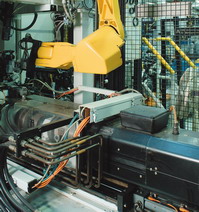
 Cost-effective predictive maintenance vibration monitor detects rolling element bearing failures and shaft imbalance conditions in four locations simultaneously.
The innovative efector octavis bearing condition monitor from sensor market leader ifm electronic is now available as a master unit which can monitor up to four seaparate locations. These new versions make predictive maintenance efector octavis even more cost effective.
The octavis central unit can also now be programmed via ethernet. The vibration pickups, which can be up to 30m from the central diagnostic, are made in stainless steel with a IP69K rating for arduous environments.
 TOTAL E&P UK, one of the largest exploration and production subsidiaries of the TOTAL Group has installed a 10,000 point + CitectSCADA system to provide monitoring - with full dual redundancy - of the control and safety systems for the giant St Fergus gas terminal in Scotland. The Terminal plays a key role in supplying Britain
 There are many sources of machinery health and production availability information available to an organization's maintenance and operations staff. Two of the most commonly used sources of information are scheduled inspection of machinery and condition monitoring.
 By using the latest condition monitoring systems and services, manufacturing companies can reduce unforeseen breakdowns. Schaeffler UK's managing director, Kate Hartigan, explains
 For many organisations today, the most important issue is how to reduce costs to compete profitably in global markets. The two key approaches to manufacturing cost reduction are Lean and TPM (Total Productive Maintenance).Lean reduces costs by eliminating waste in the end to end process, following Henry Ford's original dictum "the longer anything is in my factory, the more it costs me".
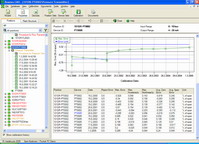 Plants can improve their efficiency and reduce costs by performing calibration history trend analysis. By doing it, a plant is able to define which instruments can be calibrated less frequently and which should be calibrated more frequently. Calibration history trend analysis is only possible with calibration software that provides this functionality.
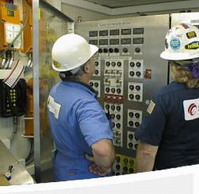 If one could get the right mix of preventive maintenance (PM) and corrective maintenance (CM), things might not be so bad. If CM could be reduced to zero, that would be grand, but that is not going to happen. Amid the propositions of RCM, TPM, RCA, the Pareto rule, best laid plans, etc., one still must contend with randomness. When our programs result in high levels of performance, the limiting factor is often randomness. Using the concept of randomness in analyzing equipment failure events is helpful in establishing the realistic limiting factors in PM and CM program development and management.
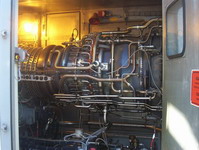 Predictive maintenance (PdM) techniques are commonly used on motors and drives. But how often is the power to the equipment inspected? Adding basic power quality measurements to equipment maintenance procedures can head off unexpected failures in both the equipment and the power system.
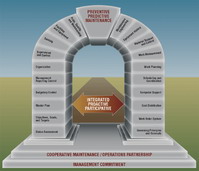 The first step toward realizing this goal is to figure out where you are presently. Determining the present baselines and gaps that exist in your processes and organization is best accomplished by performing a reliability assessment. This exercise will point out the areas within your business that need to be addressed from a reliability perspective. All facets of your organization must be analyzed. We have identified 21 key elements that, when integrated, provide the basis for reliability excellence (Fig. 1). Assessing the current state of each of these elements will identify the gaps that exist and provide the basis for a master plan of improvement.