News

50 years of REMBE – With empathy and heart, at any time and worldwide.

After fifty years of business, people often look back at the history, at old pictures, brochures and reports. But in REMBE's anniversary year things are different, because here (today just as 50 years ago) it is the people who shape the corporate spirit and make REMBE what it is today. Stefan Penno, Chief Executive Officer REMBE GmbH Safety+Control explains: "We trust each other, see the best in people and believe in each person's individual strengths. Because humans are what matters to us."

Bernhard Penno founded the company in 1973 as a sales office for rupture discs – initially as a one-man business in his garage at home. Just a few years later, new rupture disc designs were being manufactured in the company's first production hall. In 2005, Stefan Penno, the son of the company founder, took the reins of the business. Today, REMBE employs 340 "RFM" (REMBE family members) in over 90 countries and with 10 subsidiaries.

To mark its anniversary year, REMBE has come up with some "special activities". This year's celebrations are entirely in keeping with the above motto. They will start with an international REX conference for all RFMs worldwide. After a long break due to the coronavirus pandemic, the conference can finally resume this year at the newly renovated company headquarters in Brilon, Sauerland. This will be followed by the REMBE Family Day, thus ensuring that the anniversary year will be commemorated in style.

REMBE rupture discs and explosion protection systems safeguard processes in all industries around the world and help to save lies every day. REMBE wouldn’t be REMBE if we didn’t think outside the box, says Stefan Penno. With this in mind, several initiatives have been launched in recent years. For example, the RFMs involved in the REMBE green initiative are looking for improvement potential, determining which environmental aspects could be given greater attention to benefit customers and partners, and evaluating ways to ensure natural resources are handled responsibly – and are thus making a small contribution to protecting our planet.

After the REMBE WeltWald was launched last year as a major project of the initiative (8 hectares of forest are being reforested here), there is another campaign for the anniversary. 50 years - 500 trees. For more information: https://rembe-green.de/

This article can also be foud in the issue below.


BVC ATEX Industrial Vacuum Cleaners – Choosing the Right Machine

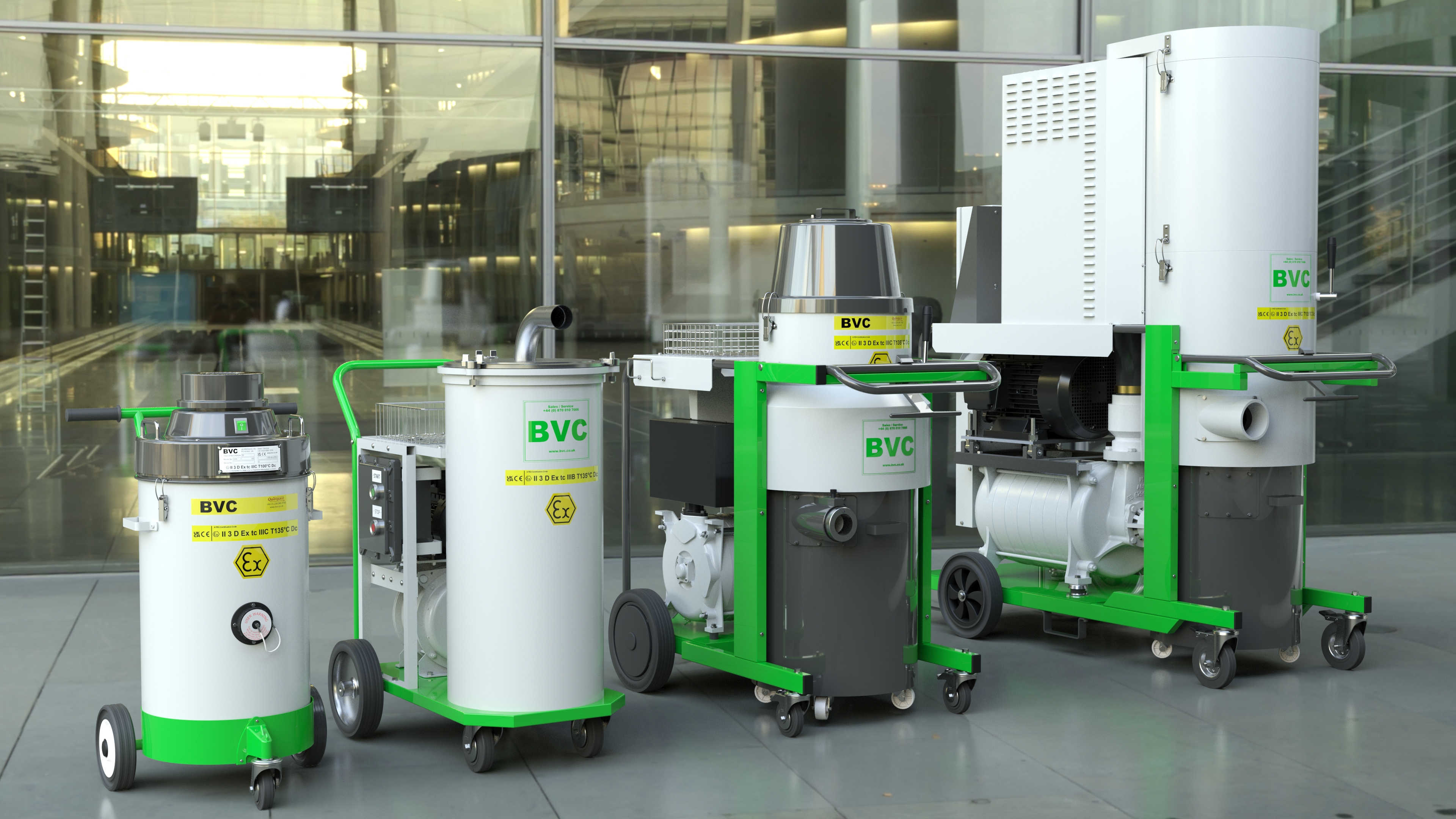
BVC Industrial Vacuum Cleaners are now manufactured by Quirepace Ltd in Fareham, Hampshire but the Company has direct roots back to the original British Vacuum Cleaner Company formed by Hubert Cecil Booth in 1902 to exploit his patented innovation, the first mechanically-powered vacuum cleaner.

Today Quirepace specialise in manufacturing heavy duty vacuum cleaners under the BVC brand designed to meet the rigours and harsh environments found in Industry.

Of particular importance, and even more so now where there is increasing focus on fire and explosion risk, is the range of BVC machines designed for ATEX environments. Most of the ATEX rated units in the BVC range are “category 3” products; that is, they are designed to operate in areas where an explosive atmosphere is not likely to occur but if it does occur, will persist for a short period only.

It is the employers and/or owners’ responsibility to determine the risks within their establishment. DSEAR (Dangerous Substances and Explosive Atmospheres Regulations) places responsibility with EMPLOYERS and the self-employed to carry out a Risk Assessment of their workplace to identify the risks from fires or explosions and to take preventive measures.

One of the preventative measures is to ensure that any vacuum cleaners used for cleaning are appropriately rated for the area they are to be used in. When thinking about Vacuum Cleaners people think about dust, particularly with reference to ATEX zones where dust in the air can under some circumstances become explosive.

Potentially explosive dusts include dusts of organic compounds such as sugar, flour, wood, plastics and also metal dusts such as aluminium and magnesium. It is extremely important, in the context of choosing an Industrial Vacuum Cleaner for an ATEX zone to understand that the ATEX rating of the machine relates solely to the area the machine is to be used in but does not imply any confirmation that the product is suitable to be cleaned with a vacuum cleaner. For example, some very fine metal dusts have a very low Minimum Ignition Energy and are unsuitable for vacuuming because of the ease with which they will catch fire, even if the ATEX zone has a lower rating.

It is always the employers and/or owners’ responsibility to do their own risk assessments on their products.

Potentially explosive atmospheres are not only created by dusts but also by gases. If a particular operation has ATEX zones that refer to both Gas and Dust hazards, then it is essential that any Industrial Vacuum Cleaner is likewise appropriately rated for both environments.

Whilst ATEX Dust Zone 22 and ATEX Gas Zone 2 both require a category 3 rated machine, the actual specifications of a machine may differ slightly for use in each environment. For example, an ATEX rated vacuum cleaner for Dust Zone 22 may not automatically be suitable for Gas Zone 2. This is because components such as motors and motor starters may require different levels of protection for Gas Zones.

BVC ATEX rated Industrial Vacuum Cleaners are available in various specifications. For example, the popular IV60 1-2kW unit is available rated either for dust only, or in a slightly different configuration for both dust and gas rated ATEX environments. The rating plates and documentation for the machines confirms the specification of each individual unit.

Choosing the correct ATEX rated vacuum cleaner can be a fairly complex decision and Quirepace’s experienced sales team are able to advise the correct machine to supply to meet the ATEX zone requirements that have been determined by the employer and/or owner of the operation.

Quirepace Ltd

023 9260 3700

Quirepace.co.uk

This email address is being protected from spambots. You need JavaScript enabled to view it.

This article can alos be found in the issue below.


Understanding the differences between UKCA ‘Ex’, The ATEX Directive and IECEx

logos


ATEX Certification (EU)

ATEX is one of the CE Marking Directives required for placing products on the European market when the product is designed to be used in potentially explosive atmospheres. The use of harmonized European standards (prefixed ‘EN’) gives the manufacturer the “presumption of conformity” to the “Essential Health and Safety Requirements (EHSRs)” and this is the basis on which to issue a declaration of compliance for the ATEX Directive. It is also possible to certify directly against the Essential Health and Safety Requirements without applying a Standard, but this is a far more difficult route and requires a high degree of specialist knowledge. The ATEX Directive requires that Zone 0 and Zone 1 electrical equipment (and zone 0 non-electrical equipment) has the following documents for approval.

  • An ATEX EC Type Exam Certificate issued by a Notified Body
  • An ATEX Quality Module issued by a Notified Body
  • A Declaration of Conformity (DoC) and Technical File stating compliance with all applicable Directives. The DoC is issued by the manufacturer.

For certain types of equipment (non-electrical for Zone 1 or both electrical and non-electrical for Zone 2), it is possible to self-certify, although in many cases buyers will request some form of 3rd party certification. For non-electrical equipment designed for Zone 1 use, self-certification can be carried out, but the technical file generated must be lodged with a Notified Body.

UKCA ‘EX’ Certification (UK)

UKCA ‘EX’ Certication is essentially the same as ATEX with the major difference that the products are certified to ‘UK Designated Standards’ by a UK Government Appointed Body for the ‘EPS Regulations’ (Equipment and Protective Systems).

The IECEx Scheme (Global)

The IECEx Scheme is a voluntary Certification Body Scheme for Ex equipment and assemblies used in potentially explosive atmospheres. It consists of three elements, all issued by an IECEx Scheme Certification Body (ExCB):

  • IECEx Test Report (ExTR), which documents the evaluation and testing of the subject equipment, performed to the applicable IEC Series Standards
  • IECEx Quality Assessment Report (ExQAR), which documents the suitability of the manufacturer’s QA system.
  • IECEx Certificate of Conformity (IECEx CoC), which can be issued to a manufacturer holding an ExTR and an applicable ExQAR. This is published ‘on-line’ and is live.

Unlike ATEX and UKCA ‘Ex’ there is no route for self-certification. Unlike ATEX and UKCA there is also no legal requirement to have IECEx Certified Equipment, but it is often a requirement of end users (who prefer that all approval is from a highly regulated 3rd party) and by other Certification Bodies around the world who use the IECEX Test Report as the basis for local certication. IECEX is the ‘passport’ for Global ‘Ex’ Approval and access to world markets.

Sean Clarke CEng MSc FIET is the Managing Director of ExVeritas who a UKCA Approved ‘Ex’ Body, an ATEX Notified Body and IECEx Test and Certification Body. www.exveritas.com for on-line ATEX and UKCA Technical File Lodging

Glamox to reduce carbon footprint of LED luminaires by switching to recycled aluminium

  • 63 percent reduction in emissions of CO2 equivalents for aluminum
  • Will eliminate annual emissions of 1,000 tonnes of CO2 equivalents on three product lines

Oslo, Norway, 13 March, 2023 – Glamox AS, a leading lighting company, is progressing towards its goal of Net Zero operations by 2030. Today it announced that it has started to switch from using virgin aluminium to recycled aluminium in manufacturing its LED luminaires. The company has already made the switch for one of its most popular luminaires and is preparing to extend it to other families. The move will further lower the carbon footprint of the company and those customers who purchase the already energy-efficient LED luminaires for use in professional buildings.

Recycled aluminium is created by re-melting scrap metal. The process is less expensive and energy-intensive than creating new aluminium, which is made by the electrolysis of aluminum oxide, which must first be mined from bauxite ore and then fired.

“We’ve already implemented the plan to shift over to recycled aluminium in the manufacture of a popular luminaire which will result in a 63 percent reduction in the emissions of CO2 equivalents over using new aluminium in these profiles,” said Birger Holo, Technical Director, Professional Business Solutions, Glamox. “By adding two new product lines we estimate that we will eliminate a total of 1,000 tonnes of CO2 equivalents each year, which equals the amount of carbon sequestered by nearly 1,200 acres of forest a year.”

The Glamox C35 and C95 LED luminaire ranges are earmarked to be the next products to join the Glamox C80 luminaire range in using recycled aluminium. All three product lines are manufactured in Keila, Estonia. Together they represent around 400,000 products sold yearly, using a combined 300 tonnes of aluminium.

The company is also progressively eliminating plastic in its packaging, replacing bubble wrap and Styrofoam with materials that are easier to recycle. This has been done for its Glamox C35 and C95 luminaires.  Also, it recently launched an Environmental Product Declarations (EPD) generator. Based on international standards, this tool documents the environmental footprint of products taking into account their lifecycle.

“We still have a lot of work ahead of us, but we are committed to helping our customers to reduce their carbon footprint and for us to achieve Net Zero operations by 2030. It’s not enough providing energy-efficient LED lighting, we must ensure that every facet of our operations and supply chain minimises our environmental impact,” said Viktor Söderberg, Business Development Director, who heads up the company’s sustainability programme.

This article can also be found in the issue below.


Five tips to help you drive safety transformation

MicrosoftTeams image 73

The priority for managers in charge of safety is the health and wellbeing of their employees. But, when those leaders try to implement transformational measures, getting approval for the budget needed to guarantee and improve the safety levels can prove an obstacle.


Demonstrating the value of safety in an organisation is not easy. That’s why Antonio Pereira, from MSA Safety, has prepared five tips for creating a business case that can effect change and help drive your safety transformation strategies forward.

Tip one: Share the mission

A shared safety mission does several things: It articulates the safety goals and values that should resonate throughout the company, unites workers and managers, and provides a single purpose that engages all employees. It also supplies some direction for creating a safety management system. In short, it drives safety at a company and is the first step toward creating a safe culture.

A shared mission is an effective way to bring people together. The mission should be simple, straightforward, and meaningful.

Fortunately, with safety, the mission is clear: “reduce risk and boost productivity.”

When presenting your case in support of a transformational safety strategy, make sure everyone stays focused on the mission. Repeat it often, so that others will be able to repeat it, too.

Tip two: Define and communicate the goal

If you’ve ever heard the expression, “Let’s get everyone on the same page,” then you know exactly what this tip is about. As the safety professional, it’s your job to ensure that everyone understands what you’re asking for. Keep in mind that your goal is more defined than your mission. A goal is a clear and tangible achievement that supports the mission.

Productivity experts suggest using SMART goals in which the goal is specific, measurable, attainable, relevant, and time bound. The point here is to encourage you to take the time to think through what you’re asking for and why, then write it out in a format that’s easily understood.

Smart Goal Example: Connected Safety Program, moving to the Altair io™ 4

  • Specific: We want to reduce the time spent with gas detection management, and achieve compliance by using a connected gas detectors.
  • Measurable: We are aiming for a specific reduction in time spent completing administrative tasks.
  • Attainable: Using paper and spreadsheets to manage our gas-detection fleet, wastes a certain number of hours per week. Automating the process will save us time and increase compliance from our workers.
  • Relevant: Keeping workers safe and our organisation compliant is key to maintaining safe, productive operations and ensuring profitability. Understand when a device is turned on, turned off – and everything in between.
  • Time-bound: We’ll see results almost immediately and achieve our measurable goal by the end of the quarter.

Tip three: Offer insight

Part of building a business case for change is to inspire a mindset shift in those who are potential barriers to safety transformation. Position your case for success by educating others, giving them information about how what you’re asking for aligns with both the safety mission and overall organisational objectives.

One way to help gatekeepers understand and accept the change is by sharing success stories with them. Learning of others’ success is both inspiring and informative. More importantly, it adds evidence that supports your case and, ultimately, informs the business decision.

Tip four: Demonstrate the benefits

Of all the tips, perhaps this is the most crucial. It’s also the most challenging. Why? Because at the heart of this tip is an idea that is likely the complete opposite of the gatekeeper’s idea about expenditures:

This is an investment, not an expense.

Such an investment is a business decision not a personal one, so it’s up to you to substantiate the proposal by providing appropriate facts and figures. This is the time to talk about ROI considerations, with respect to both productivity and cost.

Remember, your goal is to overcome the objection about spending time and money. So, here’s an example of how to pivot the discussion from expenditure to investment using elements of The MSA Connected Work Platform, driven by the ALTAIR io 4 Gas Detection Wearable.

  • MSA’s ALTAIR io 4 Connected Gas Detector have been tested under the harshest conditions. Featuring military-grade durability and an IP68 dust and water rating, the detectors can also survive a 25-foot drop. This means you can be confident you’ll avoid costly down times with devices out of action.
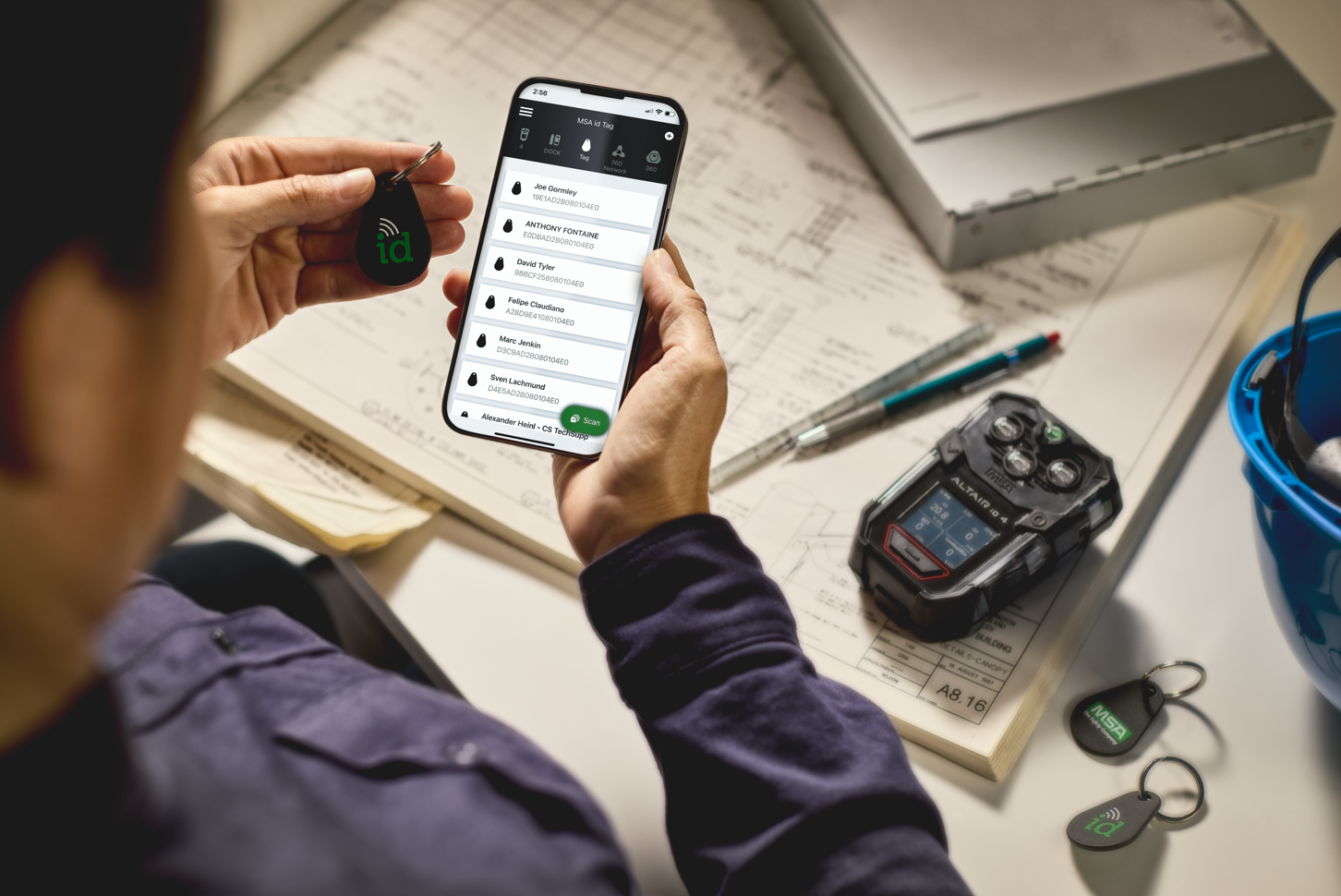
  • Signing-out devices using manual processes or clipboard sign-ins is a time-consuming and logistically difficult task. Assigning the Altair io 4, however, is as simple as a “tap” with the associated id Tag, while returning them happens with just a “click” into the Altair io Charge. This frees up worker time for greater productivity while also helping to ensure compliance and accountability.
  • MSA+ is a complete subscription programme, including hardware and software solutions. It removes upfront capital expenditure, and eliminates the depreciation of your safety asset, with subscribers able to upgrade to the latest technology as soon as it becomes available.
  • MSA’s Grid software helps to save time spent managing the gas detection fleet – with Altair io 4 devices updating to the latest firmware over-the-air, minimising servicing time.
  • The ALTAIR io Dock streamlines your calibration process, starting automatically when you insert the Altair io 4 device and automatically logging the test for compliance management.
  • XCELL® SENSORS use 50% less gas than the industry average during calibration and bump testing. The breakthrough sensor design enables faster response and shorter span calibrations. Plus, it’s rated to last.

Tip five: Invest in future-forward solutions

We live in a connected world and now safety has the technology that can connect workers, worksites, and workflows. Connectivity with an MSA+ subscription enables remote live monitoring, allowing managers to see all active users at any given time, including their live location gas exposures and man down alarms.

The move to an MSA+ subscription provides the ability to act at speed, reducing workplace injuries and providing actionable data, so you can have a better, more proactive control of your detection programme.

Build Your Case for a Connected Work Platform

Having a proven plan of action based on these five tips can help you prepare for and present your case most effectively. Because you probably want to garner buy-in from others, it’s important that you prepare them for transformation by taking them on the journey to it.

You know – and they soon will, too – that creating a connected safety program is not only the practical thing to do, it’s how you’ll help advance the safety mission and support organisational objectives.

If you need additional insight or help in creating a stronger, proactive culture of safety and performance, learn more about MSA Connected Work Platform here or request a call back from our specialists here.
The priority for managers in charge of safety is the health and wellbeing of their employees. But, when those leaders try to implement transformational measures, getting approval for the budget needed to guarantee and improve the safety levels can prove an obstacle.


Demonstrating the value of safety in an organisation is not easy. That’s why Antonio Pereira, from MSA Safety, has prepared five tips for creating a business case that can effect change and help drive your safety transformation strategies forward.

Tip one: Share the mission

A shared safety mission does several things: It articulates the safety goals and values that should resonate throughout the company, unites workers and managers, and provides a single purpose that engages all employees. It also supplies some direction for creating a safety management system. In short, it drives safety at a company and is the first step toward creating a safe culture.

A shared mission is an effective way to bring people together. The mission should be simple, straightforward, and meaningful.

Fortunately, with safety, the mission is clear: “reduce risk and boost productivity.”

When presenting your case in support of a transformational safety strategy, make sure everyone stays focused on the mission. Repeat it often, so that others will be able to repeat it, too.

Tip two: Define and communicate the goal

If you’ve ever heard the expression, “Let’s get everyone on the same page,” then you know exactly what this tip is about. As the safety professional, it’s your job to ensure that everyone understands what you’re asking for. Keep in mind that your goal is more defined than your mission. A goal is a clear and tangible achievement that supports the mission.

Productivity experts suggest using SMART goals in which the goal is specific, measurable, attainable, relevant, and time bound. The point here is to encourage you to take the time to think through what you’re asking for and why, then write it out in a format that’s easily understood.

Smart Goal Example: Connected Safety Program, moving to the Altair io™ 4

  • Specific: We want to reduce the time spent with gas detection management, and achieve compliance by using a connected gas detectors.
  • Measurable: We are aiming for a specific reduction in time spent completing administrative tasks.
  • Attainable: Using paper and spreadsheets to manage our gas-detection fleet, wastes a certain number of hours per week. Automating the process will save us time and increase compliance from our workers.
  • Relevant: Keeping workers safe and our organisation compliant is key to maintaining safe, productive operations and ensuring profitability. Understand when a device is turned on, turned off – and everything in between.
  • Time-bound: We’ll see results almost immediately and achieve our measurable goal by the end of the quarter.

Tip three: Offer insight

Part of building a business case for change is to inspire a mindset shift in those who are potential barriers to safety transformation. Position your case for success by educating others, giving them information about how what you’re asking for aligns with both the safety mission and overall organisational objectives.

One way to help gatekeepers understand and accept the change is by sharing success stories with them. Learning of others’ success is both inspiring and informative. More importantly, it adds evidence that supports your case and, ultimately, informs the business decision.

Tip four: Demonstrate the benefits

Of all the tips, perhaps this is the most crucial. It’s also the most challenging. Why? Because at the heart of this tip is an idea that is likely the complete opposite of the gatekeeper’s idea about expenditures:

This is an investment, not an expense.

Such an investment is a business decision not a personal one, so it’s up to you to substantiate the proposal by providing appropriate facts and figures. This is the time to talk about ROI considerations, with respect to both productivity and cost.

Remember, your goal is to overcome the objection about spending time and money. So, here’s an example of how to pivot the discussion from expenditure to investment using elements of The MSA Connected Work Platform, driven by the ALTAIR io 4 Gas Detection Wearable.

  • MSA’s ALTAIR io 4 Connected Gas Detector have been tested under the harshest conditions. Featuring military-grade durability and an IP68 dust and water rating, the detectors can also survive a 25-foot drop. This means you can be confident you’ll avoid costly down times with devices out of action.
  • Signing-out devices using manual processes or clipboard sign-ins is a time-consuming and logistically difficult task. Assigning the Altair io 4, however, is as simple as a “tap” with the associated id Tag, while returning them happens with just a “click” into the Altair io Charge. This frees up worker time for greater productivity while also helping to ensure compliance and accountability.
  • MSA+ is a complete subscription programme, including hardware and software solutions. It removes upfront capital expenditure, and eliminates the depreciation of your safety asset, with subscribers able to upgrade to the latest technology as soon as it becomes available.
  • MSA’s Grid software helps to save time spent managing the gas detection fleet – with Altair io 4 devices updating to the latest firmware over-the-air, minimising servicing time.
  • The ALTAIR io Dock streamlines your calibration process, starting automatically when you insert the Altair io 4 device and automatically logging the test for compliance management.
  • XCELL® SENSORS use 50% less gas than the industry average during calibration and bump testing. The breakthrough sensor design enables faster response and shorter span calibrations. Plus, it’s rated to last.

Tip five: Invest in future-forward solutions

We live in a connected world and now safety has the technology that can connect workers, worksites, and workflows. Connectivity with an MSA+ subscription enables remote live monitoring, allowing managers to see all active users at any given time, including their live location gas exposures and man down alarms.

The move to an MSA+ subscription provides the ability to act at speed, reducing workplace injuries and providing actionable data, so you can have a better, more proactive control of your detection programme.

Build Your Case for a Connected Work Platform

Having a proven plan of action based on these five tips can help you prepare for and present your case most effectively. Because you probably want to garner buy-in from others, it’s important that you prepare them for transformation by taking them on the journey to it.

You know – and they soon will, too – that creating a connected safety program is not only the practical thing to do, it’s how you’ll help advance the safety mission and support organisational objectives.

If you need additional insight or help in creating a stronger, proactive culture of safety and performance, learn more about MSA Connected Work Platform here or request a call back from our specialists here.
ATEX Concepts: Understanding Dust Zone 22

Dust explosions from combustible dust can occur in any industrial process where materials are processed. This combustible dust could exist in the form of a cloud or by build-up, which when circulated can cause an explosive atmosphere. This occasion is rare in normal operation and often temporary. Zone 22 specifically relates to the presence of an explosive dust atmosphere that occurs only by accident, but not in normal duty, category 3D and equipment level Dc is required at a minimum.

In ATEX coding, G represents gas and D for dust, while the second letter refers to the protection level required. Dc equipment protection levels offer enhanced protection; the equipment remains safe in normal operation and may have extra protection to minimise ignition risk in fault situations. A single fault may cause the equipment to shut down on Gc or Dc labelled equipment.

ATEX fans certified for zone 22 use are designed to exacting standards and are suitable for dust group IIIB non-conductive dusts such as milk powder, sugar, or flour, and IIIC conductive dusts such as graphite powder and toner. Some of these materials are not normally combustible, but they can burn or explode if the particles are the right size or concentration.

Motors characterised as “Increased Safety” Ex ec or ex eb, are used on industrial zone 22 explosion proof fans. Ex ec is the lowest and most normal level of Ex protection, known as reduced risk protection. The design of ex ec motors prevents an internal malfunction from creating sparks in normal operation and therefore is not capable of causing an explosive atmosphere to ignite. The construction ensures reliable prevention of unacceptably high temperatures and sparks or electrical arcs that could act as ignition sources in hazardous areas. It also aims to prevent excessive heating and offers a safer design against the risks of sparks during starting.

If a dust cloud enters in contact with a hot surface, it may auto ignite and explode. The MIT, or minimum ignition temperature is the minimum temperature for which a surface will ignite a dust cloud. MIT values are generally between 150-700 degrees Celsius depending on the material. During design phase, a dust explosion risk analysis is carried out on test material to determine the ignition point. This is then used to ensure the system is designed so that the ignition temperature cannot be reached by any component in the process.

Unlike gas zones, where maximum surface temperatures fit into a class that is dependent on the carried gas ignition properties, for dust, the maximum surface temperature should be used as an absolute figure. Industrial fans suitable will advise the absolute figure on their ATEX label; for example, 120° and 135°. Maximum admissible temperatures should be equal or lower than the lowest value of the temperature limit. This is given as 2/3 of the maximum ignition temperature of the dust.

Axair are an award winning team of industrial fan integration experts but cannot by law assess an area to determine its hazardous area classification. We encourage anyone working with hazardous areas to contact an independent body for a zone assessment before requesting information about ATEX certified components for gas or dust extraction. For industrial fan assistance contact our team who will be happy to discuss key ATEX concepts and the suitability of explosion proof or material handling components for dust rich environments.

Axair Fans UK Limited

This article can also be found in the issue below.


RugGear and Esper partner to innovate the rugged device market

RG850 PM


Image


  • Esper’s Android device management and software deployment solution strengthens RugGear’s devices for the enterprise
  • This collaboration will empower customers with full control to remotely manage, monitor, control, lockdown, debug, and update their rugged devices with ease, giving them the confidence to scale their business

Lauda-Koenigshofen, March 16, 2023 - RugGear®, a leading international developer and manufacturer of rugged mobile phones, smartphones, and tablets designed for professional use in extreme safety and working conditions, is teaming up with Esper, the only platform for predictable software deployment and device management, to provide total device control solutions to customers in the Android rugged device market. This collaboration will provide enterprises with the confidence to manage large fleets of devices with a focus on their critical business applications, leaving the device infrastructure and management to RugGear and Esper.

The RugGear mobile devices can be customized to meet the needs of daily work. Together with Esper's device management solutions, customer needs can now be met even more concretely for the best possible user experience.

This partnership will focus on industries like logistics, transportation, telecom, healthcare, and mining segments.  Features like zero-touch provisioning dramatically decrease device setup times, while remote monitoring and scheduled software rollouts improve device fleet visibility, health, and security. Geofencing and device lockdown ensure tamper-free, secure devices. RugGear has been part of the Google zero-touch enrollment program since August 2019. Thanks to this program, RugGear devices can be easily deployed on corporate networks. With a registered customer account, the customer's IT department can set up the devices automatically with the help of the Esper device manager. All top models (RG530, RG540, RG655, RG725 and RG750) are zero-touch compatible.

“With Esper, we have a competent partner on board to offer our industrial customers tailor-made solutions from a single source. We are pleased to be able to help our customers make the enrolment process even more cost- and time-effective”, said Martin Haaf, CEO RugGear GmbH.

“We are excited to partner with RugGear to help enterprises scale the deployment and management of rugged devices in global markets. Our collaboration will enable various logistics and transportation customers to minimize downtime, accelerating their digital transformation,” commented Shiv Sundar, Esper co-founder, and COO.

About RugGear®
RugGear® is a leading international developer and manufacturer of rugged mobile phones, smartphones and tablets designed for professional use in extreme safety and working conditions, especially in the Mission Critical area. The mobile devices are developed and designed by specialists in Germany (Lauda-Koenigshofen), where RugGear GmbH is also based. RugGear's high-end devices support all types of mobile voice and data communication, LTE/private LTE, Google Chrome Enterprise, eMBMS (evolved Multimedia Broadcast Multicast Service) and especially the Mission Critical application Push-to-Talk-over-Cellular (POC or PTToC), which is increasingly replacing traditional PTT solutions such as TETRA in Europe or iDEN in the USA and other regions of the world. RugGear's mobile devices are suitable for a wide range of industrial and outdoor applications and meet the most important standards (IP67/68/69, MIL-STD-810G/H, waterproof, shockproof, dustproof, etc.). RugGear was founded in 2006 by the president of the company Maverick Chen and is present in Europe, USA, Middle East, Australia and Asia. Since early 2020, Maverick Chen has further intensified the existing partnership with Martin Haaf, CEO of the German company i.safe MOBILE from Lauda-Koenigshofen. Together, the two manufacturers thus cover the three most important areas of application for the professional use of mobile devices in a leading global position: 

  • Mobile device providers for PTT (push-to-talk)/POC (push-to-talk-over-cellular) and mission critical applications
  • Provider of complete solutions, for example for MDM (Mobile Device Management), PTT, MCPTT and POC (in cooperation with software partners)
  • Mobile device supplier for hazardous areas of zones 1/21 and 2/22 (intrinsically safe devices).

RugGear cooperates globally with leading mobile equipment suppliers and operators as well as solution and integration providers to provide industrial customers with tailor-made solutions from a single source.

For more information on RugGear®, please click here:
RugGear® on the net: www.ruggear.com
RugGear® on LinkedIn:
https://www.linkedin.com/company/ruggearglobal/
RugGear® on Facebook: http://www.facebook.com/RugGear
RugGear® on YouTube: https://tinyurl.com/youtube-ruggear

This artilce can be alos foud in the issue below.


Peli Safety Lighting for Confined Space

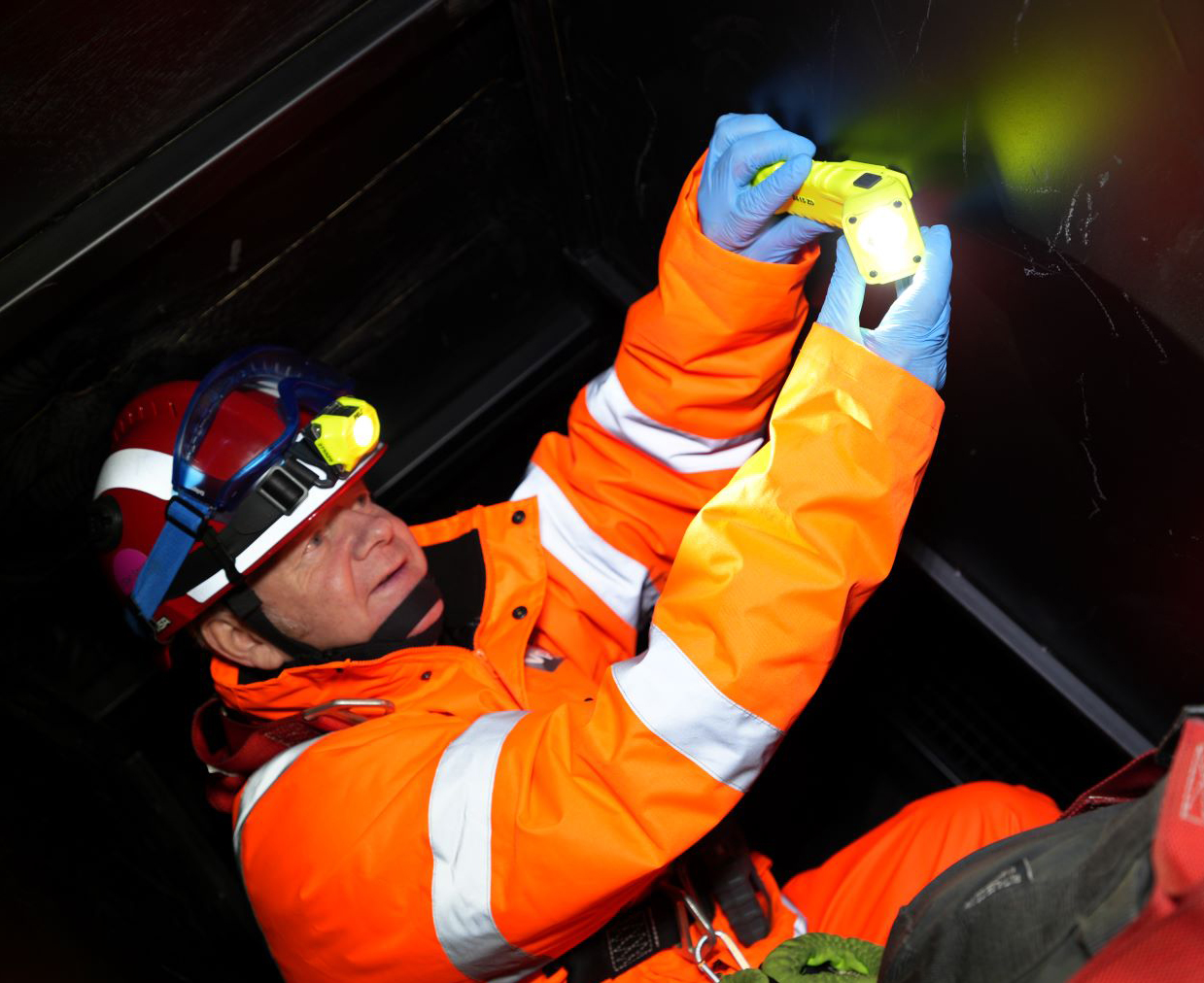
Peli Products (UK) recently teamed up with ESS to put Peli lighting products to the test in their confined space training facility in Southampton. Thanks to Nick Cole, Trainer, for his assistance.

ESS is one of the leading specialist hire companies in the UK offering a range of safety equipment for operating in confined spaces. They are also a leading training provider of confined space training, training thousands of delegates per year via their network of training venues. ESS qualified trainers educate on the procedures and equipment needed to remain safe when working in a confined space.

Peli Products (UK) offer a wide range of tough safety torches including head torches, right angled models, compact versions and heavy-duty hand lights; all designed for use in hazardous areas.

Peli ATEX torches and lights are ideal for such hazardous areas as silos, tanks and chambers where an individual may be exposed to a range of potential hazards.

In the tunnels, Peli Safety torches were used in a scenario to evacuate a casualty. The Peli 3415 Z0 features a strong magnet which was used to position the light perfectly and freed up the trainer’s hands to attend to the “casualty”.  This model also has a 90° articulating head to angle the light exactly where required.  An integrated clip easily attaches to clothing for body worn, hands-free light.

The Peli 9415 Zone 0 is a rugged hand lamp with a powerful beam which cuts through smoke and fog.   The ATEX Zone 0 rating ensures the light can be used in hazardous areas.  This model was used to illuminate the tunnels, allowing the rescuer to attend to the “casualty”.  It features a sure grip handle for a comfortable and non- slip grip with an extra-large space to accommodate gloved hands.

The 9455 Zone 0 from the Peli range of Area lights was also used for a wider illumination.  This maintenance-free rechargeable LED light is easily portable, weighing 7.3kg and can be set up in seconds.

The unit is compact, easy to transport and has a retractable mast; the head can be rotated 360° and it also pivots to angle the light directly where required.

The 9455Z0 is popular across many industries where previously they may have been encumbered by bulky lights, trailing cables and the use of external power supplies.

Professionals have chosen the Peli brand for many years; trusting in the reliability, performance and durability of the products in the most testing conditions.  Established for over 30 years, Peli Products (UK) is ISO registered; ensuring quality systems and excellence in service.  The company has grown considerably during this time and has developed an outstanding reputation for both the quality of products and excellence in customer service.

For more details telephone 01457 869999 or go to www.peliproducts.co.uk.

This artilce can also be found in the issue below.


Sentric Safety Group Acquires Zonegreen

Sentric Safety Group, a company that manufactures and distributes leading safety solutions, announces today it has acquired Zonegreen.

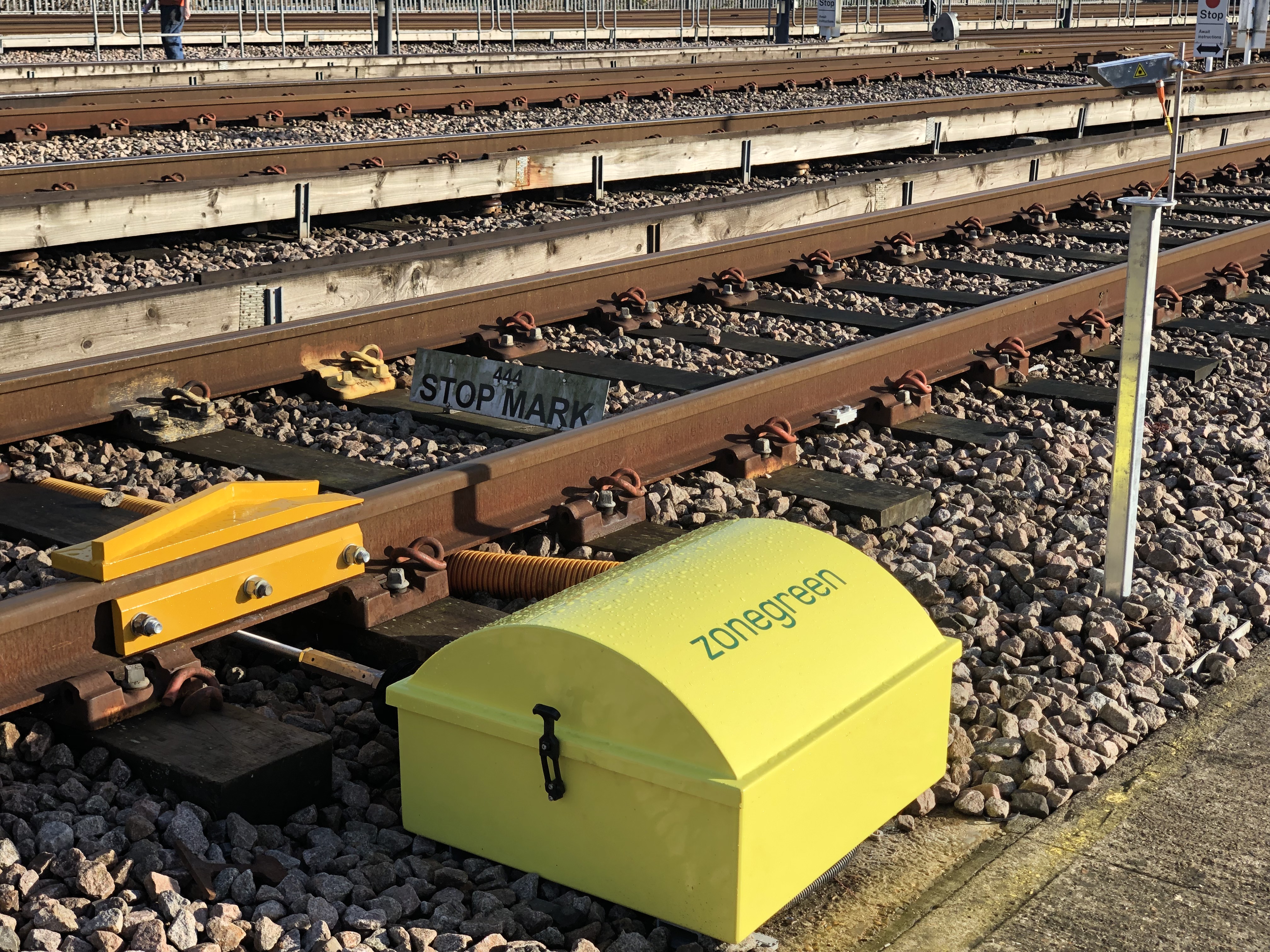
Headquartered in Sheffield, Zonegreen develops technologies, software and services that make working in rail depots safer and more efficient. Controlled remotely, these technologies protect lives by ensuring vehicles don’t move unless it is safe to do so. Zonegreen’s products are used by rail customers across the UK, Ireland and Australia.

"Sentric has a proven track record in the rail safety space in France. The acquisition of Zonegreen will enable us to offer a complete range of connected solutions to keep rail maintenance workers safe," said Aurelie Paul, General Manager, Sentric. “Our companies’ technologies are solving real problems every day as new ways of travelling continue to evolve. Sentric’s investment not only accelerates its ambition for international growth, it also gives the company long-term support to create the safest environment for employees when working in rail depots.”

As a highly sustainable mode of transport, rail makes a notable contribution to reducing carbon emissions and achieving climate objectives. With its growth, there is a growing demand for innovative technologies which support the safety, reliability and efficiency of rail networks and their workers.

  • Depot Personnel Protection System (DPPSTM):  Allows the safe and efficient movement of vehicles in and around rail maintenance depots. The innovative technology safeguards workers by using approved powered derailers, linked to road end panels. Staff create safe zones in which to work in using RFID tags and access permission for trains will then only be given if the road is clear.
  • Depot Manager: SCADA software provides a real time graphical overview of the status of the DPPSTM, and records all safety operations, providing full traceability.
  • Points Converter: allows the automation and remote operation of any traditional manual points/switches and rail road crossings.

“Joining Sentric will give us new opportunities to develop our technology offerings and expand our international reach, to protect even more rail workers, and to further increase safety, productivity and reliability for rail network operators,” Gemma Houghton, Head of Sales, Zonegreen.

Down stream USA 2023 ticket news

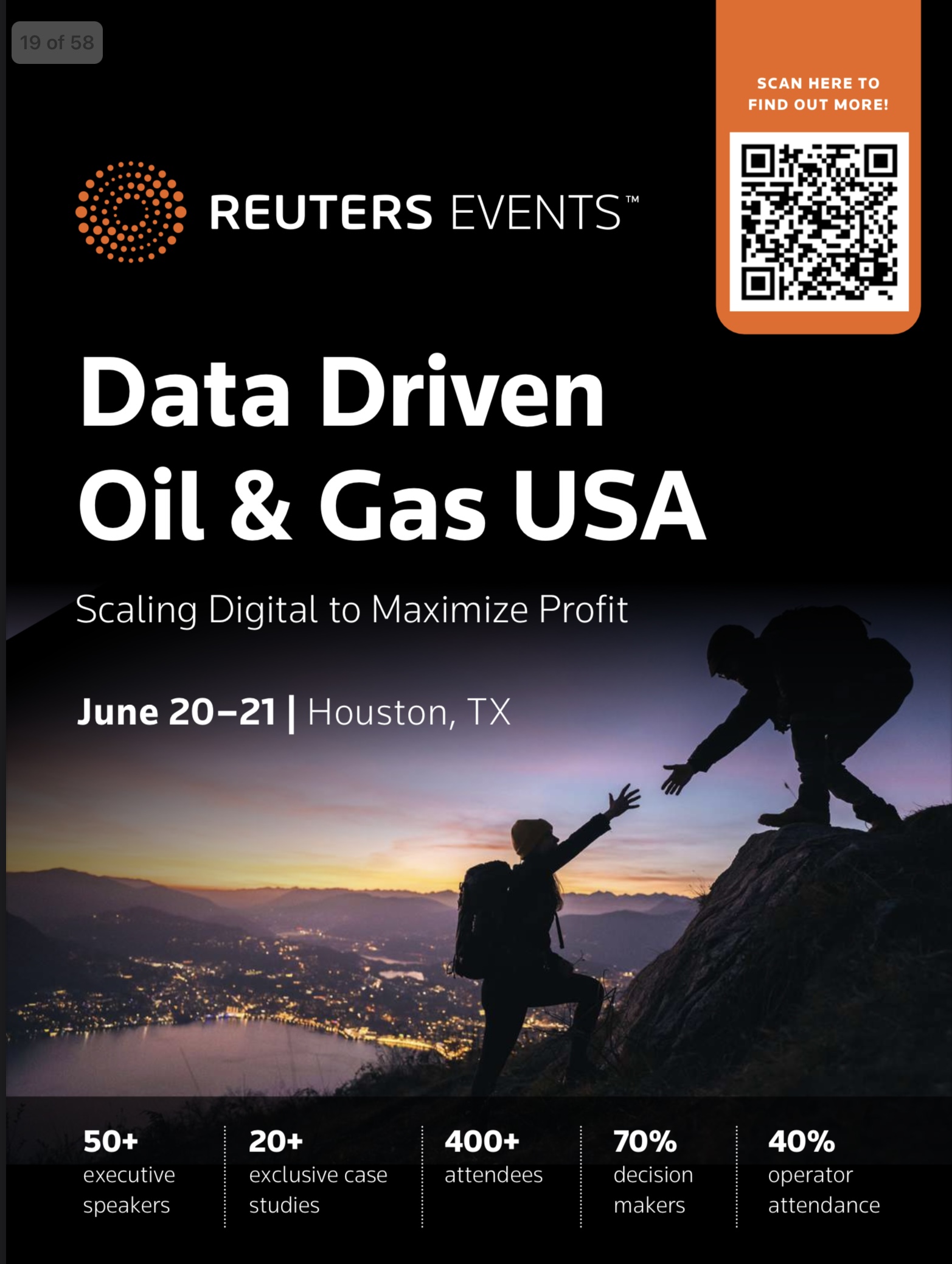
Good evening, have you signed up to attend downstream USA this coming June if not use this code HESMEDIA200 to get $200 off any full price ticket.
For more information visit the link below

https://lnkd.in/eZtSe-S8

#oilandgas #datadriven #downstream