News

Wherever eyes are exposed to injurious material in the workplace we provide the emergency equipment necessary to keep workers safe

As leaders in the designing  of manufacturing of products for the management of flammable liquids and hazardous materials, our goal is to create essential pieces of equipment that become the standard in every laboratory and facility that uses harmful substances. Our equipment meets the highest ANSI standard design and never compromises on safety or efficiency. We create products at such a high standard so our clients enjoy hassle-free protection.

Whilst we hope there is never the need for your safety showers to be used, having one is imperative on site should be working around harmful substances.

Our tank-fed ranges are designed to be positioned in easily accessible areas and are easily activated even if vision is compromised. The tray firmly shuts off water flow and keeps nozzles free of airborne pollutants when it is upright. Filling, inspection, and cleaning are all made easier with the wide rear aperture. The FDA-approved tanks are self-contained and do not require a water source. Drain pipes and wall/shelf mounting bracket are included, and we always strive for superior build quality.

Keeping up with current ANSI standards can be a challenging task. Our main feed washes can be conveniently located in open areas and are constructed at an ANSI-compliant height. Suitable for all areas. A specifically constructed valve with an inbuilt, heavy-duty stainless steel stop-plate is included in the system to handle harsh operation without failure. Low operating torque ensures consistent and simple on/off operation and is especially appreciated in emergency situations. 

Many clients choose Aqua’s products due to their superior reliability and longevity. Built from corrosion-resistant materials, these assets deliver tepid water to even the most remote locations.

Aqua Safety Showers can keep your workers safe with our wide range of products and units available. For a bespoke quotation, please get in touch with our sales team today who will generate a quote specific to your needs with our best possible pricing.

We are on hand to help in any situation, big or small.

www.aqua-safety.com

This article can also be found in the issue below.


Attractive discount available for Teledyne FLIR Scion thermal monoculars

flir_15.jpeg

The Teledyne FLIR Scion® series of long-range monoculars, built to equip law enforcement professionals and military personnel with superior thermal surveillance, is now available to customers in the EMEA (Europe, Middle East and Africa) region at an attractive 15% discount.

This not-to-be-missed promotion also includes a free rechargeable battery, providing a limited-time opportunity for law enforcement agencies, police forces and border guards to enhance their service performance at a reduced price.

Featuring Teledyne FLIR’s high-performance Boson® thermal core for sharp, reliable vision in complete darkness, Scion long-range (up to 1120m) thermal monoculars are ideal for a host of applications, from maintaining a safe stand-off distance during law enforcement operations, to scanning distant ridgelines for a lost backpacker. Feature-rich Scion PTM and OTM monoculars are available with 9 or 60 Hz refresh rate and include: Wi-Fi and Bluetooth® connectivity; 2 GB of internal storage; a microSD™ card slot to record both geo-tagged video and still images; a rugged IP67-rated housing; picture-in-picture zoom; and GPS functionality. Additionally, a ‘Lock Span Mode’ creates highly detailed images by eliminating unwanted temperature detection. The promotion is valid until 31 December 2023.

First Laser Open Path H2S Gas Detector for safety related applications

Teledyne Gas and Flame Detection is unveiling its GD1 laser-based gas detector with full SIL2 3rd party approval. This ground-breaking development means that the GD1 SIL2 is the market´s first open-path gas detector for hydrogen sulphide (H2S) safety-related applications

Flir4.jpeg

The global importance of SIL (Safety Integrity Level) has grown substantially in the oil, gas, petrochemical and other process industries over the past 10 years. It makes sense, therefore, that devices such as gas detectors demonstrate their suitability and competence in line with the latest SIL2 third-party certification. The GD1 from Teledyne GFD first entered the market in 2011, with well over 1600 units since deployed at oil and gas exploration and production (Onshore & Offshore) companies throughout the Middle East and the rest of the world.

With its new certification, the GD1 is now suitable for use in systems with SIL2 requirements. To provide some context, a typical SIL1 ATEX-certified gas detection device/system will come complete with the functional approval according to IEC 60079-29-3 and require regular maintenance. The step from SIL1 to SIL2 requires built-in automatic self-testing of hardware components and this means reduced maintenance intervals for sensors, and reduced downtime. GD1 complies to the latest standard for IEC 60079-0:2017 (IECEx).

Teledyne GFD´s innovative GD1 will prove attractive in SIL2 applications for several reasons, not in the least its unique customized tunable laser diode that eliminates environmental effects from sun, rain or fog. In fact, the GD1 can operate with up to 98% obscuration, boosting overall site safety. This capability is possible because light emitted by the detector travels as a cone from one point to another, rather than as a conventional straight beam. In other words, the beam expands after transmission and is almost a meter in diameter when it reaches the receiver mounted 75m away.

It can therefore penetrate harsh environments that competitor solutions may find difficult. With its fast and fail-safe laser, the GD1 performs real-time dual automatic calibration and automatic proof testing, thus eliminating the need for manual intervention and reducing maintenance costs. Further advantages include low power consumption (15W), very long lifespan and a high sampling/detection rate of 8000 times per second thanks to its ultra-stable optomechanical construction. All these added-value characteristics mean the GD1 can replace multiple standard detectors to cover the same risk, making it an economic solution that typically demonstrates real cost savings within two years. 


PPE Footwear: Smarter Choices are Sustainable Choices

HAIX UK Sales Manager Simon Ash discusses investing in high-quality footwear creates better choices for the environment.

Every year, around 149 million pairs of shoes are thrown into landfills in the UK. As footwear is manufactured, transported, worn and discarded at a rapid pace, the impact spreads far beyond the environment. Fast-paced supply chains often rely on cheaper materials and manufacturing processes that are outsourced overseas, resulting in a commodity-driven process that causes social and environmental damage.   

Consumers, non-governmental organisations, governments and other stakeholders are ramping up the pressure for businesses to commit to supply chain transparency and ethical production across a broad spectrum of industries. However, in the world of workwear, there still needs to be a fundamental shift from solely encouraging ethical procurement of well-designed and superior-quality boots to considering both this and the maintenance and repair of the shoes.   

Partnerships like the one HAIX has with the Boot Repair Company can generate working relationships that complement both customers and the environment by minimizing workwear’s social and environmental impacts.  

The Boot Repair Company, formed from two family businesses with over 120 years of experience, specialises in repairing boots made for fire, police, ambulance and other emergency services workers. All HAIX boots are manufactured in Europe which meets socially responsible guidelines, thoroughly designed using considered material choices and construction methods to withstand multiple terrains, environments, and activities that will provide years of protection and use Of the services available, repairs such as a full resole can double the enduring life expectancy of HAIX footwear, further  preserving the investment and quality of the PPE.  

The Boot Repair Company’s Director, Tom Forbes, suggests that, “Regularly inspecting safety boots is particularly important for emergency service workers to avoid unnecessary injury. However, while a sole will become worn with use, a nicely broken-in upper can escape virtually unscathed and have tons of life left in it. We’ve found that HAIX boots can be re-soled around three times because the thick upper leather is so strong. The timeframe for a repair will depend on occupation, the job hazards encountered, how often the boots are worn, and even the wearer’s size and weight.   

Ultimately, good boots are like old comrades. We take pride in knowing that we can minimise waste and help more people keep their footwear for longer.”  

To help achieve a circular footwear economy, we need an industry-wide shift to make ethical workwear maintenance as important as ethical procurement practices. Businesses are required to maintain their premises, equipment and company vehicles, to a high standard, with all of these being highly considered choices. Why does this not extend to their footwear?

For safety boots, there is a business case as well as an environmental case for investing in high quality, durable footwear that wearers will get many years out of, and subsequently be able to access boot repairs to extend the life even further. Footwear that is also made as durable as possible means that wearers can minimise waste and organisations can buy better, not buy more.   

Using high-quality materials can extend the life of footwear and encourage prolonged use. HAIX shoes are put through their paces to ensure that they exceed the minimum standards as much as possible, including undergoing a series of over 100 material and quality assurance tests, replicating the day-to-day challenges of wearers, who spend most of their time on their feet. Setting this high standard for footwear results in boots that are higher quality, and last longer.  

www.haix.co.uk


TACKLING EXPOSURE TO AIRBORNE CONTAMINANTS THROUGH LOCAL EXHAUST VENTILATION (LEV) 

We spoke to Daniel Frith, Operations Manager at UK’s leading safety company, Arco, about the dangers of exposure to airborne contaminants and how to mitigate the risks. 

How can workers be exposed to airborne contaminants? 

Daniel Frith: Airborne contaminants can occur from a variety of outputs depending on the occupational setting via substances such as dust, gases, fumes, mists, or vapours present in the air. As a result, some industries are more susceptible to the presence of harmful substances such as construction, manufacturing and mining. Manufacturing roles such as brick and tile manufacture, ceramics and stone working, foundry work are particularly prone to harmful effects, even dusts created by foodstuffs that we consider to be safe can be hazardous, if there is continuous exposure. Output is often invisible to the naked eye, and workers are not aware that they are exposed.  


What are the dangers of being exposed to these kind of hazardous substances? 

Daniel Frith: Every year, thousands of workers in the UK experience damaging lung-related effects from airborne contaminants such as lung cancer, asthma or lung scarring because of airborne contaminants they have breathed in at work. In 2022, there was an estimated 19,000 new cases of breathing or lung problems made worse by work, according to the HSE. The severity of harmful effects will ultimately depend on duration, frequency and degree of exposure to the substances. 

Is it difficult to control exposure to airborne contaminants? 

Daniel Frith: As a result of the variety of airborne contaminant transmission and the often-imperceptible output, the HSE has identified a concerning trend: that employers are often unaware that their workers are being exposed to hazardous substances or that their existing controls may be insufficient. This lack of awareness gives rise to several issues including the sources of exposure being missed, the deterioration of existing controls and incorrect utilisation of the implemented safeguards.  

What is the law on protecting workers from harmful exposure? 

Daniel Frith: The UK has a strong framework and reputation when it comes to health and safety and the approach towards airborne contaminants is no exception. The primary legislation that addresses harmful airborne contaminants in the workplace is the Control of Substances Hazardous to Health Regulations (COSHH) which outlines that employers have a legal duty to access risks associated with hazardous substances and make decisions on what measures to use to protect the health of their employees. It is important that employers are engaged with airborne hazard safety not only for the health of their employees but to also avoid enforcement action. 


What do employers need to do to eliminate the risk and protect workers? 

Daniel Frith: Employers can use the Hierarchy of Control as a way to determine which actions are most necessary to control hazards in the workplace. The first level of control is the elimination of the hazard entirely - removing a toxic chemical for example. The second level is substitution and involves offering a safer alternative to the hazardous substance. The first two actions can be the most difficult to adopt for reasons such as cost and design and so the third level - local exhaust ventilation systems (LEV) - is the level of control used most often. The use of LEV isolates workers from the hazard by removing the substance at the source. The fourth level is administrative controls such as reducing the frequency of exposure to hazards. The fifth and final level is the use of personal protection equipment (PPE) such as gloves and masks to minimise exposure to hazards. Levels four and five are useful actions but should be combined with other control methods to offer the most protection. 

What is the process for installing LEV into the workplace? 

Daniel Frith: There is a systematic approach to installing LEV in the workplace to make sure that it is fit for purpose and effective. The first step is a risk assessment - anticipating, recognising, evaluating and controlling the hazards. It is advisable to engage with an expert throughout this process so that the most suitable methods are chosen - installing an ineffective system can be very costly. Arco Professional Safety Services can offer risk assessment guidance and support businesses to identify workplace hazards and implement practical measures to eliminate or reduce them. Undertaking a comprehensive COSHH assessment and workplace air monitoring can help you to identify your hazardous substance/s, evaluate the usage risks, determine the required control measures and ensure they are working effectively. 

How often do LEV systems need to be monitored and checked? 

Daniel Frith: Regular inspections of LEV systems should take place to ensure the smooth running of the device. A Periodic Test Examination (TExT) should be conducted at least every 14 months with records kept for at least five years. This requires a competent examiner who has the correct knowledge, skills and practical experience and can be conducted by a trained employee or an outside contractor. Detailed information from the examination should be kept for the lifespan of the LEV system.  Business owners should work with an expert safety partner to ensure systems are compliant.   At Arco we have a dedicated team with the knowledge and experience to produce a 14-monthly TExT Report to ensure you remain compliant to COSHH Regulations and that equipment is in good working order and provides the necessary protection. 

To read more on LEV, please visit Arco’s advice page: https://www.arco.co.uk/expert-advice/hose/LEV or contact us on: 01482 383288 or email This email address is being protected from spambots. You need JavaScript enabled to view it. 

This article can also be found in the issue below.


Saving lives at speed: Testing rapidly-deployable military camouflage for hostile environments

To save lives and safeguard assets in a variety of environments, military personnel need to be able to move undetected. Often, their very lives and the security of their mission depend on it

FLIR_3.jpeg


Teledyne FLIR integrator Thermal Vision Research is working with a leading manufacturer of life-saving protective equipment for military applications, BCB International, to do exactly that. With 160 years of experience in developing protective technology, BCB International provides bespoke camouflage materials that conceal equipment and personnel across a spectrum of different wavelengths to ensure that secrecy and safety work as one. Precise insights vs prohibitive environments In these environments, being able to move around undetected is key - but this extends beyond the limitations of human sight and CCTV surveillance: they must also be able to transcend thermography to ensure invisibility

As camouflage technologies improve, so too does thermography so that it can better pinpoint anomalies and provide insight when it’s needed most. However, on this occasion, the goal is not to be seen at all.

Using a custom rig built by TVR using FLIR thermal imaging cameras, BCB is able to test their newest and most advanced camouflage netting up close under a wide range of frequencies to see what shows up on thermography - and what does its job. To ensure that their nettings are up to the challenge, they use three different FLIR thermal imaging cameras that operate across different wavelengths: a FLIR A62/61 for shortwave, FLIR X8500 for medium wave and FLIR A70 for long wave applications. This process means that the manufacturer can streamline critical testing in both a lab and field environment with the mobile rig, detecting anomalies from -45°C to 70°C.


FLIR2.jpeg

Rigorous quality checks made possible with thermal inspection As BCB ‘s range of high-tech camouflage materials (such as those used in military uniforms and netting) are 1/2 designed to be fire resistant with anti-thermal properties to mask ambient heat emissivity, they must be able to conceal troops and equipment in almost any environment.

To ensure this, BCB worked with TVR in a closed environment, with the thermal imaging rig set up at a distance of 10 metres - which puts the high-tech camouflage under much greater scrutiny than it might face at long-range in the field. Andrew Howell, Managing Director, of BCB International explains:

“We need to see what shows up by thermal imaging so we can see what accurately conceals and what doesn’t - and for this, we use FLIR thermography. “This process is paramount to our operations as it allows us to identify any issues as they arise and means we can mitigate shortcomings before the product is deployed. We can see what works and what doesn’t, and in this scenario, if we can see something, we set to work refining it so that it can better protect personnel, vehicles and installations on the ground.” Matthew Clavey, Director of integrator Thermal Vision Research, adds: “Whether the camouflage netting is being deployed over a tank or over artillery or supplies, they'll invariably have different wavelength requirements. This is why it’s so important to test the heat emissivity of different materials across the spectrum of thermographic wavelengths - so we can track where heat is visible and identify any thermal dissipation to ensure this front-line defence technology performs as expected.”

www.flir.com


Explosion vents to protect the bulk materials from environmental influences Certified weather resistance of explosion vents

Once again, REMBE GmbH Safety+Control is challenging the status quo of autonomous protective systems. Thus, the globally increasing environmental influences and weather extremes prompted REMBE engineers to test the protective effect of REMBE explosion vents also against weather-related water and air permeability.

Particularly in plants and processes with high demands on water and air tightness, explosion vents that are directly exposed to weather conditions due to their installation position often represent a potential point of entry and thus a hazard for the bulk materials themselves. REMBE therefore applies what is legally required for construction elements such as windows and doors to the various explosion vents in the explosion protection area. Within the framework of large-scale weather simulations, the REMBE explosion vent types ODV, EDP, EGV-HYP, as well as the new vent duct cover KAD-LIC have been tested for their properties of air permeability, watertightness and their resistance to wind load. BS EN 14351-1, the product standard for windows and doors, served as the basis and classification.

The results of the weathering test are extremely impressive. A comparison of the test results with real weather conditions shows that storms with wind forces of up to 14 on the so-called Beaufort scale (bft) - this corresponds to wind speeds of up to 166 km/h - have no influence on the protective effect of the explosion vents. Even in heavy rain in conjunction with wind speeds approaching 120 km/h, the explosion vents exhibit a high degree of tightness. A comparison with the windows used in the construction industry illustrates the high weather resistance: The REMBE explosion vents achieved the same and in some cases significantly better test results than the currently available windows for residential buildings.

What is the added value of weathering testing?

The REMBE explosion vents thus not only protect the plant in the event of an explosion through targeted explosion venting, but also ensure effective protection of the bulk materials themselves from external environmental influences during normal operation. The risk of contamination by water, dust and air as well as collateral damage due to swelling or excess weight is thus minimised.

rembe_1.jpeg    rembe_2.jpeg

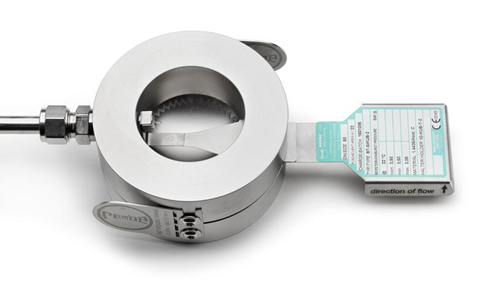
Fig. 1: Examples of the tested explosion vents (left: Explosion vent EDP; right: Explosion vent EGV HYP)

  • Certified weather resistance
  • Effective protection of the plant and its products from environmental influences
  • Air leakage of < 0.75 m³/h m joint length
  • Impervious to driving rain up to a wind force of 12 bft (120 km/h) and a precipitation rate of 440 mm/h
  • Wind stability up to a wind force of 14 bft (166 km/h)

www.rembe.de

This article can also be found in the issue below


ICIS Hydrogen Market Watch to Help Accelerate Market Growth

 ICIS, a global source of commodity intelligence, today announced the launch of a new, free weekly hydrogen market overview, “ICIS Hydrogen Market Watch”. The ICIS Hydrogen Market Watch acts as a central resource for market participants to monitor key developments in the nascent hydrogen market. The overview presents market participants with pricing information and coverage of core developments across policy, regulations and more, supporting them in making investment decisions in this important commodity for the future.

Jake Stones, Hydrogen Specialist at ICIS, said, “Hydrogen is one of the key enablers for the energy transition. However, although there is already large hydrogen usage, there is not enough clarity to establish a global market on the level needed for the future. ICIS is therefore producing this free weekly overview to support both price and information transparency to support market growth.”

The hydrogen market is currently opaque, which hinders new entrants as they cannot gauge return on investment. Although there is a lot of disparate information available, this weekly summary focuses on essential developments, giving market participants clear, actionable insights across policy, regulation and pricing.

“Supporting investment decisions with a reliable insight about the market and pricing transparency will help bring clarity to the hydrogen market,” continues Stones. “This new intelligence service will feature ICIS’ hydrogen assessment information for unabated Steam Methane Reforming (SMR), commonly referred to as “grey” hydrogen, low-carbon SMR and low-carbon Autothermal Reforming (ATR) and wholesale power market electrolysis. The overview will also show the cost premium between low-carbon hydrogen and grey hydrogen.”

ICIS Hydrogen Market Watch will include an ammonia-to-hydrogen assessment, providing the cost of hydrogen from imported ammonia, which represents a large proportion of hydrogen production. This is a market-based assessment based on the pricing of ammonia. It will also include insights from across the hydrogen economy, such as articles and whitepapers, and will feature the ICIS Hydrogen Insights podcast series.

“While the future energy mix will be diverse, hydrogen has a big role to play. If we are going to meet our decarbonisation targets, it is essential that we have transparency in this developing market. ICIS helped to create the European Gas market, through its forerunner Heren Energy, hence the Heren Index and ICIS TTF, and we are confident that the ICIS Hydrogen Market Watch will help move the Hydrogen market a big step forward,” concludes Stones.

This article can also be found in the issue below.


ETW Energietechnik builds biomethane plant in Rittershoffen, Alsace

ETW Energietechnik from Moers has built a biomethane plant in Rittershoffen, in Alsace, in cooperation with the planning office Rytec from Baden Baden. The processing capacity of the plant, which went into operation in February 2023, is about 700 normal cubic meters of raw biogas per hour. This means that up to 350 normal cubic meters of biomethane are fed into the natural gas grid every hour. This is roughly equivalent to the average fuel consumption of 20,000 passenger cars.

Use of substrates from the region

The project was initiated by three young, visionary farmers from Alsace who are committed to environmental protection and regenerative energies and want to promote sustainable agricultural use in the region. Only agricultural residues from the immediate surroundings are used as substrates.

Especially the very low power consumption of 137.6 kilowatts electric makes ETW‘s plant state of the art for biomethane plants of this size class. This significantly reduces the risk of future electricity price increases. Even with a downstream high-pressure compression plant, which compresses the processed biomethane to 67.7 barg (bar gauge) and feeds it into the natural gas grid, the power consumption of the entire plant is less than 202 kilowatts electrically, significantly lower than comparable products on the market. This means that the entire plant consumes less than 7 per cent of the energy provided by the biomethane.

Interface reduction ensured rapid construction progress

As early as 2016, the first considerations were made to realise the project. In 2019, the concrete design and planning work began. The approval, application for funding, construction financing and earthworks were all carried out by the Rytec company from a single source. The maximally reduced interfaces allowed the construction work to progress quickly and effectively. The biogas plant will create three jobs in the region. The residents of the neighbouring village of Rittershoffen initially expressed concerns during the project development. In response, however, the entrepreneurs invested a lot of work and money to ensure that the plant was well integrated into the landscape.

Green added value for the entire region

„As a family business that has traditionally specialised in growing fine crops such as asparagus and horseradish, the sustainable development of our region is an important concern for us. Therefore, it was particularly important to us that the integration of the biogas plant is not only in line with our company philosophy, but also offers a green added value for the entire region,“ reports Denis Scharrenberger, Managing Director of FERME SCHARRENBERGER.

The location of the biomethane plant is now off the road at a sufficient distance from the adjacent village – planted with a wall around the property as well as high-quality native trees and hedges. To accommodate the local residents, extensive earthworks as well as longer power lines and pipelines were invested in here.

Focus on highest quality

When designing the plant technology for the fermentation of the diverse residual materials, a lot of emphasis was placed on the highest quality. The ETW SmartCycle® biomethane plant from ETW Energietechnik GmbH is correspondingly high-quality, reliable and low-maintenance. Thanks to the use of oil-free screw compressors and an intelligent plant control system, the plant has the lowest energy consumption on the market.

Prefabricated parts from Drössler Umwelttechnik with factory-concreted installation parts such as FF pieces and agitator frames were also used for the concrete. All built-in parts have additional sealing flanges. The sandwich construction of the tank walls is optimally thermally insulated and already fitted in the factory with integrated heating pipes protected by the concrete.

The stirring and separation technology was carried out by the Paulmichl company. The agitators are equipped with powerful external drive technology. Especially the fermenter agitator Mammut convinces at the Rittershoffen plant with a strong agitating performance at a high dry matter content. Thanks to the infinitely variable hydraulic adjustment of the agitators, optimal adaptation to the fermenter substrate can be achieved. The panorama sight glasses developed by Paulmichl provide the operators with visual insight and monitoring of the plant operation. The reliable separation operation at the Rittershoffen plant is carried out by a separator of the PM260 model series, which is specially adapted to the fermentation residue. By means of pressure control of the separator, the feed pump is controlled in its flow rate, so that operation can take place without a feed tank and overflow pipe.

The gas storage tanks from SATTLER, who have almost 45 years of experience in this field, have an enormously high tensile strength and extremely low permeability.

With the BioG solids dosing system, more demanding residues such as straw and manure can be introduced in liquid form. The system in Rittershoffen consists of a 190 cubic meter BioFeeder. The subsequent BioMerge mixing system (market launch 2022) mixes fermenter liquid with the shredded material and pumps it through an eccentric screw pump as a homogeneous mass into the fermenter. Stones as well as other foreign bodies are successfully separated in the overall system. This helps to reduce the wear and tear on the pumps as well as on the downstream technology.

Gate valves and measuring technology are each double-protected, so that the plant is equipped with the highest safety standards of the Rytec company.

With the low-energy gas processing plant from ETW Energietechnik, the frequency converters from Rytec and the future CO2 liquefaction, the bottom line is that a negative CO2 footprint is generated.

This article can also be found in the issue below.


Gemmak Certified to Execution Class 3

Rope and Sling Specialists Ltd.’s (RSS) Gemmak Engineering Ltd. fabrication facility has received a UKCA Certificate of Conformity of the Factory Production Control, up to and including EXC 3.

The certificate, to designated standard EN 1090-1:2009 + A1:2011, covers structures and structural components, including manufacture of structural steelwork components. EXC 3, or execution class 3, relates to supporting structures made of steel up to strength class S700 and structural components made of aluminium alloys. Typical examples include buildings with more than 15 floors; pedestrian, bicycle, road, and railway bridges; and crane tracks.

Gemmak is one of 10 RSS facilities, situated near the company’s de facto headquarters in Pyle, South Wales. It serves as the manufacturing division within the firm’s engineering services department. It is principally used to design, manufacture, fabricate and repair a range of lifting beams, swing jibs, lifting platforms, pipework, runway beams, and lifting brackets, in addition to bespoke equipment, for the steel, shipbuilding, petrochemical, and other heavy industries. Dŵr Cymru Welsh Water is one of a number of high-profile companies that utilise these services.

Alan Varney, engineering services director, said: “Our customers benefit in having the confidence that the products that we manufacture will have full traceability and NDT [non-destructive testing] inspection with certification. In turn, it will create broader opportunities for us, which, in the past, we have had to turn down due to not having suitable certification [to EXC 3].”

Gemmak will fabricate anything metal, using the latest design, cutting, and welding technology. At the centre of a suite of design systems is SolidWorks, a solid modelling computer-aided design and computer-aided engineering computer programme. Tooling includes various guillotines, a plasma cutter, radial drills, magnetic drills, pillar drills, a centre lathe, an iron worker / press, an abrasive wheel, a band saw, and a circular saw. Gemmak delivers one-off projects plus batch orders and even maintains ongoing production lines for customers.

In addition to EXC 3 projects, Gemmak continues to manufacture to EXC 1 and EXC 2 standards. The first covers structural components made of steel up to strength class S275 and structural components made of aluminium alloys. This includes buildings with up to two floors (four floors if detached), bending beams up to 5m in length, projection beams up to 2m in length, and stair railings in residential buildings. It also covers agricultural buildings such as barns. The second class, meanwhile, comprises all supporting structures made of steel up to strength class S700 and structural components made of aluminium alloys. This typically includes buildings with between two and 15 floors.

Varney added: “Our fab shop has been getting busier over time and this latest certification will position us to enter our next phase of growth.” 

Gemmak is also certified to ISO 9001, ISO 14001, ISO 45001, and Safe Contractor.

The UKCA Certificate of Conformity of the Factory Production Control was presented by Centre for Assessment Ltd., of Manchester, UK.

This article can also be found in the issue below.