News

Dam wall proves no obstacle for Hoist & Winch

With many successful water industry infrastructure projects under its belt, leading industrial lifting equipment supplier Hoist & Winch was once again approached to provide a comprehensive and robustly tested lifting solution for a specialist marine subcontractor. This demanding reservoir application required the transfer of three large-diameter pumping station pipes – each weighing 30 tonnes – across the reservoir waters and up the inclined slope of its dam wall. As always, Hoist & Winch proved up to the task.

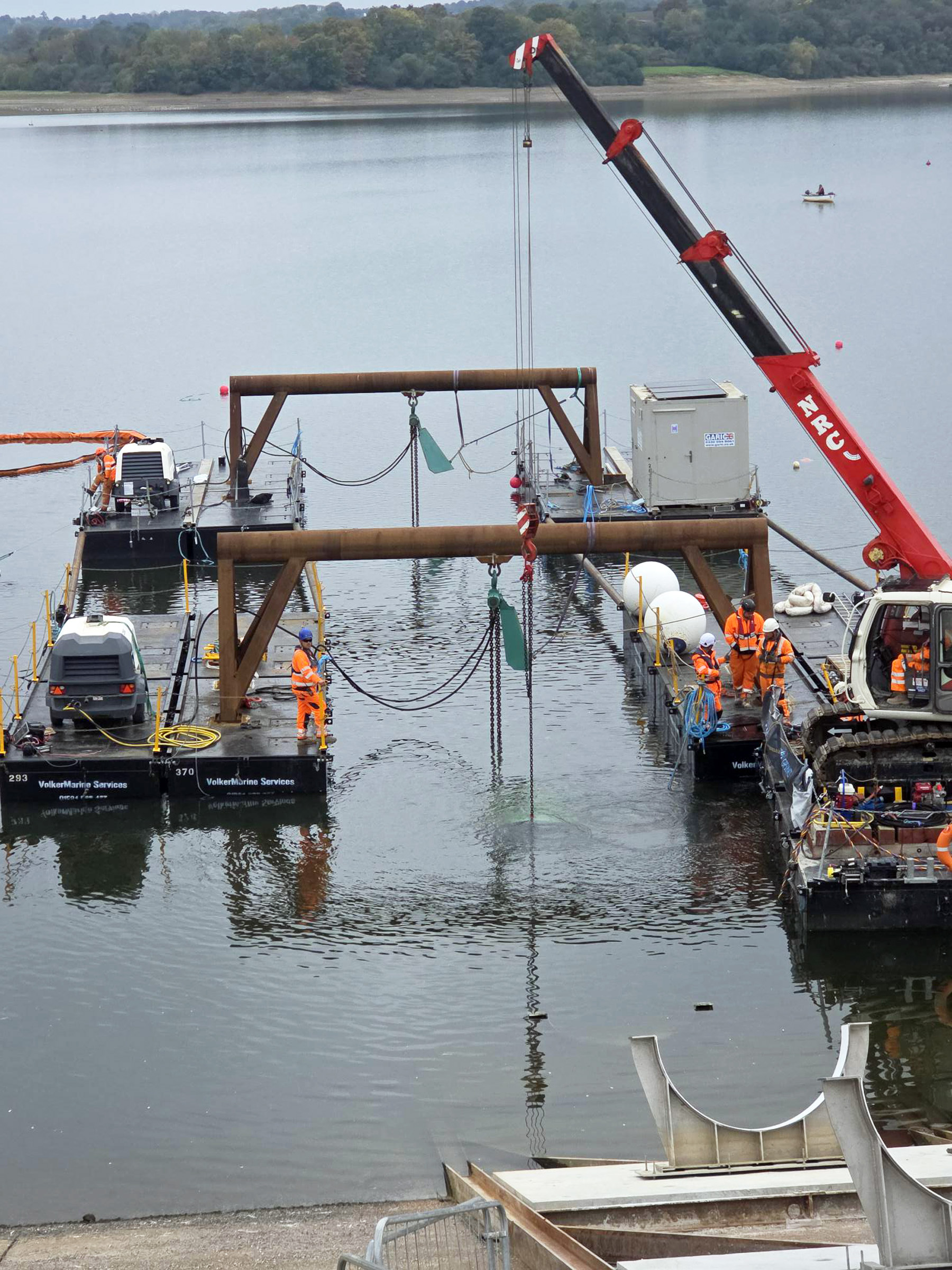
This complex hire equipment project required a triple-aspect approach. Firstly, to move each pipe across the water, Hoist & Winch had to supply, install, commission, load-test and LOLER-certify two air-powered chain hoists offering 20-tonne safe working load (SWL). The company proposed a pair of JDN top-hook suspension air hoists, each with its own load chain collector box, air service unit and air supply hoses. The hoist units are each controlled by an individually connected, heavy-duty, air-powered pendant control. They were fixed to the customer’s free-standing fixed gantries on two fabricated floating pontoons (20t SWL), which Hoist & Winch also had to load-test and LOLER-certify.

Secondly, Hoist & Winch was tasked with providing a similar package of services for a large-capacity hydraulic winch system. Here, the company recommended a 12t SWL floor-mounted hydraulic winch with wire rope, diesel-powered hydraulic power unit, joystick control stand and interconnecting hoses. The winch was required to pull each pipe up the inclined slope of the reservoir’s dam wall in conjunction with two rail-mounted travelling gantries (20t SWL) fabricated by the customer.


Lastly, the customer wanted Hoist & Winch to supply four 15t SWL manual chain blocks. The Tiger top-hook suspension type manual chain blocks proposed by Hoist & Winch would support each pipe from the rail-mounted travelling gantries following transfer from the air hoists in readiness for winching up the slope of the dam wall.

Hoist & Winch technical support experts partnered closely with the main contractor’s civil and mechanical engineers throughout this safety-critical project, with strict approval procedures in place.

Load testing of the two air hoists and their supporting gantries was facilitated by a 20t/25t skid-mounted dynamic proof-test load. Working closely with the marine subcontractor’s dive team, the test weights were initially positioned on the reservoir bed.

Dynamic load testing of the hydraulic winch took place in two stages, firstly using an interim site test load comprising lighter concrete components, which also required winching up the reservoir’s dam wall. A further dynamic test was performed on the day of winching the first pipe. This activity was closely monitored to check all aspects of the winching system installation as work proceeded. Indeed, Hoist & Winch was tasked with operating the winch for the full duration of the first pipe lift up the dam wall slope while maintaining constant radio communication with the overall lift supervisor. As the night time closed in the very precise lifting operation had to continue and so the work was completed under floodlights.

Hoist & Winch also provided various other aspects of technical consultancy, including guidance on lifting equipment legislation, lifting operation planning/management, the specification and procurement of a portable diesel-powered compressor, and operator handover training.


“The final outcome was the highly successful movement up the reservoir dam wall of all three pipes in a finely controlled and smooth manner, which delighted both our customer and the end client,” says Hoist & Winch Director Andy Allen. “It’s yet another successful example of how our extensive experience and deep technical knowledge can provide the optimal solution for some of industry’s most challenging lifting and transfer operations.”

Visit www.hoistandwinch.co.uk for further information and to view recent case studies.
Refrigerant Tracking and Compliance Software: An Overview for the European Market

refridge.jpeg

Under the F-Gas Regulation (EU) 2024/573, operators and manufacturers of equipment containing 5 tonnes of CO₂ equivalent or more of listed fluorinated greenhouse gases (F-gases) generally must keep records for at least five years to maintain regulatory compliance[1]

The required records must detail a wide range of F-gas-related data, including a list of the regulated pieces of equipment, what refrigerant they use and the initial charge. Records must also be kept of maintenance and servicing, describing the work (e.g., refrigerant reclaims/top-ups, leak checks, decommissioning, etc.), dates and results of any leak repairs, and the details of the companies and technicians who performed the work.

Non-compliance can lead to financial penalties and legal action, seriously threatening a business's reputation and bottom line.

But how do you effectively track your facility’s air conditioning and refrigeration systems, whilst ensuring continuous upkeep and compliance with F-Gas legislation?

Traditional methods like spreadsheets are often cumbersome and notoriously inadequate for meeting complex regulatory requirements, leading to unnecessary work, stress, and potential penalties. When on the job, you should be able to focus on maintaining your system’s refrigerant and its optimal performance, not deciphering an outdated or non-compliant tracking system. Managing your facility’s refrigerant shouldn't be a source of additional headaches.

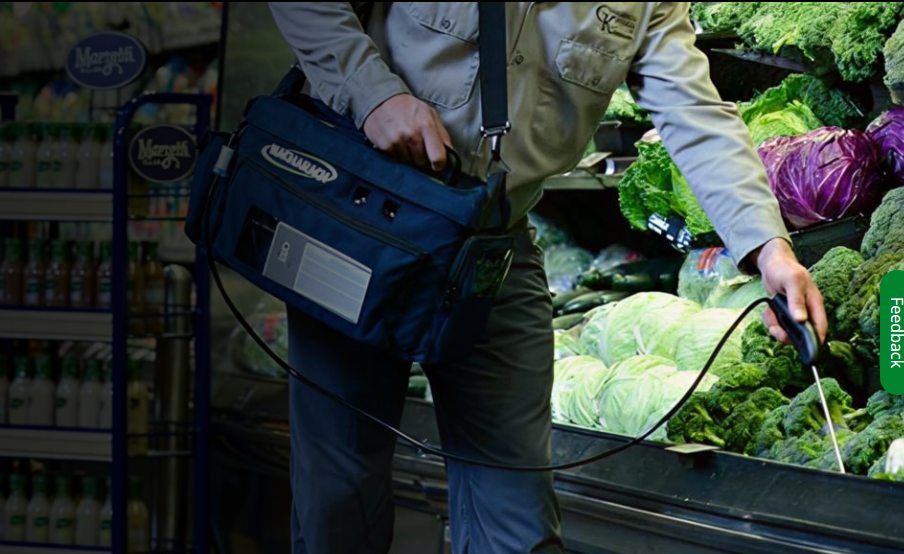
The MSA Parasense Refrigerant Tracking & Compliance Platform is a robust solution designed to streamline processes and help keep industry professionals organised and fully compliant. Tracking refrigerant is just the beginning of this comprehensive platform's offerings.

6 Key Features of the MSA Parasense Refrigerant Tracking & Compliance Platform

1. Inventory Management for HVAC-R Equipment
A centralised, accurate, and real-time inventory of your HVAC-R systems enables more effective refrigerant management and simpler F-Gas Regulation compliance. The MSA Safety Parasense Refrigerant Tracking & Compliance Platform's asset database tracks your HVAC-R equipment by make, model, refrigerant type, charge size, Global Warming Potential (GWP), and more. A system's GWP is important because it determines the required frequency of leak checking and whether or not it needs a fixed refrigerant leak detection solution.

2. Cylinder and Bank Management
Use the Refrigerant Bank and Bottles feature to track stored refrigerant across your company's sites and depots. The Parasense platform allows users to efficiently allocate, assign, and record usage of stored refrigerant, including recoveries, to help create a clear audit trail as required by the F-Gas Regulation.

3. Regulation Workflow and F-Gas Compliance Calendar 
Stay on track with the requirements of the F-Gas regulation. This feature automatically schedules upcoming actions such as mandatory leak checks, recalibration of leak detection systems, and servicing requirements. It distils complex regulations into clear, actionable processes, procedures, and tasks that are easy to understand and follow. Users can access the full history of activities, making it simple to retrieve and cross-reference updates and events during audits.

4. Helps to Identify Where Refrigerant Leaks Are Occurring
The Parasense platform provides users with a historic record of all service and repairs, which can be accessed centrally. This helps users identify systems that require frequent refrigerant top-ups, indicating a potential leak on those units.

5. A Complete Audit Trail 
The platform provides an intuitive solution for recording service and maintenance activity on HVAC-R equipment as required by the F-Gas Regulation, including mandatory leak inspections, leak repairs, refrigerant top-ups, and other maintenance.

6. Fast, Comprehensive F-Gas Regulation Reports
The Parasense platform enables users to generate reports for F-Gas Regulation compliance with only a few mouse clicks.
 

If you’re ready to simplify refrigerant compliance, contact us today. Discover the Hidden Cost of Refrigerant Leaks

Filtermist introduces revolutionary new Absolent technology in boost for UK dust and fume extraction

 One of the UK’s leading filtration experts has announced the launch of innovative new dust and fume extraction technology from sister company Absolent AB.

Filtermist Limited, which specialises in ensuring the air in workshops is clean and safe to breathe, is now offering the brand-new AD range that maximises ‘True Downflow’ technology to provide dust extraction units which are compact and easy to maintain, yet deliver optimised filtration density.

Designed utilising input from hundreds of real customer use cases, the new offer provides a truly modular, fully ‘customer centric’ product line that is now available to UK manufacturers that undertake abrasive metal processes including welding, laser cutting, grinding and many more, exclusively from Filtermist Limited.

“Several pain points were identified and addressed during the 3-year project,” explained Robert Wiktorén, Absolent Air Care Group’s Chief Product Officer.

“As an existing manufacturer of dust collectors under our Absolent, Dustcheck and Diversitech brands, we knew there was a need in the market for a brand-new way of thinking about dust and fume extraction.

“Traditionally, dust collectors have been sized using generic data to select suitable filter type, filter area and air speeds between filter elements, and resultant footprints have been comparatively large. Noise levels are frequently high due to external compressed air cleaning systems and integral fans, and the units can be difficult to maintain.”

He continued: “When filters need to be changed, even the best current designs require the filter retaining mechanism and moving parts to be in the ’dirty side’ of the unit, exposed to contamination. This is not a great environment for moving parts and requires a tool to reach the filter elements furthest away.

“Our True Downflow combines the verticality of the filter elements with a top to bottom air flow. This unique combination optimises the effect of gravity and ensures that the dust coming out of the filter elements during pulse jet cleaning is forced down to the disposal solution in the hopper.”

The roll-out of the first AD phase includes three models: the 0.5 (which holds two deep pleat cartridges) 1.0 (four filters) and the 1.5 (six deep pleat filter elements). Airflows currently range from 1,200-10,800m³/hr, but can be increased thanks to the modular construction.

The new range is being introduced in stages to customers throughout Europe and the UK, with phase one suitable for use in metal applications such as welding, laser cutting, plasma cutting and non-ATEX abrasive metals (grinding and linishing).

Additional models for use in a wide range of other applications, including explosive dusts requiring ATEX certified equipment and higher air volumes (>65,000m3/hr), will follow later, along with alternative dust disposal options.

Dust collectors suitable for pharmaceutical dust (requiring safe change features) will be added to the range during 2026.

Senior Group Product Manager and former Filtermist employee Andy Darby, who played a pivotal role in developing the new range, went on to add: “A baffle at the inlet evens out the airflow across the volume of the filter and makes sure we use each square metre to its maximum potential. True Downflow is the only solution that guarantees to eliminate any upflow or crossflow with the filter elements - traditionally leading to higher dust retainment and having to oversize the filtration surface.

“This enables us to offer ‘high filtration power density’, meaning we can increase the filter speed and reduce the filter media surface area. Because of this, the solution comes in a far smaller footprint than other filter units on the market.

“Another unique aspect of the new range is the ’CleanChange™’ filter change clamping mechanism. The filter elements are linked together and, as the operator pulls the first element out, the next one is pulled to the front. No tool is needed, and engineers do not have to enter the dust filled unit.

“Locating the fan and cleaning unit inside the body of the extraction unit decreases noise and we can reduce this even further if required by using additional noise attenuating measures. Finally, the standard units will be constructed from pre-treated Galfan steel, which offers a high level of corrosion protection.”

The AD range uses modular construction ensuring extremely competitive lead times, even for customised products.

Robert Wiktorén concluded: “We are confident that the AD range will revolutionise the way end-users, OEMs and systems integrators think about dust and fume extraction.”

Find out more by visiting www.filtermist.co.uk or call Filtermist’s dedicated dust and fume team on 01952 290500.

Pepperl+Fuchs Supports the Digitalization of the Process Industry

pepperl_nov.jpeg

The digitalization of processes in hazardous areas places high demands on explosion protection. All infrastructure components used in these areas must be intrinsically safe or explosion-proof and certified. The Pepperl+Fuchs Group, a pioneer in the field of mobile devices for hazardous areas, meets these requirements with a comprehensive portfolio of certified solutions, from smartphones, tablets, and HMI systems to intrinsically safe barriers and remote I/O systems to Ethernet APL technology and sensor technology in hazardous areas.

Augmented reality for more efficient workflows

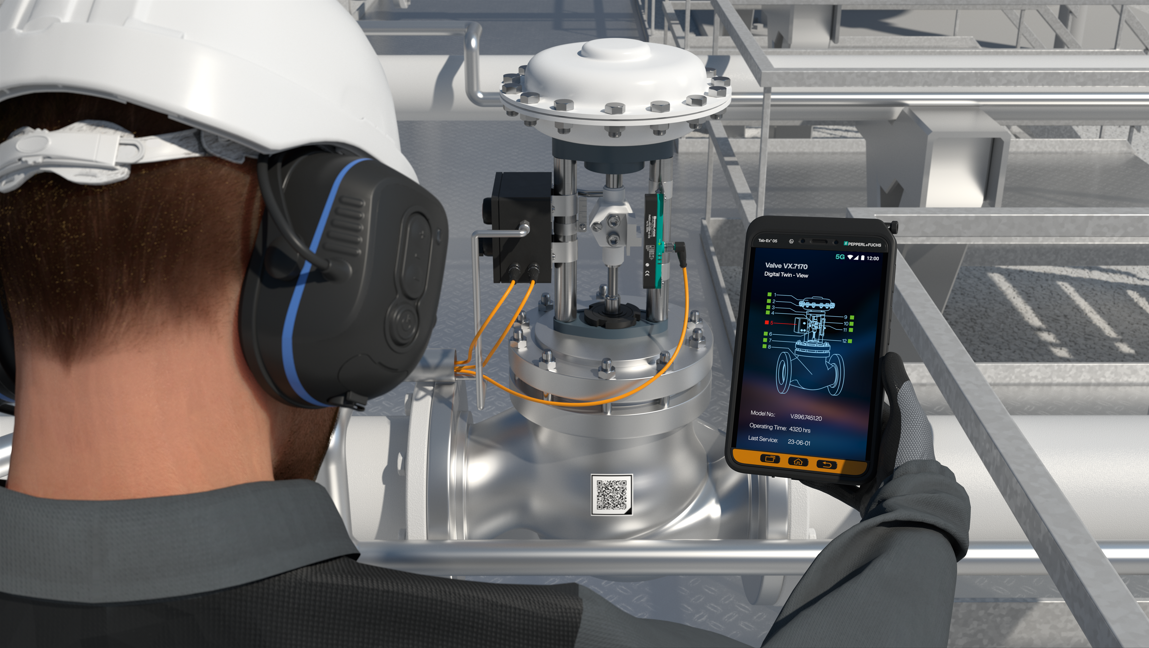
Augmented reality (AR) offers enormous potential at device level for digitalizing processes. With the help of this technology, information can be brought directly into the field of vision and display of employees in real time and presented in a spatially and context-sensitive manner. For example, markings on cables or flanges or process values can be displayed directly next to the corresponding valves.

AR therefore offers particularly great potential for complex tasks such as shutdown work, commissioning, or fault diagnosis in areas that are difficult to access. The technology is also ideal for training and qualifying new employees, for example in practical on-the-job training with AR-supported instructions or via remote support. In addition, AR overlays can be linked to digital twins of assets to simulate scenarios. This integration significantly improves the basis for decision-making, increases efficiency, and ensures safe plant operation.

5G as the basis for AR

The 5G mobile communication standard ideally complements augmented reality technology. In addition to the necessary bandwidth, 5G also provides the low latency required to transmit AR content in real time and integrate it seamlessly. On site, technicians receive context-sensitive instructions, overlay markings on components, and live data such as sensor values or histories directly in their field of vision. At the same time, they can request support or instructions from remote experts at any time, who can be easily connected.

This shifts maintenance processes more toward just-in-time assistance, reducing errors and increasing first-time fix rates. Planning is shifting organizationally toward data- and event-driven workflows, for example, when predictive maintenance alerts automatically trigger AR checklists. An integrative approach is crucial here. AR and 5G are not isolated solutions. They must be seamlessly connected to CMMS/ERP systems, asset digital twins, and role and rights models.

IT security in practice

The high demands placed on IT security require that it be considered from the outset in all digitalization initiatives. Today, this can be easily reconciled with intuitive and efficient operation, for example, using modern, explosion-proof smartphones and tablets from Pepperl+Fuchs. These devices feature integrated biometric authentication methods, such as fingerprint sensors or facial recognition, which ensure fast, user-friendly, and highly secure access.

This eliminates the need for time-consuming entry of complex passwords in everyday industrial use, without compromising security. Biometric identification ensures that only authorized persons have access to sensitive data, control functions, company networks, or applications. Together with encrypted communication and role-based access concepts, this creates a solution that not only successfully bridges the gap between maximum user-friendliness and maximum security but also ensures industrial processes are running smoothly.

Customers also benefit from the fact that Pepperl+Fuchs mobile devices are part of the Android Enterprise Recommended (AER) program. This guarantees consistent, easy deployment and management of mobile solutions through hardware and operating system support, as well as guaranteed security and operating system updates. The Samsung Knox mobile security solution also ensures a high level of device and data security for companies.

Connected workers—highly networked into the future

Intrinsically safe tablets and smartphones already serve as digital and networked hubs for connected workers. They enable authentication, collect sensor data, and bundle a wide variety of communication channels. They also allow for the seamless integration of mobile scanners, IoT gateways, or communication peripherals such as headsets. This makes them a central component for safe, efficient, and networked work processes in hazardous areas.

In the future, platforms for “digital shift operation” will emerge that digitally map handover protocols, know-how transfers, shift handovers, and shift KPIs, thus enabling comprehensive shift digitalization. Step by step, the connected worker is evolving into a highly networked, smart-supported employee who can access and respond to all relevant information, analysis tools, and expert knowledge securely and context-sensitively in real time at any time.

“As a pioneer, Pepperl+Fuchs is continuously working on developing intuitive solutions to optimally connect people in industrial environments, simplify work processes, and sustainably increase efficiency,” says Christopher Limbrunner, Team Lead Product Management of the Enterprise Mobility division at Pepperl+Fuchs. “In addition to providing the right hardware, we also support our customers in the holistic planning and implementation of the necessary infrastructure. They benefit from our many years of expertise and a global support and service network. This ensures that applications are not only compliant and reliable, but also efficient and future oriented.”

https://www.pepperl-fuchs.com

WELTEC BIOPOWER biomethane plant to go into operation in mid-2026

Biomethane from beer and whiskey industry residues

German manufacturer WELTEC BIOPOWER is currently building a biomethane plant for the Irish company Evergreen Agricultural Enterprises Limited. The plant at the company’s headquarters in Monasterevin, County Kildare, will go into operation in mid-2026 after a total construction period of 11 months. The location offers the operator logistical advantages, among other things: “On the one hand, it is well connected to the M7 motorway. In addition, the national gas network for direct biomethane feed-in is in the immediate vicinity,” emphasises Patrick Meade, Managing Director of Evergreen.

No competition with feed production for use of input materials
The €50 million project comprises four digesters and one stainless-steel secondary digester, each with a volume of 4,900 cubic metres. These are mainly used to ferment production residues and by-products from the Irish beer and whiskey industry. The materials are readily available and do not compete with feed production, as they are unsuitable for animal feed. Three additional tanks are used to store liquid substrates. “Despite its size, the plant, with an annual processing capacity of 165,000 tonnes, will be built in just six months of pure construction time. Construction is proceeding according to plan and mechanical completion is scheduled for the end of this year,” says Tobias Gerweler, Managing Director of WELTEC BIOPOWER. “The decision not to use grass silage was a conscious one, so that we would not be competing with the livestock industry,” Patrick Meade continues. A combined heat and power plant (CHP) installed on site generates around 1 megawatt of power for the operation of the plant and supplies heat for the digesters.

Hourly production of 1,300 cubic metres of biomethane
Three rotating long-axis agitators and three submersible motor agitators in the tanks support the effective digestion of the substrate mix. The biogas is collected in the digesters with double-membrane roofs and processed into biomethane using membrane technology. It then enters the public gas grid 20 metres away via the feed-in point. Once commissioned, the plant will produce around 1,300 standard cubic metres of biomethane per hour – equivalent to around 110 GWh of energy per year. The annual output of 65,000 tonnes of digestate is stored in a covered concrete lagoon and delivered to farmers separately as liquid and solid fractions.

By 2030: 5.7 terawatt-hours of biomethane per year
“The fact that German manufacturer WELTEC BIOPOWER was awarded the contract to build the largest plant in Ireland to date was due not only to the technical advantages mentioned above, but also to the short delivery times,” emphasises Managing Director Patrick Meade. This will also enable Ireland to achieve its ambitious expansion targets for biomethane production: the government aims to produce 5.7 terawatt-hours (TWh) of biomethane annually by 2030. To achieve this, existing biogas plants for biomethane processing would have to be expanded, and technically mature plants such as the one built by Evergreen in Kildare would have to be planned and constructed.

www.weltec-biopower.de


Gas and Flame Detection Solutions for Hydrogen Applications

As hydrogen plays an expanding role across energy, manufacturing, and industrial sectors, managing safety in its production, storage, and handling presents unique challenges. Hydrogen’s small molecular size allows leaks through tiny openings, while its flames can be nearly invisible and emit low radiant heat, making traditional fire detection methods less effective.

Addressing hydrogen safety calls for a layered approach using multiple detection technologies suited to these conditions. Fast-response ultrasonic sensors detect high-pressure gas leaks at the speed of sound, providing early warning often before a gas cloud becomes visible. Electrochemical and catalytic sensors complement this by detecting lower concentrations of hydrogen or combustible gases where accumulation might occur.

Combined, these technologies provide comprehensive monitoring adapted to different stages and environments within hydrogen applications, helping to reduce risk and improve operational safety.

Products Available for Immediate Dispatch

MSA offers a range of hydrogen-ready detection products, all available for immediate dispatch to support project timelines and operational needs.

Available products include:

  • MSA Safety’s ULTIMA® X5000 Gas Monitor: Equipped with MSA XCell® sensors, this smart gas detector supports hydrogen and associated gas monitoring with extended calibration intervals, self-checks (via TruCal®), and a compact design ideal for retrofits.
  • MSA Safety’s PrimaX® P Gas Transmitter: Designed for challenging indoor or outdoor environments, this device supports hydrogen and other combustible/toxic gases with easy calibration and durable housing.
  • MSA Safety’s SUPREMATouch Controller: A scalable control system capable of managing up to 256 inputs and 512 outputs, ideal for large-scale hydrogen production or processing facilities needing SIL-rated architecture.
  • MSA Safety’s SENTRY io®: A modern, wall-mounted controller with touchscreen interface, supporting up to 16 detection points — ideal for smaller hydrogen systems or expansions.
  • FieldServer ProtoAir® Gateway: A cloud-connected IIoT gateway for remote monitoring and integration, useful in distributed hydrogen systems or unmanned sites.

These can be tailored to meet the specific safety requirements of your facility, whether in energy, manufacturing, or industrial operations.

Supporting Your Hydrogen Safety Projects

MSA Safety offers a comprehensive portfolio of fixed gas and flame detection solutions developed to address the unique safety challenges of hydrogen applications. Select products and accessories designed for hydrogen environments are in stock and ready for immediate dispatch to help keep your projects on track.

Explore Products & Order Now

Enerpac Strand Jack for 3km Toulouse Cable Car Cable Maintenance

POMA, the world leader in cable transportation, has used Enerpac strand jack technology to streamline aerial cable maintenance operations on the 3 km Téléo cable car in Toulouse - the longest urban cable car ever built in France. Developed in collaboration with cable maintenance specialist, COMAG, the new system significantly reduces cable tensioning times.
The 3-kilometer Téléo cable car route connects Paul Sabatier University to the Oncopole Institute via the Rangueil Hospital, in just 10 minutes, with an overflight up to 70 meters above ground level. It uses four carrier cables, with two carrier cables per track, as well as a looped traction cable. The cabins run on these cables, similar to a railway track. The cables run without breaks from Paul Sabatier University to Oncopole-Lise Enjalbert station.
Rope repositioning is a key part of cable car maintenance. POMA wished to optimise the time required for the operation and, above all, to leave the cable sliders in position by pulling two track ropes at the same time. To achieve this, the two track ropes were attached to a lifting beam which in turn was attached to an Enerpac HSL 20006 strand jack. By stroking the strand jack, the cables can be tensioned up to a maximum of 240 tons in incremental steps of 480 mm.
After slackening the cables at Paul Sabatier station, the track ropes were tensioned by the strand jack positioned at the Oncopole-Lise Enjalbert terminus 3 km away - at the end of the cable car run. During the tensioning operation, 30 m of cable were moved to regain the correct cable position.
“Pulling both cables at the same time, in perfect synchronisation, was a major objective of the operation, until now we’re relied on a pulling winch and hauling system for each cable, a time consuming process,” said David Blanchet, project manager, COMAG. “The Enerpac strand jack was the right choice for us thanks to its operating speed, ease of use and small size, which allowed us to place it between the two track ropes in a horizontal frame. We look forward to deploying the stand jack system on other cable maintenance projects.”
Enerpac Strand Jack technology
The Enerpac HSL 20006 strand jack was supplied by Faure Technologies, an authorised Enerpac distributor and strategic Enerpac Heavy Lifting Technology (HLT) partner. Throughout the project, Faure Technologies played a key role in supporting POMA and COMAG. This collaboration reflects the strong partnership between Enerpac and HLT, as well as Faure Technologies’ dedication to providing reliable and high-quality solutions.
The Enerpac strand jack is a hydraulic lifting and tensioning device that works by gripping and pulling on multiple steel strands in a controlled, step-by-step manner. By alternately gripping and releasing the strands, the jack effectively ‘displaces’ or ‘lifts’ heavy loads.
For more information on Enerpac Strand Jacks, visit www.enerpac.com.
For more information on POMA, visit www.poma.net.

DuPont Introduces Tyvek® APX™, Heralding a New Era in Worker Safety

17d569e8 b9ca 4b14 b51f b3bb001c02b8

Unprecedented breathability with no loss in levels of protection and durability revolutionizes worker safety and protection

DuPont (NYSE:DD) today unveiled Tyvek® APX™, a new disposable chemical garment fabric designed to transform the way wearers experience comfort and safety at work, at A+A 2025 in Dusseldorf, Germany. The culmination of years of scientific research and customer collaboration, Tyvek® APX™ fabric is the most advanced form of Tyvek® material to date and provides outstanding levels of breathability without compromising on protection or durability.

“With the launch of Tyvek® APX™, we’ve created a new and revolutionary form of Tyvek® material that addresses one of the most problematic health and safety challenges – how to make garments more breathable without sacrificing performance or durability,” said Dave Kee, Global Business Director, DuPont Personal Protection. “Tyvek® APX™ fabric offers an outstanding combination of protection and comfort, helping workers to perform at their best, especially in physically demanding environments.”

Improving worker well-being

Worker well-being and comfort have gained increasing prominence in recent years, as companies across sectors—from pharmaceuticals and utilities to heavy manufacturing and chemical processing—have placed an increased focus on worker safety. The ability to efficiently dissipate body heat while wearing protective coveralls is becoming an increasingly important factor in worker comfort and the prevention of overheating. Regulations are focusing more on worker well-being, driving the need for more breathable protective garments. But achieving the desired levels of comfort without compromising on safety has been the sticking point.

Tyvek® APX™ protective coveralls provide the ultimate balance of comfort and protection. It represents a breakthrough in breathability, allowing moisture to escape and air to circulate, keeping workers more comfortable.

“For over 50 years, the DuPont™ Tyvek® brand has defined the category of protective clothing. It is synonymous with safety and trusted innovation,” said Kee. “Now, we are taking that legacy to a new level with Tyvek® APX™, redefining what it means to feel safe and protected.”

Comfort as a science

DuPont defines comfort as enhancing worker well-being by reducing the risk of suffering from heat build-up while wearing essential protective garments. Crucially, the properties being claimed for Tyvek® APX™ garments are scientifically validated. An independent physiological study, conducted by Empa, has demonstrated the enhanced breathability credentials of Tyvek® APX™ fabric. It measured the physiological changes in workers wearing traditional chemical protective garments and Tyvek® APX™ coveralls under different environmental conditions while performing different levels of activity.

DuPont also conducted customer wear trials globally to gauge whether wearers could feel the difference in performance. Almost 300 people took part across different regions and applications. The garments were tested in extremes of temperature and humidity, and from low work intensity to high levels of activity. Overall, the preference for high-breathability Tyvek® APX™ fabric was clear.

For more details, please visit: tyvek.co.uk/apx

New best practice guide aims to help address issue of drug and alcohol misuse in the workplace

RoSPA guide launched in partnership with Draeger Safety UK

  • 40% of industrial accidents have been linked to substance misuse 1
  • Alcohol misuse in UK workplaces costs £7 billion a year in lost productivity 2
  • Some prescription medications (such as those used to treat conditions, including anxiety and chronic pain) also have the potential to impair performance 
  • 83% of workers support drug and alcohol testing 3 

 The Royal Society for the Prevention of Accidents (RoSPA), in partnership with Draeger Safety UK, has published a new best practice guide to help UK employers tackle the growing issue of drink and drug misuse in the workplace.

Released today, A Best Practice Guide for Managing Drink and Drug Misuse in the Workplace and when Driving for Work outlines practical steps for organisations to manage impairment risks, improve safety, and meet legal obligations.

The guide provides a step-by-step framework for developing workplace policies and introducing and conducting fair and confidential impairment testing programmes. It also highlights the impact of alcohol and drug use in UK workplaces and the risks posed, especially for safety critical roles such as those involving the operation of heavy machinery or when driving for work. 

Substance misuse, including alcohol, illegal drugs, as well as some prescription medications, poses serious risks to workplace safety, productivity, and public health. It is estimated that 40 per cent of industrial accidents at work are linked to substance abuse, and alcohol misuse alone is estimated to cost the UK economy over £7 billion annually. 

Meanwhile, Dräger’s research, undertaken for its annual Dräger Safety and Health at Work report, indicates that 83 per cent of workers support drug and alcohol testing at work, reflecting growing awareness of the issue and support for proactive safety measures. This is set in the context that 78 per cent of managers surveyed said that their organisation had concerns about workplace impairment (and resulting injuries/accidents) due to alcohol, drugs and prescribed medications such as antidepressants.

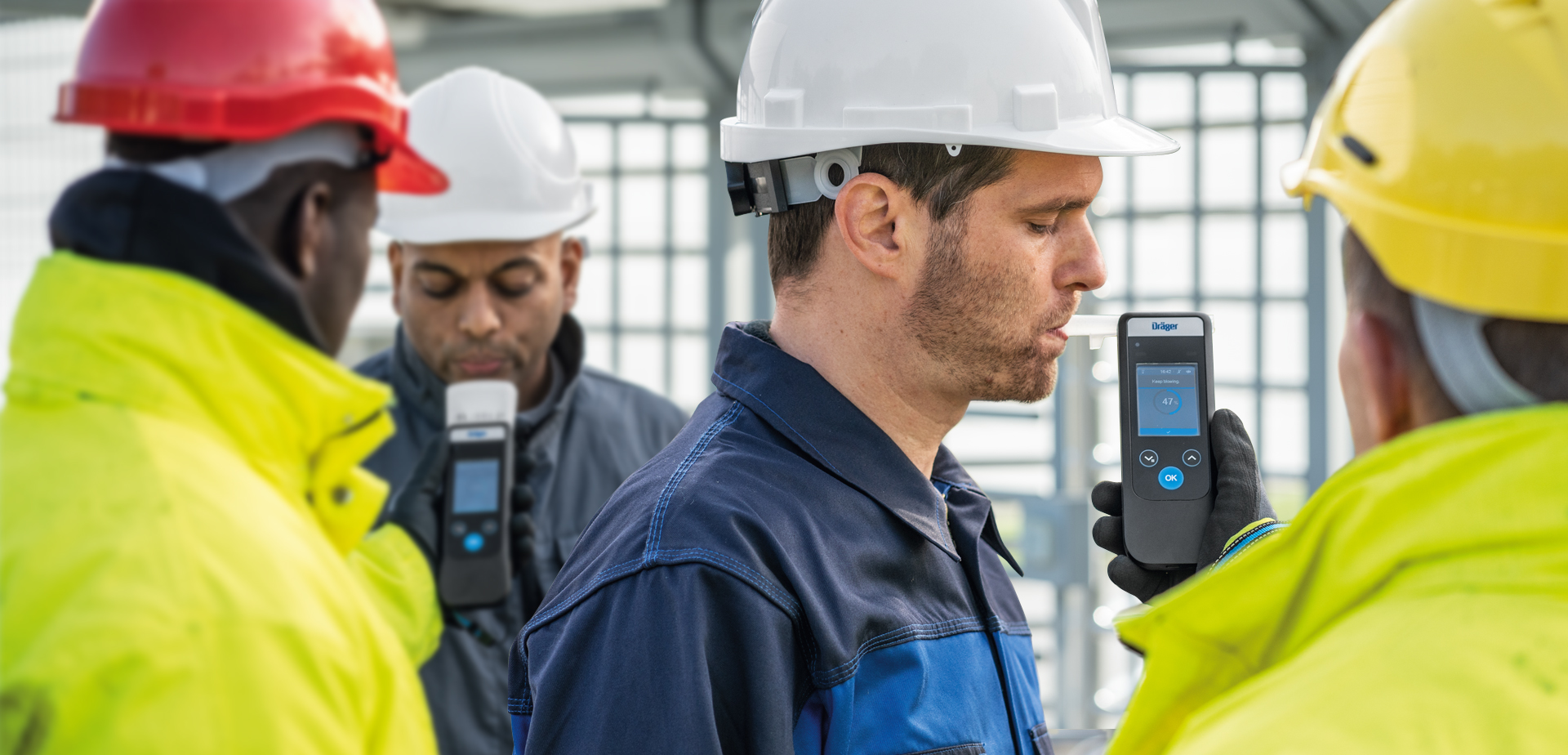
The best practice guide recommends a combination of education, consent-based testing, and rehabilitation support, and also outlines modern technologies for screening and testing, such as saliva and breath testing, as well as alcohol interlock systems, which, once installed in a vehicle, rely on a negative breath test to allow the engine to start.

The legal frameworks that employers must navigate are also referenced in the guide, including the Health and Safety at Work Act and UK General Data Protection Regulation (GDPR).

Caitlin Taylor, Road Safety Manager at RoSPA, said: “Substance misuse isn’t just a personal issue; it’s a workplace safety risk, and it’s on the rise. Whether it’s alcohol, illegal drugs or prescription medication, impairment can have devastating consequences. This guide helps employers take practical, fair steps to protect their staff and the public.”

Mark Burrup, Drug and Alcohol Testing Expert at Draeger Safety UK, adds: “Today’s workplace testing technologies are highly advanced and designed to be discreet and non-invasive, typically involving a quick saliva swab and/or a single breath sample into a breathalyser to indicate whether an employee has taken drugs or alcohol. These simple testing processes make implementation of pre-employment, random or for-cause testing straightforward for employers. In our experience, such programmes are well-received by employees as they understand that these measures play a vital role in maintaining a safe and responsible working environment for everyone.”

Aimed at HR departments, fleet managers, and health and safety professionals across all sectors, the guide is free to download on the RoSPA and Dräger websites.  It is also available via the Scottish Occupational Road Safety Alliance(ScORSA), a RoSPA initiative supported by the Scottish government helping businesses to manage occupational road risk.

Hart Door Systems completes international foods’ contract

Working for a leading global foods business, Hart Door Systems has completed the installation of  three of Hart’s door types at a plant in Greater London.

National Operations Manager Keith Fisher comments that the client had requested work to commence on a Thursday and be complete in readiness  for the start of following week.

“This was a clear requirement which, by working over the weekend, we completed the installation of one Speedor Eco, one Speedor Mini and one Hart’s roller shutter, despite the pressures resulting from multiple trades working in the same area.  

“We were very much aware of the need to start and complete the installation to a food compliance deadline for the client. Resultantly the three doors up and running with no  interference of operation of the client’s business,” says Mr Fisher.

“This we achieved satisfactorily. The installation demonstrates our flexibility, our range of door types and our commitment to deliver a superior service.”

Doug Hart, Hart’s chairman, says the ‘can do’ approach “is a good example of the team drive within Hart”. He adds: “We are a global business, delivering high quality door systems which can be seen on every continent. This has only been achieved through the team ethic which clearly is still very evident throughout the company.”

www.hartdoors.com