
News
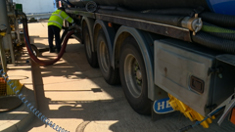
Road Tanker / Tank Truck Safety from Static Electricity
Carrying out a product transfer with an ungrounded road tanker/tank truck is a static electricity hazard capable of causing extreme damage to plant and personnel.
The design and manufacture of a road tanker/tank truck must ensure that all metal items are bonded together. International Standards and Recommended Practices state that this bonding/continuity must be < 10 Ohms between metal items. Designated earth point/s must also be welded onto the vessel/body of the truck and be clearly marked and manufactured from corrosion resistance material.
Drivers must be educated to attach the grounding clamp and system to the designated earth point on the truck as soon as they leave the cab and before they start any other operation or product transfer. It is critical that the clamp is connected to the designated earth pin on the vehicle prior to any other equipment, bonded or associated with the tanker, (e.g. transfer hose, landing legs) comes into contact with the ground. The dedicated earthing system needs to confirm a good ground connection before the product transfer can begin. After the product transfer and all other activities have been completed the driver can then remove the earthing clamp and store it away on the earthing system stowage point before driving off.
The dedicated earthing system needs to confirm a good ground connection before the product transfer can begin. After the product transfer and all other activities have been completed the driver can then remove the earthing clamp and store it away on the earthing system stowage point before driving off.
This short article highlights international standards, recommended practices and discusses the practical benefits of a static grounding system for vehicle operations.
Visit: newson-gale.co.uk
